admin
admin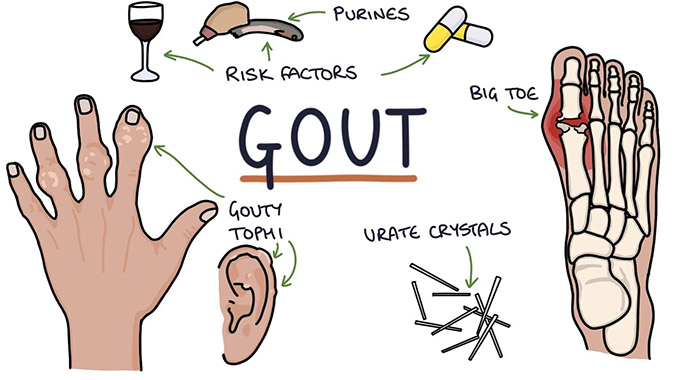
Miriam Nyasha Kwari-Herbalist
Hello friends and welcome to this week’s edition of our food our medicine. This week I am talking to you about gout. Gout is a build up of uric acid in the blood and the joints. I feel like this definition is the simplest one that we can give to a disease that affects most ageing people.
Many times, there is a specific inflammation and swelling in the big toe. Gout is a type of arthritis that causes sudden, severe joint pain. Stones may develop in the kidneys. Deposits may also build up in the skin and in the ears. Uric acid is an end product of our bodies’ metabolism and it is a component of our urine. The body gets rid of this acid through the urinary tract and the skin. With the disease advancing or growing more and more in the body, crystals of uric acid are deposited n the joints as l mentioned before, causing stiffness and pain. Sudden severe pain in a joint — usually your big toe, but it can be in other joints in your feet, hands, wrists, elbows or knees Symptoms of gout may include hot, swollen, red skin over the affected joint. You may also have a very high temperature, where you feel hot, shivery, sick and cannot eat. Usually, we have to know what to do when we are at home to ensure that we remove that discomfort.
take any medicine you’ve been prescribed as soon as possible,rest and raise the limb, keep the joint cool — apply an ice pack, or a bag of frozen peas wrapped in a towel, for up to 20 minutes at a time, drink lots of water (unless a GP tells you not to), try to keep bedclothes off the affected joint at night , do not put pressure on the joint
Things you can do to prevent gout
Making lifestyle changes may mean you can stop or reduce attacks. get to a healthy weight, but avoid crash diets, eat a healthy, balanced diet, drink plenty of fluids to avoid getting dehydrated , exercise regularly visit your,doctor, do not eat offal, such as kidneys or liver, or seafood, do not have lots of sugary drinks and snacks, do not eat lots of fatty foods, do not drink too much alcohol
Things that can trigger a gout attack — You might get an attack if you:
have an illness that causes a high temperature, drink too much alcohol or eat a very large, fatty meal, get dehydrated , injure a joint, take certain medicines
Who gets gout?
Gout sometimes runs in families. It’s more common in men, especially as they get older. You might have a higher chance of getting gout if you:
are overweight, drink alcohol, have been through the menopause, take medicines such as diuretics (water tablets), or medicines for high blood pressure, have high cholesterol, high blood pressure, kidney problems, osteoarthritis or diabetes, have had surgery or an injury
Complications of gout
It’s rare to get lots of attacks (chronic gout), but if you do, it can damage your joint. Chronic gout can also cause tiny white lumps, called tophi, to appear under your skin, usually on your ears, fingers or elbows. This is where urate crystals form under your skin. They can be painful. You can get kidney stones if your uric acid levels are very high, so you’ll need treatment to reduce the levels.
Herbal help
Gout can come back every few months or it may be years. It can come back more often if it’s not treated. LETS PLAY AROUND HERE AND SAY THAT IS WHEN WE “GOUT TO GET
SOME HERBAL HELP…” Just thought to smile a little in fun with words.
If you have frequent attacks or high levels of uric acid in your blood, you may need to take uric acid-lowering food and herbs. A high fibre diet will help remove salts from the bowel. Excess salts in the system is the cause of gout. Some more help will come from eating berries and have some herbal teas made from these berries, combined in places with parsley and chamomile.
Make sure you eat a lot of food enzymes and a big diet of raw foods to help your body break down your food during digestion. Your diet should consist of less protein foods, such as meat and beans but should have more vegetables. Neutralise the excess acid with natural sources of sodium found in strawberries, spinach, covo, rape, beetroot and more greens. Remember to sip on Graviola combined with ginger for tea. Look after yourselves and each other. God bless.
◆ Miriam Nyasha Kwari/0773378571/ [email protected]



 Online Reporter