

 admin
admin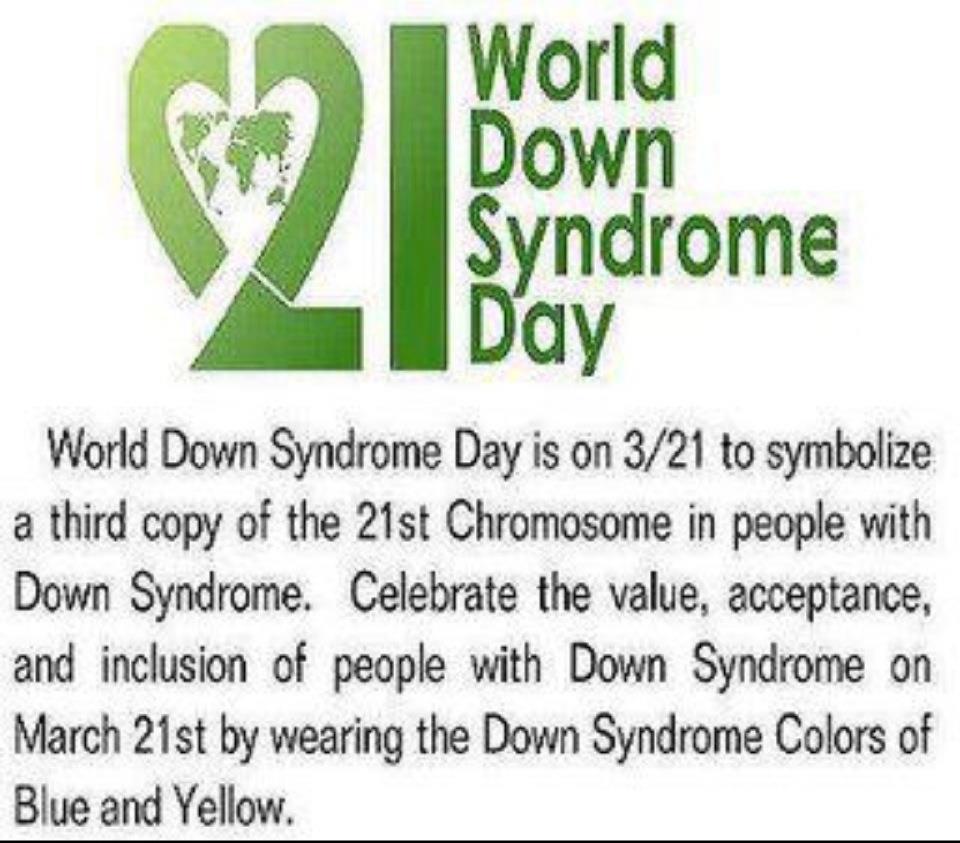
 Lungelo Ndhlovu
ZIMBABWE joined the international community in commemorating World Down’s Syndrome Day on 23 March. Children with Down’s Syndrome often suffer various forms of abuse. Many a time, society stigmatises them because of their condition. Due to their daunting conditions, young children are deprived of their human rights, such as the right to education and freedom of association.
Some are left at home while other kids attend school to seek knowledge. These children also dream of becoming journalists, lawyers, doctors, nurses, teachers and pilots like their peers but due to varying hindrances, difficulties and desperate conditions of life, they do not realise their aspirations.
A case which was reported in the media, which left residents of Hopley Farm in Harare, shell-shocked in 2012, was that of a mother who allegedly locked her son, 12 in a room for several years because he had Down’s Syndrome.
When this case was investigated, the mother said the child had brought untold suffering to her life hence the abuse. Her neighbours said they had lived with the parent for almost five years, but were not aware that she had a son suffering from the condition.
Bonlat Machiha who is the programmes manager for the Zimbabwe Down’s Syndrome Association in Bulawayo and Portia Ziramba who is the fundraising committee leader in the association, told Chronicle in an interview that the objective of this day is to create public awareness on the challenges facing Down syndrome kids as well as fundraise for their upkeep.
“Most people here in Bulawayo don’t really know that Down’s Syndrome people really exist. We want to create awareness to the nation as a whole and we are also looking for funding for the day and for general operational costs as we are keeping some of these people in our rehabilitation centres here in the city,” said Ziramba.
Down’s Syndrome is a lifelong genetic condition that affects many babies.
Children with the condition have varying degrees of learning and language disability. They also mature at a slower pace emotionally, socially and intellectually.
“Basically, for fundraising we are working with the Junior Parliamentarians and the Junior Councillors here in Bulawayo. As an association we would like to appeal to the corporate world to assist us on the long term so that we try and integrate these children back to the society in order for them to lead normal lives,” said Machiha.
According to Encyclopedia Britannica 1979, the name Down’s Syndrome comes from John Langdon Down, an English physician who published the first accurate description of the syndrome in 1866. In 1959 the French geneticist Jerome Lejeune discovered that Down’s Syndrome babies are born with an extra chromosome in their cells, for a total of 47 rather than the normal 46.
Many children with the condition are seen roaming the streets especially of Bulawayo and Harare, some dirty.
Their parents seem to have given up on them and most of these children do not attend school. Physicians always encourage parents with children who have Down’s Syndrome to enrol them in mainstream schools, but in Zimbabwe it is difficult hence many find themselves in schools for the disabled.
A Bulawayo physician, Dr Simba Hara is of the idea that children affected by Down’s Syndrome must attend mainstream schools so that they interact with their peers.
“It is advisable for those parents with children who have the Down’s Syndrome to enrol them in the mainstream schools in order to engage them in social activities with the other children of their age. This also helps these children to be able to take care of themselves, learn interaction skills and complete integration with other kids,” said Dr Hara.
Down’s Syndrome is a condition which can affect anybody at birth and parents should not lose hope on their kids .
This condition, just like any other, can be managed. During the last decades learning techniques used to help children with Down’s Syndrome have improved.
Therapists normally advise parents to include the children in all family activities and also help them through play and early intervention programmes to develop their skills.
Such programmes which should start soon after birth include physiotherapy, speech therapy, and extra personal attention along with emotional support.
The Zimbabwe Down’s Syndrome Association in Bulawayo is also urging families which are faced with such life conditions to come and register with them.
“So far about 30 families are registered with our organisation here in Bulawayo.
“We are appealing to parents of such children to register with us so that we help to integrate and rehabilitate these kids in a professional way.
“Parents should not hide their children because of this condition.
“There is a lot which we do. When they are here we teach them survival skills and we even look for employment for them. We operate a peanut butter making project where they can be engaged,” said Machiha.
In order to minimise the trauma experienced by both parents and children with the syndrome, society should be educated to appreciate the challenges faced by these children so that members of the public can help in whatever way.
Society should know that it is a condition just like any other, but the problem with some societies is that when anything happens they tend to say it is a curse for some wrong-doing or the work of evil spirits.
Feedback: [email protected]


 Online Reporter