Chronicle Editor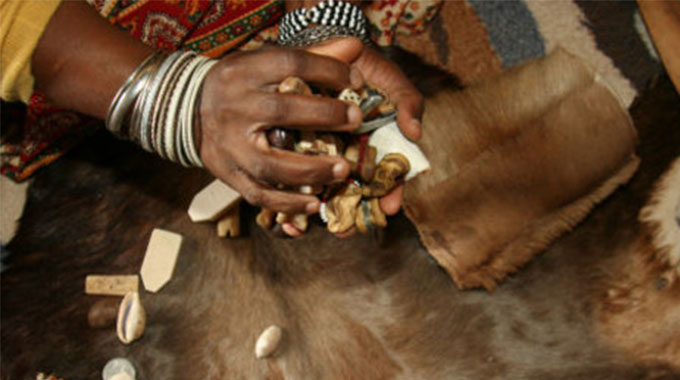
Cultural Heritage with Pathisa Nyathi
AT the end of 1957 David Ngwenya, after obtaining a Standard 6 qualification, Dr David Mhabhinyani Ngwenya left Gampu Primary School, a Government school named after Chief Gampu of EMagogweni. That was the year when the Southern Rhodesia African National Congress (SRANC) was formed under the leadership of Joshua Nkomo. The next move took him to Umzingwane Government Industrial School which had relocated from Tsholotsho (where it was known as Mavela, on account of the incidence of malaria.
When they arrived at Umzingwane in 1958 Hammond was the principal who had moved with the school from Tsholotsho. However, in 1959 he was replaced by MacKosh at a time when the three-year industrial courses were being phased out. On offer were Carpentry and Joinery, Agriculture, Leather craft, Stonemasonry and Bricklaying.
From then on training was to last 4 years whereas previously the courses were done over a period of 3 years. The first two years were devoted to the Elementary Technical Certificate which prepared students for the more advanced Parts 1 and 2.
In addition to the traditional subjects on offer, there was also Geometry and Workshop Calculations. Building was being done together with its allied trades such as roofing, carpentry, and plastering and decoration. The courses were so structured as to enable graduates to supervise construction work.
Examinations were conducted by the Witwatersrand Technical College of South Africa. Graduates from Umzingwane were on par with students’ qualifications offered at the Bulawayo Technical College and Gifford School both of which admitted white students only. Ngwenya remembers Silas Sibanda, Alick Nyathi and Livingstone Mutangadura as some of his college mates. At the end of 1961 they completed the course.
In 1962 Ngwenya found employment with Dunlop, a tyre manufacturing company in Bulawayo. Before joining Dunlop, he had been to Gomo (Harare Hospital) in Harare (now Mbare) which was the popular name for the African hospital. He was admitted and it was during his stay at the hospital that he dreamt he was to leave the institution the following day after the doctor did his morning rounds. He was advised that he would be joining the Rhodesia Railways (now NRZ) where his salary was going to be 64 pounds a month. After 3 months he terminated his contract with Dunlop.
In 1963 he started a course at the Luveve Teacher Training Technical College near Luveve Township. Together with the likes of Alick Nyathi, Livingstone Mutangadura and Silas Sibanda they undertook the two-year course. The idea was that they were going to proceed to the UK for further training.
However, racism got the better of the white students who felt threatened by the qualifications that blacks were going to obtain. White trade unions threw a spanner into the works. Also attending the Luveve College were Khanda P Dube and Kandenga. These two would later head the F2 schools that were going to focus on technical education. Ngwenya got his blue card as a skilled worker in 1988 for the course he undertook at Luveve College. The Class One blue card placed him on par with their white counterparts from the Bulawayo Technical College.
Their hopes were dashed when, through lobbying white members of Parliament, Luveve Teacher Training Technical College was closed down. An academic secondary school replaced the college. At Umzingwane too, the college was disbanded, leaving instead an Agricultural college. A secondary school was established. The last intake was in 1963.
Indeed, from 1963 till 1993 Ngwenya worked for the Rhodesia Railways, starting as fireman and later getting promoted to Engineman Grade 4(on 21 May 1970), Engineman Grade 2(on 21 June 1972), Junior Engineman (from 21 February 1974) and finally, senior Enginemen (from 1 May 1979). On 31 July he left service on voluntary early retirement.
Dr Ngwenya remembers the days when he experienced the liberation war in 1967 when the ANC and Zapu launched a joint incursion under the command of John Dube with Chris Hani as chief of staff. He calls the war the Nyantuwe War which lasted 7 days.
A special train was dispatched from Bulawayo to bring Tiger tanks which were offloaded at Dett (now Dete) A commander with the Rhodesian forces in the company of the station master welcomed the tanks which were duly dispatched to the front after they had been given some briefing and a map of the area.
One member of the combined force took possession of a car from Mopane Hotel while the owner was busy drinking.
He drove it to Lupane where he refuelled it. When the incident came to light, Lupane was phoned. The owner of the car was certain the car, with little fuel, was not going to make it to Bulawayo. Little did he know that the man had already refuelled, and did not pay for the fuel. The Rosenfels in the Marula area were alerted about the incident in order for them to intercept the guerrilla, but it was too late and the man had already abandoned the car in Plumtree and walked into Botswana.
It was that Nyantuwe War which prompted the South African security forces to take a decision to move against insurgents on the Zambezi River rather than trying to engage them on the Limpopo River. More soldiers were also deployed along the Limpopo River just in case some guerrilla insurgents sneaked through.
Ngwenya remembers the harrowing incident they went through after independence in 1983 when dissidents attacked their train. The dissidents opened fire on the train bound for Chicualacuala(Triangle) and incapacitated the train’s braking system. The train was strafed with bullets.
The incident occurred at Adams and the train moved backwards till it got to Hogo near Somabula. Ngwenya, the cook and guard were presumed dead in the attack, yet they had hidden in a caboose as Ngwenya had knocked off from work. Helicopters soon arrived to bring in soldiers to guard the train.
At 06.00 hrs paratroopers went to check the train. When they opened the caboose, they came face to face with the men they had presumed dead. A relief train arrived to take the load in the disabled train. A Mr. House was train driver. The train, after taking the load, went to Somabula where a report was made. The train proceeded to Dabuka Siding outside Gweru.
Meanwhile, arrangements had been made for Ngwenya’s funeral. At his Luveve house, NRZ had brought pots, tents, firewood and mealie-meal. Catering staff were just about to start working. Ngwenya’s wife, MaSigola and his father were already there and were dumbfounded to see him walk in.
Ngwenya’s illness that led to his detention at Gomo was indicative of ancestral spirits that possessed him. Usually, such illnesses are not easy to detect in clinics and hospitals. So Ngwenya took some time off from work to travel to Dakamela in Nkayi where he underwent some spiritual initiation.
That was in 1970 at the time he was with the Railways. What was happening to him then is what he had been shown in a dream in 1960 when he was a student at Umzingwane. He had also been told his future wife would be a MaSigola, a younger sister of ESiphezini chief, Simon Sigola. Ngwenya was learning with MaSigola’s brother’s son. The Sigolas were living at Mbilambobo in the Longfield area. His spiritual initiation lasted a month as he had to go back to work.
In connection with the aim of enhancing his spiritual potency, in 1975 he had a dream to go to Silambo in Chipinge where he put up at Mlambo’s place. In the same year he visited Swaziland to a place called EMbuzini where he met with Dr Mpapane. In 1977 he started to work as a traditional doctor, a profession he is still engaged in to this day.


 Online Reporter