Chronicle Editor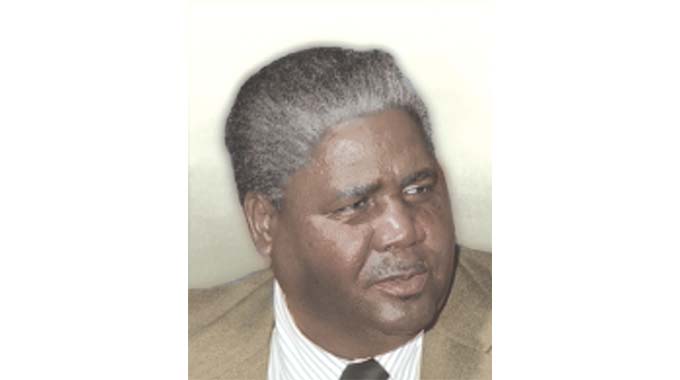
HARARE — Tens of thousands of grief-stricken mourners, including foreign dignitaries thronged the National Heroes’ Acre here to witness the burial of a founding father of Zimbabwe and elder nationalist, Vice-President Joshua Mqabuko Nyongolo Nkomo.
The mourners started gathering at the national shrine as early as 6AM, and had spilled over the terraces onto the surrounding hills and trees by 10AM. They came in buses, lorries, private and public cars and on foot to pay their last respects to one of Africa’s greatest sons and revolutionaries whose influence stretched across the continent.
The crowd, the largest ever to converge at the national shrine, comprised the young and the old, businessmen, farmers, politicians and members of the uniformed forces. It kept on swelling and some people walked from the city centre and from surrounding suburbs of Warren Park and Belvedere.
Traffic police were kept busy as cars of all makes and models slowly rolled along Bulawayo Road, making their way to the national shrine. Buses and other cars had to be diverted to park at the nearby National Sports Stadium.
At the shrine, the mourners comforted themselves with traditional and church songs in honour of Cde Nkomo. In a moving scene, the crowd sang, UNkomo wethu somlandela and Sikhokhele Nkomo which means we will follow you Cde Nkomo and Nkomo lead us.
Popular praise poet Albert Nyathi drew some emotional moments when he took to the stage with members of his Imbongi group to chant praises in honour of “Umdala Wethu”.
A sombre atmosphere then engulfed the shrine as the body of the Vice-President, accompanied by President Mugabe, Mrs Joanna Nkomo, members of the family and senior Government officials arrived at about 11.30AM.
The body, inside the white and gold-coated casket, draped in the national flag, was brought on an army gun carriage from Stodart Hall in Mbare, where it lay in State in the morning.
The casket was immediately carried by members of the Zimbabwe National Army and placed in front of the Tomb of the Unknown Soldier, where it was sprinkled with holy water and incense by Catholic Archbishop Patrick Chakaipa.
The singing and performances by church choirs and traditional groups interspersed the speeches by President Mugabe and Mr Edward Nkomo, young brother of the late Vice-President.
There was a fly past by three Air Force of Zimbabwe jets and a 19-gun Vice-Presidential salute was fired, as the casket containing Cde Nkomo’s body was lowered into the grave at 2.10PM.
This was followed by the laying of wreaths by a representative of the Nkomo family, Cde Mugabe, Vice-President Muzenda, the chairman of Zanu-PF Cde Joseph Msika, Chief Justice Gubbay, Speaker of Parliament Cde Cyril Ndebele, three service chiefs, Dean of the diplomatic corps Cde Ali Halimeh and representatives of the Zanu-PF women’s and youth leagues and war veterans.
. . . Body viewing: Stodart Hall packed to the rafters
3km queue to see Dr Nkomo’s body
The last leg of Cde Nkomo’s journey to his final resting place — from Stodart Hall in Mbare, where his body was viewed for the last time to the National Heroes Acre — was one befitting a hero of the late Vice-President’s stature.
As the crowd of many thousands descended at Stodart Hall in the morning, many youths had to climb up the frames of tower lights and trees, which became handy as vantage points to get the last glimpse of Cde Nkomo’s cortege.

On arrival of the gun carriage carrying Cde Nkomo’s coffin, women ululated and the rest of the crowd’s singing grew louder.
As the pallbearers slowly made their way into the hall, a choir perched on the gallery at the back of the hall set the tone of the occasion by breaking into song Huya Mweya Mutsvene umuperekedze (Come Holy Spirit and guide him).
Mourners’ emotions were evoked even more as another relevant song, Tionane Mwari achida (We shall meet again, God willing) followed.
As officials were contemplating stopping the viewing period, the crowd sensing this potential development, immediately countered by singing — Tipeyiwo nguva yekuona gamba redu (Give us time to mourn our hero).
The officials obliged and allowed the viewing to continue for an extra hour and considerably delayed the day’s proceedings.
Even at the end of the extended time, there was no hope of satisfying everyone. The queue snaked out of Stodart Hall for metres before losing itself into the crowd that stretched for 3km into Beatrice Road.
Besides the tens of thousands of Zimbabweans, foreign dignitaries also came to pay their requests.
They included Nigerian Vice-President Atiku Abubakar; Tanzanian Vice-President Omar Juma; South African Deputy President Jacob Zuma; Mozambiquan Prime Minister Mr Pascal Mocumbi; Zambian Minister of Education and vice-chairman of the ruling Movement for Multiparty Democracy, Brigadier Godfrey Miyanda and his country’s deputy Minister of Foreign Affairs, Mr V Koyope, Botswana’s Minister of Education, Dr C Chiyepe, Palestine Liberation Organisation executive committee member Dr E Jarque, US Deputy Assistant Secretary for African Affairs, Mr Witney Schneidman and the British Minister of State for the Foreign and Commonwealth Office, Mr Tony Lloyd.
. . . Hundreds trek back from South Africa to attend burial
Meanwhile, hundreds of Zimbabweans residing in South Africa streamed into the country through the Beitbridge border post over the weekend to attend the funeral and burial of Vice-President Nkomo.
The border post became unusually busy particularly on Saturday (July 3, 1999) as the hundreds of Zimbabweans drove into the country to pay their last respects to the father of Zimbabwean politics.
“We are going to attend Dr Nkomo’s funeral; and there have been gatherings of people back in Johannesburg,” said Mr Thulani Ncube of Bulawayo, who stays in Johannesburg.
In separate interviews many Zimbabweans from South Africa said it was vital to give a decent send-off to the father of the nation who dedicated the greater part of his life to the liberation struggle of this country.
“We must bid him farewell; he did much for us and even if we are not working here, his influence in our lives will always be remembered,” said Mr Ncube.
A group of war veterans sang revolutionary songs at the Ha-Terry Shopping Centre on Saturday evening in honour of Dr Nkomo.
In Bulawayo the streets were deserted as people were glued on their television sets at home to watch a live broadcast of the burial of Dr Nkomo.
. . . Bulawayo experiences a drizzle, which residents link to Dr Nkomo’s burial
The drizzling weather in Bulawayo also kept indoors some people who had planned to march in the streets of the city early in the morning, singing praise songs for Dr Nkomo.
However, in interviews, some city residents said there was a link between the drizzle and the Vice-President’s burial.
Said Mr Mlibazisi Ncube from Nkulumane suburb, “I feel there is a relationship between the weather today and Umdala’s (Dr Nkomo’s) burial.
“When great men die, amazing things happen,” he said.
Another resident, Mr Michal Marange of Entumbane, said he was convinced that there was a link between the change in weather and the burial of the late nationalist. How else can you explain the fact that this is the first time we have had rains this winter?” he asked.


 Online Reporter