Online Reporter
Zimbabwe’s efforts to formalise artisanal and small-scale mining have entered a critical phase, with Government calling for the establishment of a National ASM Formalisation Task Force to coordinate reforms, strengthen accountability and accelerate the integration of informal miners into the mainstream economy.
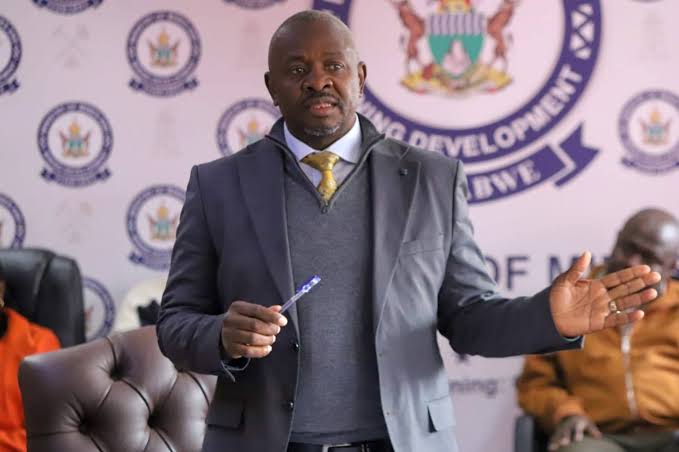
Secretary for Mines and Mining Development, Dr Thomas Utete Wushe, said the country could no longer afford to treat small-scale mining formalisation as a routine administrative exercise, stressing that meaningful transformation required coordinated institutional action, practical interventions and clearly defined implementation timelines.
Delivering his keynote address at the National Artisanal and Small-Scale Mining Formalisation Workshop held at Cresta, Msasa, on Monday, Dr Wushe challenged stakeholders to develop a comprehensive national programme to address structural challenges facing one of Zimbabwe’s most important economic sectors.
The workshop was held under the theme: “Transforming Artisanal and Small-Scale Mining: A National Dialogue on Formalisation, Sustainability and Growth.”
“I did not come here today to simply open a dialogue; I am here to demand a blueprint for action,” Dr Wushe said.
He said artisanal and small-scale mining accounted for more than 70 percent of Zimbabwe’s gold production and provided livelihoods for an estimated one million people.
However, approximately 85 percent of artisanal and small-scale miners are estimated to operate outside the formal system, exposing the sector to mineral leakages, environmental degradation, unsafe mining practices and preventable loss of life.
Dr Wushe said the situation demanded a fundamental shift in the country’s approach to mining sector development.
“We cannot build a sustainable legacy on an informal foundation,” he said.
Central to the proposed reforms is the establishment of a National ASM Formalisation Task Force, which would coordinate implementation, monitor progress and ensure responsible institutions deliver measurable outcomes.
He also called for a National ASM Formalisation Programme, supported by a comprehensive census and a coordinated database of artisanal and small-scale miners.
The database would provide Government with reliable information to design targeted interventions, improve planning and support evidence-based policy decisions.
Dr Wushe acknowledged that administrative procedures, regulatory complexities and the high costs of obtaining mining rights continued to discourage many miners from entering the formal economy.
He challenged regulatory authorities to examine these barriers and develop a system that makes formalisation accessible, affordable and commercially beneficial.
He also emphasised the need to strengthen formal mineral marketing structures through accessible buying centres, transparent pricing, efficient payment systems and targeted incentives.
Institutions including Fidelity Gold Refinery, the Minerals Marketing Corporation of Zimbabwe and the Ministry of Finance were identified as key players in integrating miners into formal markets.
Access to affordable financing, appropriate mining equipment and technical support was also identified as essential to transforming small-scale mining into a productive, safe and sustainable industry.
Dr Wushe said economic growth had to be accompanied by environmental responsibility and improved occupational health and safety standards.
He called for stronger technical training, improved mine planning and greater compliance with environmental rehabilitation requirements.
He stressed that the transformation agenda could not be delivered by the Ministry of Mines and Mining Development alone, but required a whole-of-Government approach involving the private sector, civil society and mining communities.
As Zimbabwe advances its development ambitions under Vision 2030, formalising artisanal and small-scale mining is increasingly important to ensuring that mineral resources translate into inclusive economic opportunities, sustainable livelihoods and national prosperity.
Dr Wushe challenged workshop delegates to ensure their deliberations produced practical resolutions identifying responsible institutions, required resources and implementation deadlines.
He said the success of the national dialogue would ultimately be judged not by the speeches delivered, but by tangible changes in Zimbabwe’s mining communities.