admin
admin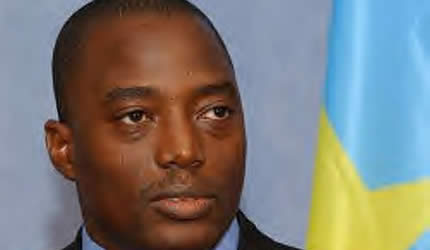
of a wider conflict and humanitarian catastrophe.
An M23 rebel leader insisted that the fighters would not withdraw from Goma, which the group captured easily on Tuesday despite the presence of UN peacekeepers, unless President Joseph Kabila agrees to peace talks.
“There must first be a dialogue with President Kabila,” Jean-Marie Runiga Lugerero told AFP by telephone. “There must be dialogue and solutions before anything takes place.”
“The M23 has specific problems and demands but there are also broader problems with democracy in the DRC on social issues, governance and human rights.”
International alarm about the unrest in the war-blighted central African nation has grown since the mainly ethnic Tutsi rebels on Tuesday overran Goma, the main city in the mineral-rich North Kivu region on the border with Rwanda and Uganda.
An AFP photographer said fighting flared around the town of Sake yesterday, a day after it was captured by the advancing rebels, who have threatened to march all the way to the capital Kinshasa, about 1 500 kilometres away.
Explosions from shells and mortar bombs could be heard as plumes of smoke billowed into the sky over Sake, which lies about 30km northeast of Goma.
The M23 rebels remain defiant despite the international concern.
“We are not going to stop at Goma, we will go as far as Bukavu, Kisangani and Kinshasa,” M23 spokesman Vianney Kazarama told a crowd at a stadium in the lakeside city on Wednesday, also demanding that Kabila — who won a disputed election late last year — stand down.
Kabila and his rival Rwandan counterpart Paul Kagame have called for the M23 to immediately retreat from Goma, and are due to hold more talks on the cris at a regional summit in Uganda tomorrow.
Kagame and President Yoweri Museveni of Uganda also “made it clear that even if there were legitimate grievances by the mutinying group known as M23, they cannot accept the expansion of this war”, said a joint statement issued after Wednesday’s talks in Kampala.
The United Nations accused the rebels of carrying out summary executions in their sweep across the east and again charged that both Rwanda and Uganda were backing the group, whose chain of command is believed to include wanted war crimes suspect Bosco Ntaganda. Rwanda and Uganda deny the charges.
The United States also renewed calls for M23 to halt their latest offensive and “permanently disband” and condemned all external support and military aid for the rebels in violation of a UN arms embargo.
UN envoy Roger Meece said the rebels had carried out “summary executions” of local leaders in their advance on Goma and were trying to set up “a formal administrative or governing structure” in the region.
“The M23 forces are well provisioned and well supplied with uniforms and a variety of arms and ammunitions, many of which have clearly not come from existing FARDC (government army) stocks,” he told the Security Council.
A Council resolution Tuesday called for wider sanctions against M23 leaders and condemned all external support for the rebels.
The United Nations and other humanitarian groups have reported killings, abductions, looting and extortion of civilians and fears of a humanitarian catastrophe were growing as electricity and water supplies dried up.
UN chief Ban Ki-moon issued a new condemnation of “grave” human rights violations by the fighters, although retreating government troops have themselves been accused of looting.
DR Congo Prime Minister Augustin Matata Ponyio said Kinshasa had “lost the battle but not the war”, and insisted the country’s territorial integrity was “non-negotiable”.
The UN defended its peacekeepers after Goma fell, with a spokesman saying a battle for the city would have endangered civilians.
There are around 1 500 “quick reaction” peacekeepers in the city among around 6 700 troops in North Kivu province.
Rebels have been blamed for hundreds of deaths since the M23 mutinied in April after the failure of a 2009 peace deal that integrated them into the regular army. — AFP.


 Online Reporter