Chronicle Editor
Varaidzo Mambende, mambendevaraidzo @gmail.com
GRADUATES from polytechnics and colleges across the country have been challenged to leverage the educational opportunities available and use their expertise to create industries that will propel the country to upper-middle-income status by 2030.
This call was made by Higher and Tertiary Education, Innovation, Science, and Technology Development Minister, Professor Amon Murwira, at the 33rd Gweru Polytechnic graduation ceremony yesterday.
In a speech delivered on his behalf by the ministry’s Permanent Secretary, Professor Fanuel Tagwira, Prof Murwira said the country’s Heritage-Based Education 5.0 model is crucial in addressing the country’s socio-economic challenges.
“It is crucial to acknowledge that our education 5.0 model fosters innovation, science and technology development. It acts as a catalyst that harnesses our heritage to fulfil our human needs.
“As Government, we encourage our graduates to capitalise on the vast educational opportunities available and channel their expertise towards creating industries that will ultimately propel our nation to an upper-middle-income status by 2030,” he said.
The Government amended the Manpower Planning and Development Act (Chapter 28:02), making it obligatory for all higher and tertiary education institutions to implement innovation and industrialisation programmes.
Prof Murwira stressed that the country’s polytechnics are integral to providing the technical and vocational skills necessary for societal transformation, aligning with the Second Republic’s adoption of Education 5.0 in 2019.
This approach, which builds on the previous Education 3.0 framework, introduces a focus on innovation and industrialisation to produce goods and services that meet local needs.
“For a society to lead a decent and dignified life in any country, we must have adequate supplies of food, water, shelter, health facilities and a supportive knowledge and skills infrastructure to ensure that the aforementioned needs are met,” said Prof Murwira.
“In this context, a nation must focus on the development of knowledge and skills, essential for providing the necessary conditions for a decent and dignified life for its people. Our polytechnics are essential in providing the technical and vocational capabilities needed to transform society.”
Under the Second Republic, the country’s education system has been revamped to produce goods and services that cater to the needs of Zimbabweans.
This transition followed Education 3.0, which solely focused on teaching, research and community service, but was silent on innovation and industrialisation.
“Hence, the primary objective of the Second Republic is to deliver heritage-based education, concentrating on cultivating graduates with the requisite knowledge, skills and attitudes to generate goods and services that meet the needs of Zimbabweans,” said Prof Murwira.
The Government has since mandated all higher and tertiary institutions to implement heritage-based education 5.0 as a strategic move to bridge the skills gap.
Prof Murwira said the Government is executing the Graduate Employment Creation and Development Programme, which is rooted in Heritage-Based Education 5.0 and aimed at spurring industrialisation and modernisation as the nation progresses towards achieving Vision 2030.
“Beneficiaries of the programme are establishing private companies and schools and we are prepared to support you in this endeavour as you establish companies that you own as graduates,” he said.
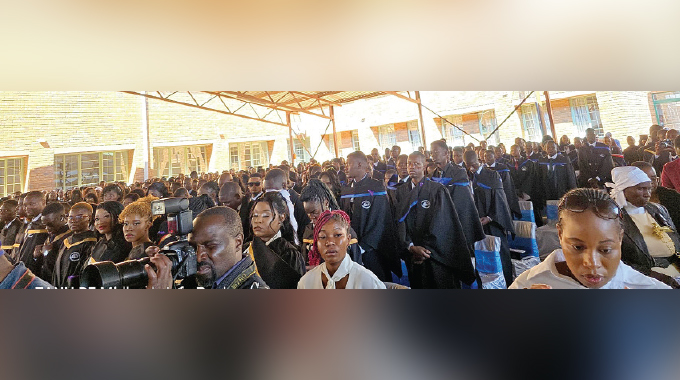
This year’s graduation was held under the theme ‘Transforming Society through Inclusive Technical and Vocational Education’.
Out of the 537 graduates conferred with higher national diplomas and national certificates, 230 were males and 306 were females.
Gweru Polytechnic has undertaken several projects, including the establishment of a clothing factory, a college clinic, a registered automotive company and an innovation incubation hub.
Additionally, negotiations are underway with the Chirumhanzu Rural District Council to further expand the college’s initiatives.
Gweru Polytechnic principal, Mr Washington Chandiwana, reaffirmed the institution’s commitment to skills development and entrepreneurship.
“Skills development is our core focus, and our theme for this year underscores our commitment to promoting inclusive and equitable quality education, fostering lifelong learning opportunities for all, equipping our students to contribute to the development of our nation,” he said.


 Online Reporter