Sikhumbuzo Moyo [email protected]
THE Drivers Association of Zimbabwe has petitioned Parliament to enact legislation that would transform driving from an occupation into a regulated profession, with minimum educational and competency requirements for those seeking to become professional drivers.
The association wants the proposed law to establish a professional body mandated to set entry qualifications, ethical and competency standards, as well as disciplinary measures for drivers who fail to meet prescribed standards.
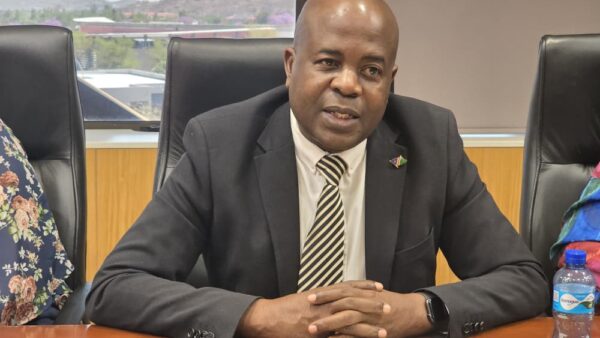
The petition, signed by association president Mr Nicholas Mabwe, a former Zimbabwe Republic Police officer, was delivered to Parliament Clerk Mr Kennedy Chokuda last week.
Speaker of the National Assembly Advocate Jacob Mudenda told legislators on Tuesday that the petition had been referred to the Portfolio Committee on Transport and Infrastructural Development for consideration.

“I have to inform the House that Parliament received the following petitions: a petition from the Drivers’ Association of Zimbabwe, beseeching Parliament to enact legislation that professionalises the driving occupation and transforms it into a profession with a professional association mandated by law to set entry educational qualifications.
“The petition has since been referred to the Portfolio Committee on Transport and Infrastructural Development,” said Adv Mudenda.
Mr Mabwe argues that the absence of a legally recognised professional body for drivers has contributed to weaknesses in the transport sector, including poor driving standards and road safety challenges.
He said the association had 15 award-winning drivers drawn from reputable companies and organisations, with some having won the Driver of the Year Competition organised by the Traffic Safety Council of Zimbabwe.
Others, he said, had represented Zimbabwe at the World Drivers Competition organised by Scania Group in South Africa in 2012, Poland in 2014 and Finland in 2016.
Mr Mabwe, who spent 20 years in the ZRP, including six years in the Traffic Branch, said his experience on the roads had prompted him to seek long-term solutions to the country’s road safety challenges.
“Whilst there, and noticing the challenges we were facing as an organisation in taming the traffic jungle in the transport industry and performing our duties as enshrined in terms of Section 219(1), paragraphs (a) and (c), of the Constitution of Zimbabwe Amendment (No. 20) Act, 2013 — that is, detecting, investigating and preventing crime and protecting and securing the lives and property of the people. I then researched and learned the following while trying to find a lasting solution to taming the traffic jungle and road carnage in the transport industry,” said Mr Mabwe.
Mr Mabwe said his research had led him to conclude that driving was not sufficiently regulated as a profession in Zimbabwe.
He said unlike professions such as medicine and law, driving did not have a statutory regulatory body responsible for establishing minimum educational qualifications, professional ethics, competency requirements and disciplinary procedures.
According to Mr Mabwe, professionalising driving would strengthen accountability among motorists, particularly those employed in the public transport, haulage and logistics sectors.
He linked the absence of professional regulation to a range of challenges affecting the transport industry, including road crashes, drink-driving, theft, assault, smuggling and other criminal activities.
He argued that professional drivers should undergo specialised training and adhere to a clearly defined code of conduct throughout their careers.
“Traditionally, the world over, the responsibility for road safety is placed on the individual road user. It tends to focus on encouraging good behaviour by road users through licensing, training, education, publicity and enforcement.
“It is not necessarily the number of law enforcement officers on the streets that brings about traffic law enforcement, but most traffic management issues can be dealt with in the background,” said Mr Mabwe.
He said the only cost-effective, efficient and permanent solution to taming the “traffic jungle” in the transport industry was for driving to receive the recognition it deserves and to become a profession, just as medicine and law had become recognised professions.
“As the president of the Association, I now write this petition in terms of Section 149(1) of the Constitution of Zimbabwe Amendment (No. 20) Act, 2013, and pray that Parliament enact legislation that professionalises the driving occupation and transforms it into a profession with a professional association mandated by law to set entry educational qualifications, ethical standards, competency standards and disciplinary measures for those who fail to meet those standards,” said Mr Mabwe.
Under the proposal, all professional drivers in the transport industry would be required to register with the proposed professional association, while employers would be expected to hire only drivers who meet prescribed competency and ethical requirements.
The petition comes as authorities continue to grapple with road safety challenges, with speeding, reckless driving, dangerous overtaking, drink-driving and other forms of human error remaining major contributors to road crashes.
The proposal will now be considered by the Parliamentary portfolio committee, which is expected to engage relevant stakeholders before making recommendations to the House.