Chronicle Editor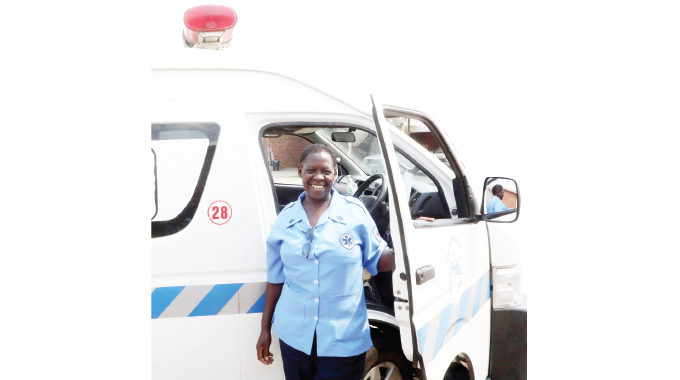
Nqobile Tshili, [email protected]
AFTER dedicating 35 years to Bulawayo, Sibusiso Mdlongwa, believed to be the first female ambulance driver in Zimbabwe, has retired. Her remarkable journey began in 1988 when she joined the council as a cleaner at Thorngrove Infectious Diseases Hospital. Over the years, she worked her way up, eventually becoming a nurse aide at Mzilikazi Clinic.
What sets Mdlongwa’s story apart is the inspiring path she chose. While commuting to work, she encountered a female bus driver in a predominantly male-dominated field, and this encounter sparked a desire within her to pursue a career in driving. She obtained a Class 2 driver’s licence, initially with the intention of joining the public transport sector as a bus driver.
However, fate had other plans for her. When vacancies opened in the City of Bulawayo’s ambulance units, she was qualified for the position but hesitant to apply because she believed such jobs were reserved for men. With encouragement from a colleague, she took the leap and applied, ultimately landing the job in 1994.
“After the vacancies had opened I told one of the sisters at Mzilikazi Clinic that I was interested in the job. But at the same time I was skeptical, I said I’m a woman and they want men in this job. I didn’t think it was possible for a woman to get such a job but she encouraged me to apply then I went for interviews and I got selected for the job,” said Mdlongwa.
Mdlongwa got the job and soon realised that being an emergency service driver meant much more than just driving an ambulance; it was about saving lives. This role required her to drive at high speeds while ensuring the safe arrival of her patients at medical facilities.
“It was a challenge, you needed to drive fast cars but before I started operationally, we were first taught how to drive an emergency car. We were also taught how to treat patients. It was a challenge because I was the first woman in that position and my male colleagues were not used to working with a woman. They were comfortable in their space and would discuss any macho topic as if I was not there,” she said.
“I even felt embarrassed during their discussions, it took them some time to appreciate that there was a woman within their environment. But they were respectful, made adjustments to accommodate me and made me comfortable as I worked.”
What drove Mdlongwa throughout her career was the fulfilment of knowing she had a direct hand in saving lives. The feedback from patients she transported to the hospital was a constant reminder of the importance of her work.
As she bids farewell to her career, Mdlongwa takes pride in the fact that her success opened doors for other women in the emergency services field. Today, there are many women following in her footsteps, a testament to her character and determination.
“Now there are so many women who are doing the same job. It gives me great pleasure and satisfaction to see that other women have come after me. It somehow speaks to my character, how I presented myself, this could be the reason that inspired other women to join the profession. If I had quit, I would have shut the door for other women but I carried myself very well and I loved my job,” said Mdlongwa.
Her message to women aspiring to enter the field is clear: never let your gender limit your dreams. Self-belief, discipline, and unwavering principles are the keys to success in male-dominated fields.
“Also, they have to be principled even on social issues, men will come after you and you have to be disciplined,” said Mdlongwa.
While retiring from the council, Mdlongwa has no plans to be idle.
“I’m not going home to be idle. There is a lot of productivity that I will be involved in. We have a plot, I will be involved in farming. There is also a programme that my child is running so I will be involved there,” she said.
Mdlongwa’s colleague and Ambulance Supervisor Airdrone Ncube said working with her inspired other women to take up the job.
“It brought about gender balance in areas where some jobs were dominated by males yet the country’s policy says we are all equal. We have seen even ladies going as far as holding guns in the army so what will make them fail in the ambulance services? She was the first if I’m not mistaken in the country but here in Bulawayo she was indeed the first. Now we have more women doing the same job that is why I’m saying it was an inspiration to others,” said Ncube.



 Online Reporter