malvernmugadzikwa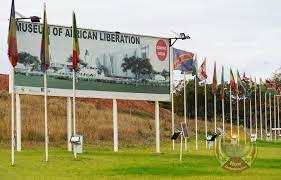
Charles Mavhunga
KWAME Nkrumah’s vision was for a United States of Africa that had a visible brand.
It seems the advocacy for a united Africa-inspired Pan-African think tank, the Institute of African Knowledge (INSTAK), to line up epic projects in the tourism industry, namely:
The Heritage Village, which is meant to showcase the cultural values and cuisine of all African countries (55).
The Museum of African Liberation that accommodates Africa’s liberation artefacts from all African countries under one roof. The museum is meant to enable Africans and the rest of the world to learn about the history and struggles for freedom, human dignity and human rights in Africa.
The Africa Fact Book that presents the continent’s true colours and addresses some of the major myths that European and American historians and writers have crafted to destroy the visibility and dignity of the African brand.
The Liberation City that represents the legacy project that includes the Museum of African Liberation, the Heritage Village, a five-star hotel, a world-class shopping mall, a theme park, a service station and presidential villas. The Liberation City will be connected to the National Heroes Acre via a cable car.
INSTAK’s advocacy and drive to advance the visibility of Africa as a global brand through tourism is noble and highly commendable.
Africa is a continent that suffered from heavy historical distortions that are traceable to slavery, colonialism, currency manipulation, forged International Monetary Fund Economic Structural Adjustment Programmes, as well as quisling opposition political parties targeting to destroy the vision of liberation movements that brought independence to African countries.
INSTAK’s projects are, therefore, meant to integrate the common interests of African countries to form a unified force that promotes innovations, originality of ideas and globalisation.
The push for Africa to become united was championed by people such as Henry Sylvester Williams, Marcus Garvey, George Padmore and Peter Abrahams from the diaspora.
In Africa, the chief architects are Kwame Nkrumah, Julius Nyerere, Jomo Kenyatta, Sekou Toure and Hebert Chitepo, among others.
Nkrumah was arguably in a class of his own as a pillar of Africa’s struggle to articulate the vision of making the continent a visible brand.
He wanted Africa to be united and advocated the formation of the Organisation of African Unity (OAU).
On May 25, 1963, the continental body was born in Addis Ababa, Ethiopia, and 32 African states that had achieved independence overwhelmingly supported it.
The OAU became instrumental in overthrowing colonialism.
South Africa, Namibia and Zimbabwe are among countries that earned their independence through support from the OAU.
Its successor, the African Union (AU), was officially launched in 2002 and now represents all the 55 African states.
Nkrumah spearheaded the transformation of Ghana from a colonial state (Gold Coast of Britain) into modern-day Ghana.
The West African state’s independence motivated liberation movements throughout Africa.
Nkrumah used every opportunity to articulate the need for Africa to become politically and economically independent through unity of purpose.
INSTAK’s plan to globalise African knowledge through tourism to protect the continental brand feeds off this noble cause.
In the book “Kemetic History of Africa”, Dr Cheikh Anah Diop, a Senegalese historian and politician, claims the ancient name of Africa was Alkebul-an, which means “mother of mankind” or “Garden of Eden”.
The colonisation and apartheid projects were, therefore, meant to destroy the Garden of Eden for Africans through erasing the African identity.
Overall, Nkrumah’s advocacy for Africa to become united was, therefore, an inspirational force to help Africans realise their potential to become relevant and globalised.
He also targeted the total liberation of Africa in politics, economics, and social and technological systems, among other areas.
The whole vision was based on the concept of the African personality and the non-racial African identity.
“We need the strength of our combined numbers and resources to protect ourselves from the very positive dangers of returning colonialism in disguised forms,” Nkrumah once said.
“We need it to combat the entrenched forces dividing our continent and still holding back millions of our brothers and sisters. We need it to secure total African liberation . . . At present most of the independent states are moving in directions which expose us to dangers of imperialism and neo-colonialism.”
INSTAK has, however, walked the talk to advance the cause of Africa to become innovative.
Its projects in tourism are epic in nature to inspire African countries to become united in protecting the continent.
The colonial project is alive and kicking and, therefore, African countries must become “Nkrumahrised” (united) to protect themselves from the dangers of falling prey to foreign interventions, foreign interference and foreign subversions.
Charles Mavhunga co-authored textbooks in business enterprising skills and is currently studying for a PhD in Management at Bindura University of Science Education. He can be contacted at: [email protected]/ Cell: 0772989816



 Online Reporter