

 admin
admin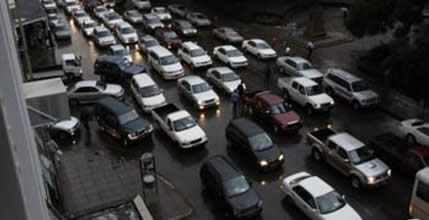
Condition One – Light
A driver is always affected by natural or artificial light available at a given time. This affects the ability to see or to be seen. You can have too much light or too little.
If a driver fails to adjust to the light conditions, he/she can be tricked into an accident. The adverse light conditions that can trick one into an accident are sun-glare, dusk and dawn, poor headlights and over driving headlights at night.
Overdriving headlights is travelling too fast for light conditions.
The average headlight illuminates the road ahead about 110 metres.
That is the reason why you should never travel at a speed greater than that which would allow you to bring your vehicle to a stop within 95 metres.
The glare of oncoming lights might also cause trouble. The human eye is said to take about seven seconds to recover from headlight glare.
If you are travelling, for example at 100km/hour, you would travel 194 metres in those seven seconds.
A driver can protect himself/herself from headlight glare by not staring into headlights to the left edgeway of the road. Coloured glasses cannot help protect against glare of headlights.
They actually reduce visibility and should never be worn at night.
There is need to increase efficiency of headlights by making sure the lenses are clean. This might as well be done for all lights – brake lights, tail lights and indicators.
Sun glare is another daytime light condition that might cause a driver to lose control. Sun glare conditions affect drivers in the morning and in the afternoon. Bright sunlight on wet road can cause vision problems after a prolonged period of driving.
Condition Two – Weather
Weather conditions also affect the ability to see and to be seen. The conditions can make roads slippery.
Resultantly, the driver’s ability to start, stop and turn is adversely affected.
Rain, mist, high wind and fog are examples of adverse weather conditions.
Adverse weather conditions can be so severe as to make it impossible to see the edge of the road, lane markings on the road and even traffic signs beside the road: Tyre hydroplaning can also occur under adverse weather conditions.
It results from a combination of factors which include a wet road surface, the tyre condition and speed of the vehicle.
The defensive measure to take against adverse weather conditions is to slow down in time.
A driver should get the feel of the road and when necessary turn on headlights even during daytime.
It also advisable that if weather conditions are so severe, a driver should get off the road completely and wait until they improve.
Condition Three – Road Condition
A driver must always adjust to the road condition. This involves the way a road or street was built, how it twists and turns, how wide it is and what kind of surface.
Even maximum speed limits differ from one road surface to another.
For example, in Zimbabwe, public service vehicles have maximum speeds of 80km/hr on wide tar roads and 60km/hr on other roads. Adverse road conditions include curves, hills, and the width of the road, potholes, wet or slippery roads.
If one drives too fast for the condition of the road, he/she can lose control of the vehicle.
This is more pronounced when a driver takes a sharp curve at too high a speed. Even on a straight road, our speed could be too fast for the road and cause us to lose control of the vehicle.
Alternate patches of dry and wet road or a rough bumpy road can throw a vehicle out of control.
A driver must make allowances for various road conditions to avoid being tricked into an accident.
l The writer, Ernest Muchena, can be contacted for feedback on 0772 110 898
or email [email protected]/[email protected].



 Online Reporter