Online Reporter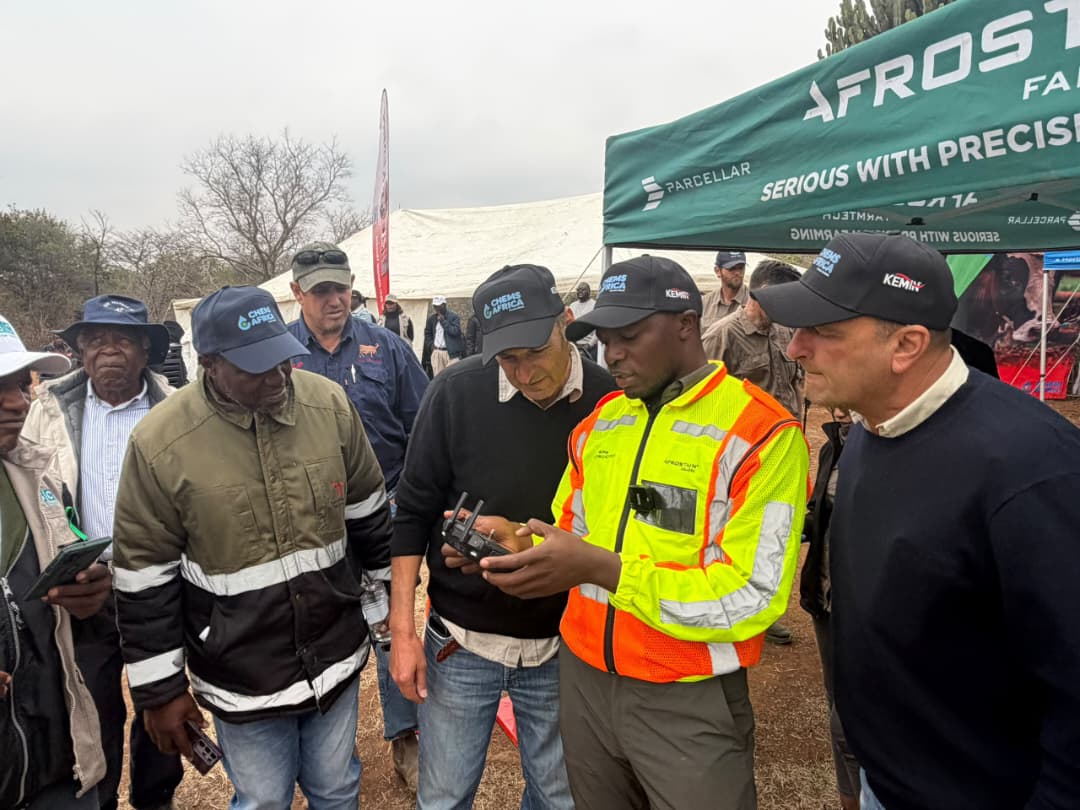
Judith Phiri [email protected]
DRONE technology is transforming Zimbabwe’s agriculture sector by providing farmers with faster and more precise ways of monitoring crops, managing pests and diseases and improving farm productivity amid growing pressure to boost food production.
In the livestock sector, the technology has emerged as a game changer, helping farmers monitor herds, track animal movements, detect straying livestock and assess grazing areas more efficiently, while reducing the time and labour required for traditional livestock management.
This was revealed and demonstrated at the Lumpy Skin Disease Field Day and Vaccine Launch held at the Pilossof Ruvale Brahmans, Matopos Research Station Farm, run by the Pilossof family in Matabeleland South on Saturday.
Speaking at the event, Afrostain Farmtech quality manager Mr Onward Marumura said drone technology could help farmers reduce costs per hectare.
“As an operator, we do commercialisation of drone operations. In this case, we have farmers who are doing cropping, and we do crop spraying. We no longer want you to use tractors; let them be used for other things that they are best at, like your ploughing and planting.
“For spraying and fertiliser spreading, we are very good at that using drones. We save a lot of money per hectare because we are no longer damaging those plants through wheel tracks,” he said.
“We are just doing your spreading above the crop. If you want to do it two metres above the crop, three metres above the crop, you will not damage the crop. Not only that, before you do the spraying, you would want to do the scouting.”
Mr Marumura said the company had drones capable of monitoring crops and providing farmers with information on crop performance, including identifying areas affected by pests and those requiring more fertiliser.
He said in the livestock sector, drones could be used to spray and monitor pastures while tracking performance.
“Most importantly, you do animal tracking using drones. We have different models that are there that are used for that. You can even use them for security and surveillance as there is need to safeguard your animals.
“Those that are in a paddock or maybe in a kraal, you can actually have your drone move around a certain area, so that your eyes are focused on that point and nobody will tamper with your animals,” he said.
Mr Marumura said drones could also assist farmers with land-use planning by using coordinates to monitor activities across their farms, with precision playing a key role.
He said drones could cover farmland 20 to 30 times faster than manual labour, completing in minutes what would take human crews’ hours or days.
The technology could also be used to deliver medicine to remote or traffic-congested areas, he added.