

 happiness Chikwanha
 Elita Chikwati recently in Chipendeke, Manicaland —
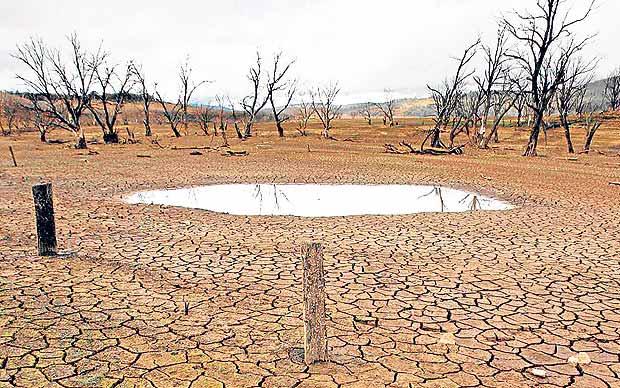
The El Nino induced drought coupled with siltation of rivers has dealt the Chipendeke community, south of Mutare in Zimbabwe’s Manicaland Province, a huge blow.
People in this part of Zimbabwe no longer enjoy the benefits of a mini-hydro power generation project which was launched in 2014.
The river which used to supply water for the project has since dried up and people hope that the forecast normal to above normal rains will come early to revive their source of livelihood.
The power generation project, which is a community initiative sponsored by a Non-Governmental organisation, Practical Action, was designed to improve the lives of people living in rural areas.
The aim of the project was to improve access to modern energy services and increase uptake of renewable energy technologies.
Soon after completion of the project in Chipendeke, the remote area was upgraded to an “urban status”.
Families installed electricity in their homes and had access to lighting while others ventured into income generating projects.
The intervention was more felt on the health delivery system as the Chipendeke Clinic, which used to rely on lamps for lighting, was electrified. This improved the lives of women who used to walk several kilometres to access health facilities especially when giving birth.
Before the project, the clinic could not attend to emergencies at night and health delivery was compromised in the area. Chipendeke Clinic nurse, Mrs Mildred Zengeni said pregnant women no longer had to travel long distances to deliver.
“The project has also seen children getting vaccinations timely unlike before. Mothers had to wait for long periods before they could have their babies vaccinated because we did not have refrigerators to keep the vaccines.
“For BCG, we had to order from nearby health centres but now we can vaccinate the baby soon after birth. The clinic can also now attend to emergencies such as snake bites and other illnesses during the evening,” she said.
Members of the Chipendeke community took advantage of the availability of the power to engage into income generating projects.
Chipendeke Mini-hydro scheme vice chairperson, Mrs Lydia Njaigira said she started selling fish while other business people opened bottle stores and others engaged in milling to earn extra income.
“We can now sell perishables without incurring losses because we have power for refrigeration. Life had improved in this area but due to the drought and stream bank cultivation which has led to siltation of the river, we no longer can generate enough power.
“We are anxiously waiting for the rains this season since the weather experts forecast normal to above normal rains. Climate change has dealt us a blow but I hope the rains will be sufficient to revive the project,” she said.
Another beneficiary, Mrs Netsai Kanyarimwe said the project brought fresh life to the village as people now had radios and televisions in their homes.
“We are now up to date with events. Now we can watch televisions and listen to news. We also have lights in our homes and this has made life easier.
“Some people have bought gas stoves for cooking and this has made life for women easier as we no longer fetch firewood,” she said.
She complained that drought had affected service delivery at the clinic as sometimes medicines were no longer available due to poor refrigeration. The electricity also benefited the local school where pupils are now learning computers.
The school deputy headmaster, Mr Big Gova said standards had improved and it would soon be rated with other schools.
“The issue of electricity has brought the community together. For instance, the community contributed the money to buy computers and also the school fence. We also received assistance from Non-Governmental organisations,” he said.
He added: “We now have radio lessons at school and televisions. The pupils know how these gadgets operate and how to safely us electricity.
Mr Gova said teachers used to transfer from the school regularly but now things have stabilised.
“Enrolment has also picked from 300 in 2010 to 683 in 2016. Our pass rate has increased from 33 percent in 2013 to 48 percent in 2015 and now we expect a higher pass rate.
“We have introduced night school for adult education because of the availability of electricity. We offer technical subjects such as agriculture, animal rearing, crop production and academic.”
Chipendeke school teacher, Mr Law Ganya said the teaching system had improved due to the availability of power.
He said many qualified teachers used to shun the school because there was no power but due to the intervention, qualified staff now can stay.
“We used to teach in abstract. We could not conduct some experiments in science as we did not have power. Now pupils have an appreciation of electricity and know how the system works.
“Pupils are learning computers and we are also using the computers as an aid. We offer guidance and counselling to the pupils especially girls and we play videos on television. Now the pupils are aware of abuse through the use of visual aids,” he said.
Headman Takesure Munyoro bemoaned the careless activities by some members of the Chipendeke community that have led to the siltation of rivers.
He said the project was a noble intervention but people were being careless by cultivating along stream banks and others growing crops in the riverbed.
“We are now faced with a huge challenge. The electricity has made a huge impact especially on health delivery. We have told people not to practise stream bank cultivation and also to desist from cutting down trees but they continue doing so.
“Drought is natural and we have no control over it but there are some things that we can control. People are no longer willing to make contours yet they are useful to the environment.
“People are cutting down trees and burning grass and this has a negative impact on us. Imagine how many people were making money through income generating projects. Some business people are now using generators but it is a bit expensive. Some have resorted to solar power,” he said.
He said it was important to impose stiffer penalties on people who destroy the environment to curb the illegal practices.
Sustainable development is not possible without sustainable energy that provides new opportunities for growth during the economic downturn. It enables businesses to grow, generate jobs, create new markets and more children can study after dark. Energy access is not just about fulfilling basic needs and keeping people alive but it can help people earn a decent living so they can work their way out of poverty.



 Online Reporter