daniel chigunwe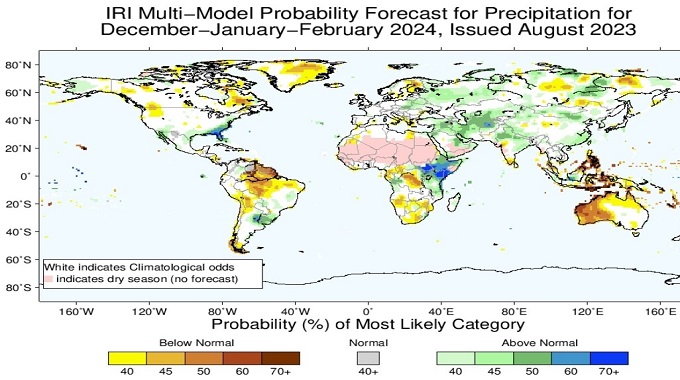
Business Writer
Agriculture is one of the major economic sectors that could be severely hit by the El Niño phenomenon.
Zimbabwe, alongside Mozambique and Madagascar, has already been listed among countries in southern Africa to be severely affected by El Niño-induced conditions such as floods, heat waves and long dry spells.
The World Meteorological Organisation has already confirmed that there is a 90 percent chance that El Niño will develop later this year.
That literally makes it more certain.
Drought will most likely affect smallholder farmers — who account for nearly 70 percent of farm output since they depend on natural rains, this will have a negative impact on food
security.
An analysis by a Swiss-based academic and research institution suggests southern and central parts of the country will be hit by the phenomena likely to cause heat waves and drought in December and January 2024.
How can smallholder farmers reduce the impact of El Niño or prolonged dry conditions?
Dr Reneth Mano, smallholder agriculture value chain development specialist, said with chances of being a drought year high, priority should be given to crops that are drought tolerant.
He suggested that farmers should choose more robust crops that can survive under dry conditions than water-intensive crops such as maize.
These include sunflowers, small grains (sorghum or millet), groundnuts, sweet potatoes, and round nuts.
“It’s a drought year and the crop mix has to change . . . (by) shifting to crops that are drought tolerant so that farmers can harvest more under drier conditions,” said Mano.
He said the mix of crops grown under Pfumvudza/Intwasa, the traditional planting technique that helps crops survive droughts by keeping them hydrated for longer than tilling needed to be expanded to reduce the risk concentration on a single crop.
“Pfumvudza/Intwasa crops have to reflect that we are in a dry year,” said Mano.
He added there was a need to start psychologically preparing farmers so that they know suitable crops to grow during drought years.
“We need to plan ahead otherwise our farmers will end up deploying a lot of resources on the wrong crops,” Mano said.
“Naturally, it is difficult to change their mindset (to shift from traditional growing crops).”
He also suggested expansions of the areas under irrigation while ensuring efficient use of water.
“It is important to note that water bodies drop during drought years. It becomes critical that we need to identify competent farmers that can produce good yields under irrigation.”
At the national level, remedial policy action is needed.
Mano said the Government should start looking at boosting stocks of major grains that can be deployed in the event of shortfalls.
He also suggested that the Government should start boosting its silos as part of efforts to mitigate or avoid potential hunger.



 Online Reporter