admin
admin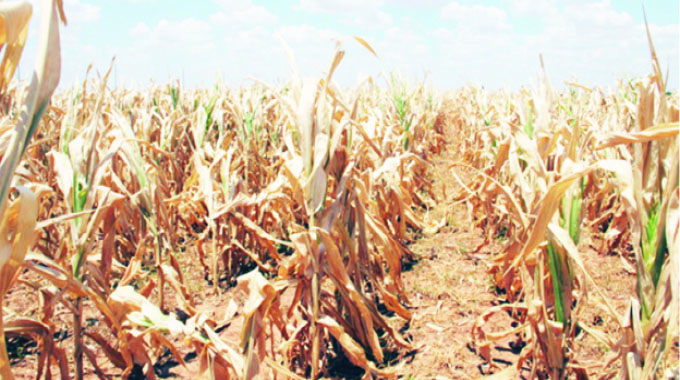
Sifelani Tsiko
Agriculture Editor
Drought and extreme rainfall have surged in the SADC region and are now occurring at a rate five times higher than in 1980, according to a study by the Southern African Research and Documentation Centre (SARDC).
Neto Nengomasha, a senior research coordinator at Sardc, told journalists at a virtual media workshop on Reporting Disasters in the SADC region, that weather events such as droughts and cyclone-induced storms have increased by more than a third this decade.
“Severe drought now strikes the SADC region every two to three years as from the year 2010 compared to the 1970s and 1980s when droughts occurred at least after every ten years while floods rarely occurred,” he said.
“In the 2000s the frequency of drought increased to between four and five years. Tropical cyclones and floods picked up. Tropical cyclones are increasing as well and at least 3 cyclones have already occurred in the 2020/21 rainfall season. Cyclone Chalane in December 2020, Eloise in January and Guambe in February 2021.”
Drought is one of the natural disasters causing food insecurity in southern Africa widening poverty levels in the region.
SADC and the UNESCO Regional Office for Southern Africa (ROSA) organised the workshop to provide a platform for journalists from the region to share experiences on how they have responded to the challenges of natural disasters, especially those triggered by extreme weather conditions such as Cyclone Idai induced floods that left a trail of destruction in Malawi, Mozambique and Zimbabwe in 2019.
The workshop attracted journalists from the entire SADC region.
The SADC region recorded the lowest rainfall in nearly four decades in the 2018-2019 cropping season leading to increased food insecurity and water shortages in the region.
Nengomasha said severe droughts afflicted the region in the 1967-73, 1981-82, 1991-92, 1994-95, 2001-03 and the 2015/16 periods.
“Droughts exert severe impacts on a wide range of environmental and economic activities such as water level of the Kariba dam which dropped by 11,6m from 1991 to 1992 due to a series of drought and this had a major impact on the dam’s capacity to generate hydropower,” he said.
Southern Africa also experienced climate extremes — droughts and floods — caused by the occurrence of the El Niño Southern Oscillation(ENSO). The region is now vulnerable to floods most of which are associated with the occurrences of tropical cyclones.
Cyclone Eline of 2000, was the worst in living memory because of its associated floods.
Southern parts of Mozambique, Zimbabwe, South Africa and Botswana were hardest hit, with two million people affected in Mozambique and 650 000 forced to abandon their homes.
Cyclone Idai of 2019 was recorded as one of the worst tropical storms to ever affect Africa and the southern hemisphere.
It affected central and southern Mozambique, southern Malawi, and eastern Zimbabwe causing severe flooding and destroying infrastructure and large tracts of cropland in the three Sadc countries.
An estimated three million people in the three countries were affected.
“The media plays several critical roles in the national and regional discourse, among which include raising public awareness, educating the public and mobilising public support for national and regional programmes,” said Munetsi Madakufamba, executive director of Sardc.
“It is in this regard that Sardc and UNESCO ROSA saw it fit to convene this workshop to provide a platform for journalists from the region to share experiences on how they have responded to the ever-increasing challenge of natural disasters, especially those triggered by extreme weather conditions such as Cyclone Idai induced floods that left a trail of destruction in Malawi, Mozambique and Zimbabwe in 2019.”
Dr Anywhere Mutambudzi, director Media Services in the Ministry of Information, Publicity and Broadcasting Services urged journalists to uphold ethics and professionalism when it comes to reporting natural disasters to prevent misinformation and the spread of fake news.



 Online Reporter