Online Reporter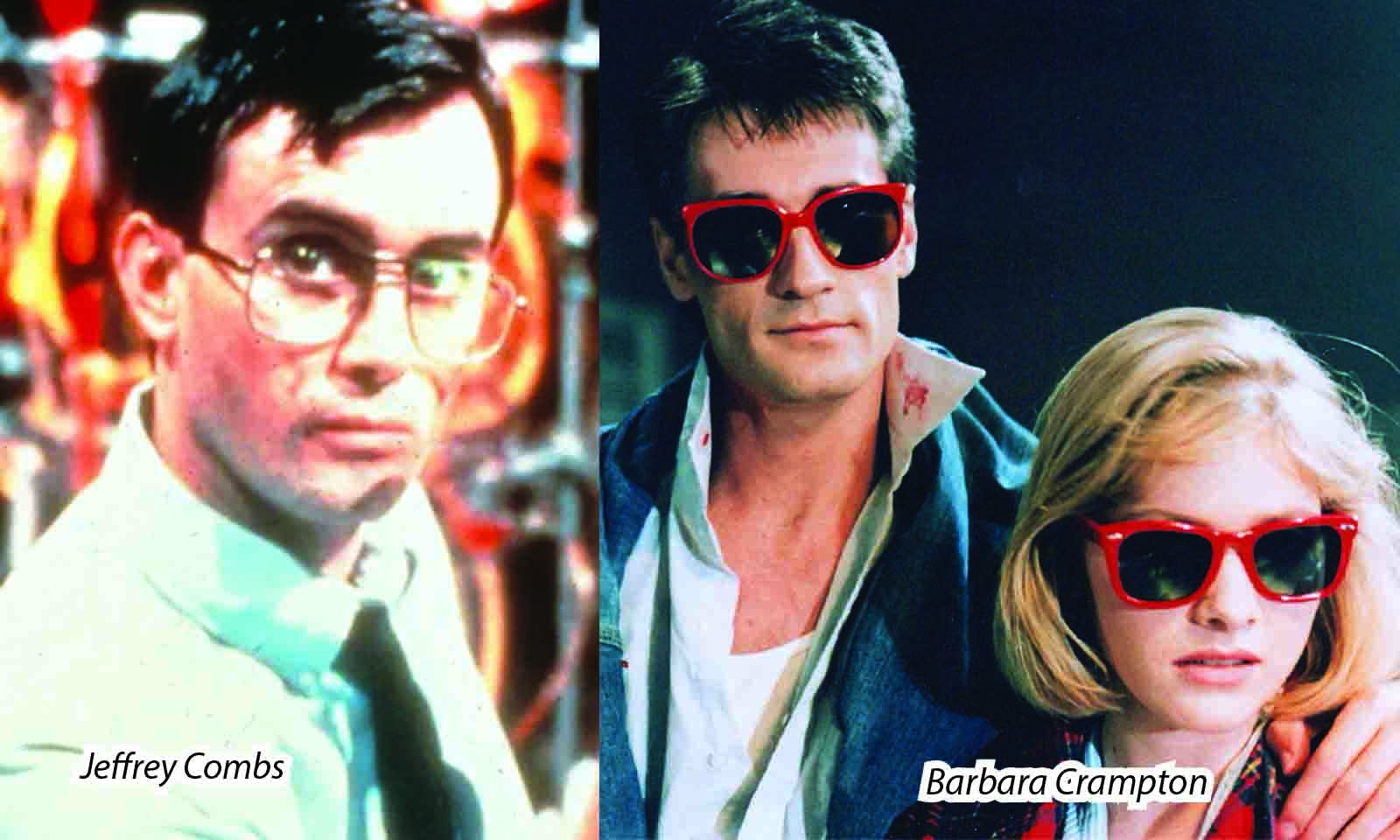
LOS ANGELES. —Forty years ago, the mad scientist comedy-horror was released to meagre box-office.
But its shock value and outrageous humour soon made it a cult favourite among horror fans.
Searching for a single word to describe cult horror Re-Animator, one of the film’s special effects artists, John Naulin, offers “moist”.
Released in the US 40 years ago this month, Re-Animator is loosely based on Herbert West— Reanimator, a 1922 short story by the seminal horror writer HP Lovecraft, which was indebted to Mary Shelley’s Frankenstein and centred on a medical student who found a way to revive corpses.
The film transports Lovecraft’s mad scientist to the 1980s, where the results are absurd, violent and obscenely bloody.
“We made over 40 gallons of blood from my own formula,” Naulin tells the BBC, “which was more than I have ever used on any film.” Director Stuart Gordon, who died in 2020, plastered the syrupy mixture across everything with a “more is more” flair: more blood, more carnage, more everything. “They would dress the set with blood,” says Jeffrey Combs, who played the titular re-animator, Herbert West, “and then Stuart would walk in and say, ‘Hand me that gallon of blood, would you?’ It was like drowning in this stuff sometimes.”
Adding to this inundation was some separately-created “foamy drool”, says Naulin, a bloody but also frothing mixture that spews from the mouths of West’s zombie-like creations and coats Re-Animator’s later scenes.
The original recipe had to be changed when the sheer volume of gore Gordon desired became apparent, since it included an antacid with potentially adverse side effects when taken in large quantities.
“After we’d heard the call ‘more foamy drool!’ more times than you can shake a stick at, we worried it might thin the actors’ blood,” says Naulin.
Such revolting excess is one reason why Re-Animator is so hard to unstick from the mind long after it ends.
Yet, beneath that blood is a masterclass in adaptation, a tight balance of laughs and frights, and an innovative filmic experience, which keeps audiences coming back for more four decades later.
Re-Animator emerged from a horror landscape which in 1985 was “in a stage of transition”, academic and film-maker Mike Duffy tells the BBC.
The slasher boom that followed 1978’s Halloween was foundering, though the release of A Nightmare on Elm Street in 1984 signalled that, Duffy adds, “the genre might be on the verge of embracing wilder stylistic ideas and approaches”. This uninhibited flavour was felt in films that followed, including Re-Animator, Sam Raimi’s Evil Dead II (1987), and Return of the Living Dead (1985), which embraced surrealism, comedy and experimentation, as opposed to deadpan masked killers.
It was a moment made for Gordon, who was directing his first film.
He’d developed a reputation for making experimental, often controversial, theatre —including an infamous politicised take on Peter Pan featuring a nude dance sequence, for which he was arrested on obscenity charges— and brought many of those sensibilities to Re-Animator.
“Stuart loved to take an audience out of their comfort zone,” Combs says.
“They could be immersed in a story and then Stuart would do something, and suddenly the audience is part of the story because they’re reacting in two different ways: not only to what’s happening with the characters and the story, but to what’s happening to them.”
An audience that enters expecting the same-old 80s horror of ghosts or immortal slashers is quickly compelled to re-calibrate their expectations.
Viewers might shift uncomfortably as West experiments on the dead cat belonging to Dan Cain (Bruce Abbott), his housemate and later accomplice, but may well be laughing when he wrestles its zombified corpse.
By the time the severed head of West’s rival-scientist-cum-nemesis Dr Carl Hill (David Gale) leers over Cain’s fiancée Megan Halsey (Barbara Crampton), while his own headless body ties her to a slab as a vaudevillian scoundrel might tie a woman to the railroad tracks, they may also be looking at each other in disbelief as much as they are at the screen.
The film was part of a sub-genre of excessively gory horror films that became known as “splatter horror”, a term coined by director George A Romero to describe his 1978 zombie film Dawn of the Dead. From the 1960s until the late-1980s, such “splatter” films thrived, and were defined by their focus on physical gore and lack of interest in any real moral framework, or ideas of good and evil.
But while other films of this type might have similarly forced audiences to audit their relationship with the disgusting, they did so with a corrosive cruelty. Re-Animator, by comparison, is so in-your-face, so perverse, and so caked in blood that viewers cannot help but revel in the absurdity.
“It’s really hard to have that participatory thing that a theatre production allows in a movie,” Combs says.
“And he really did that!”
When revered film critic Roger Ebert reviewed it, he noted that it was “a movie that had the audience emitting taxi whistles and wild goat cries”.— BBC