Online Reporter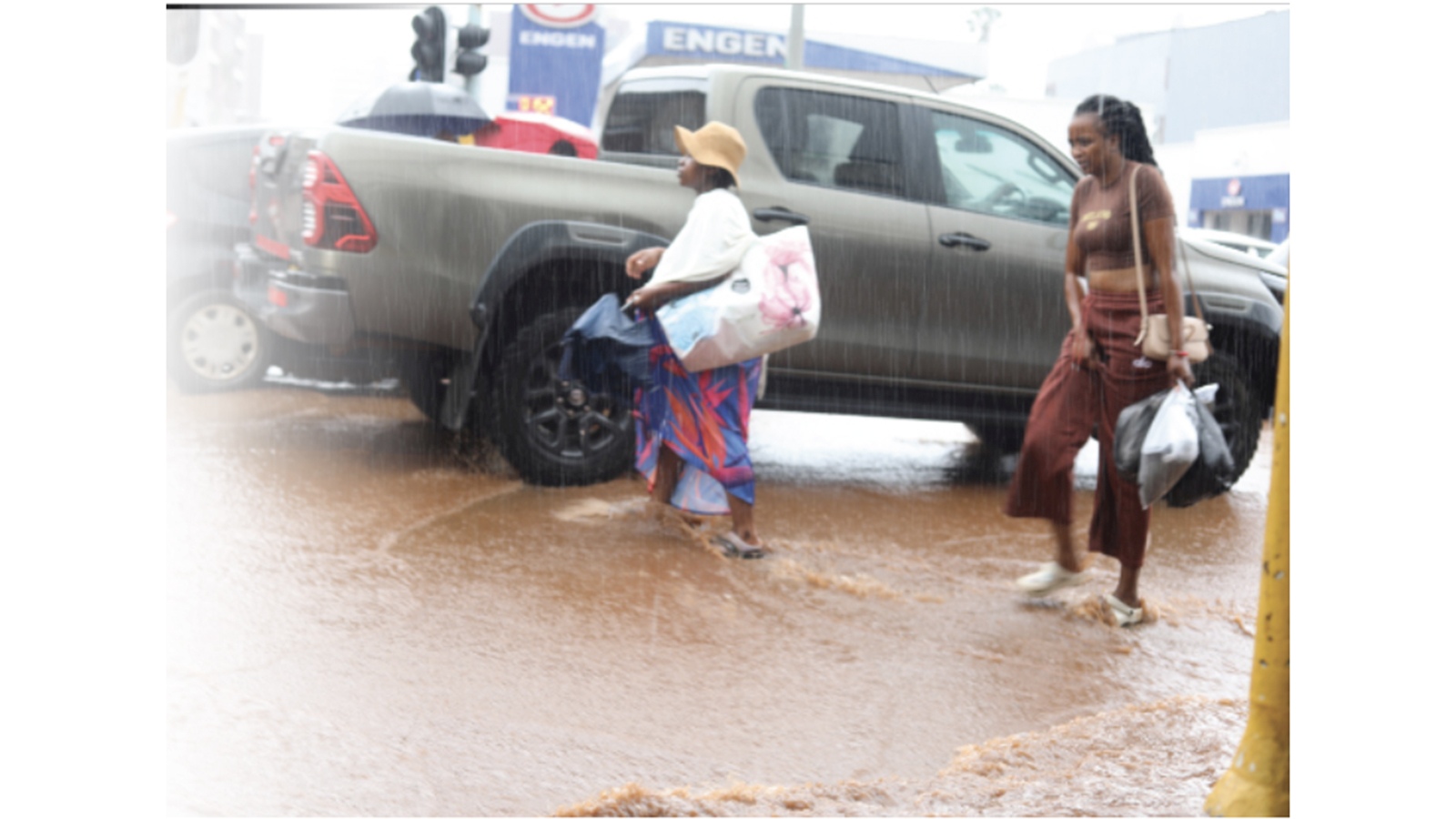
Trust Freddy
CheckPoint Desk
IT is late Saturday afternoon in Harare’s central business district and the sky is no longer just grey, it has changed into a heavy, suffocating purple.
Harare is under siege, not from shoppers, but from water.
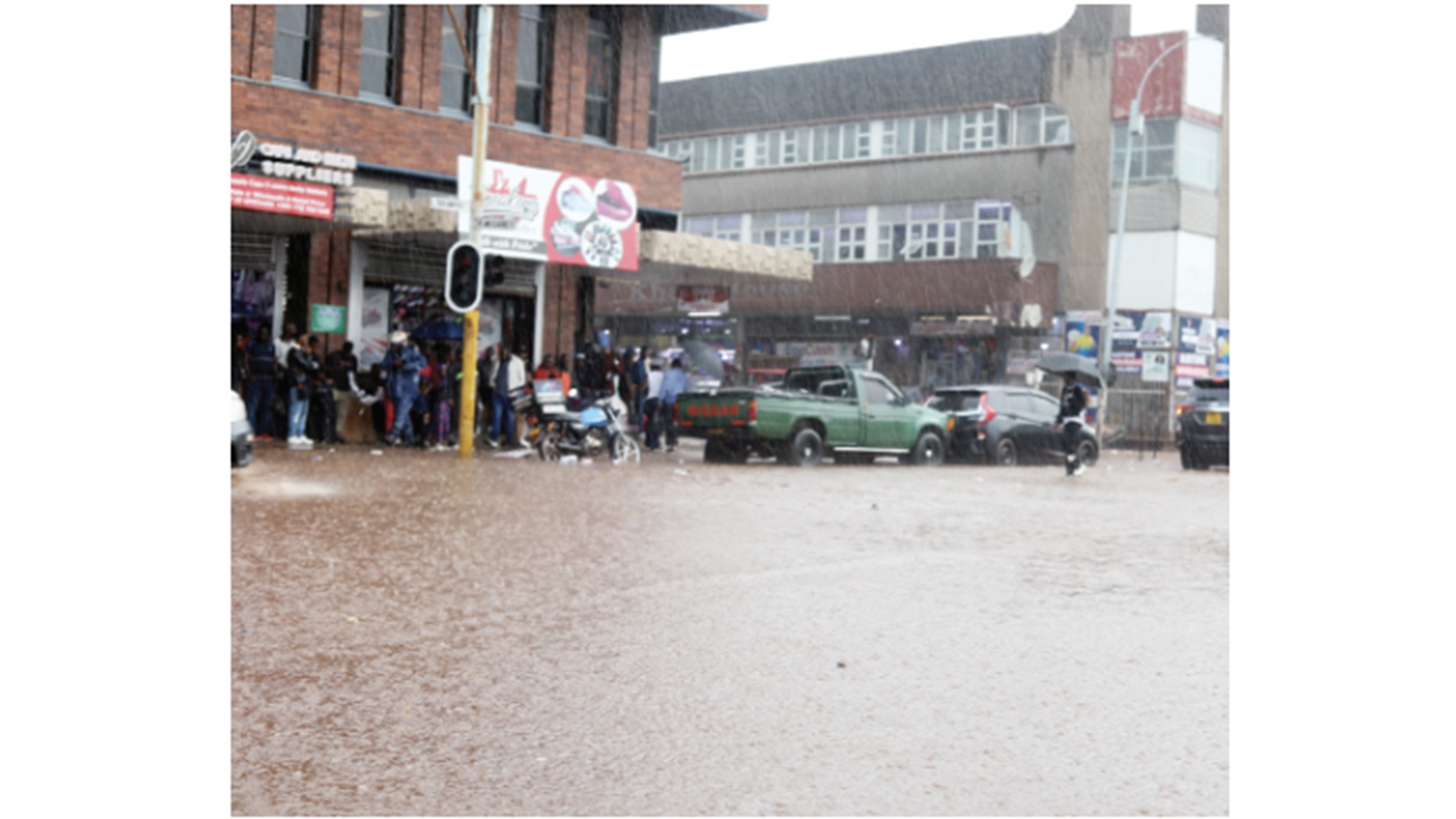
The clouds have finally buckled, unleashing a torrential downpour that has transformed the city’s concrete arteries into a chaotic network of urban water streams.
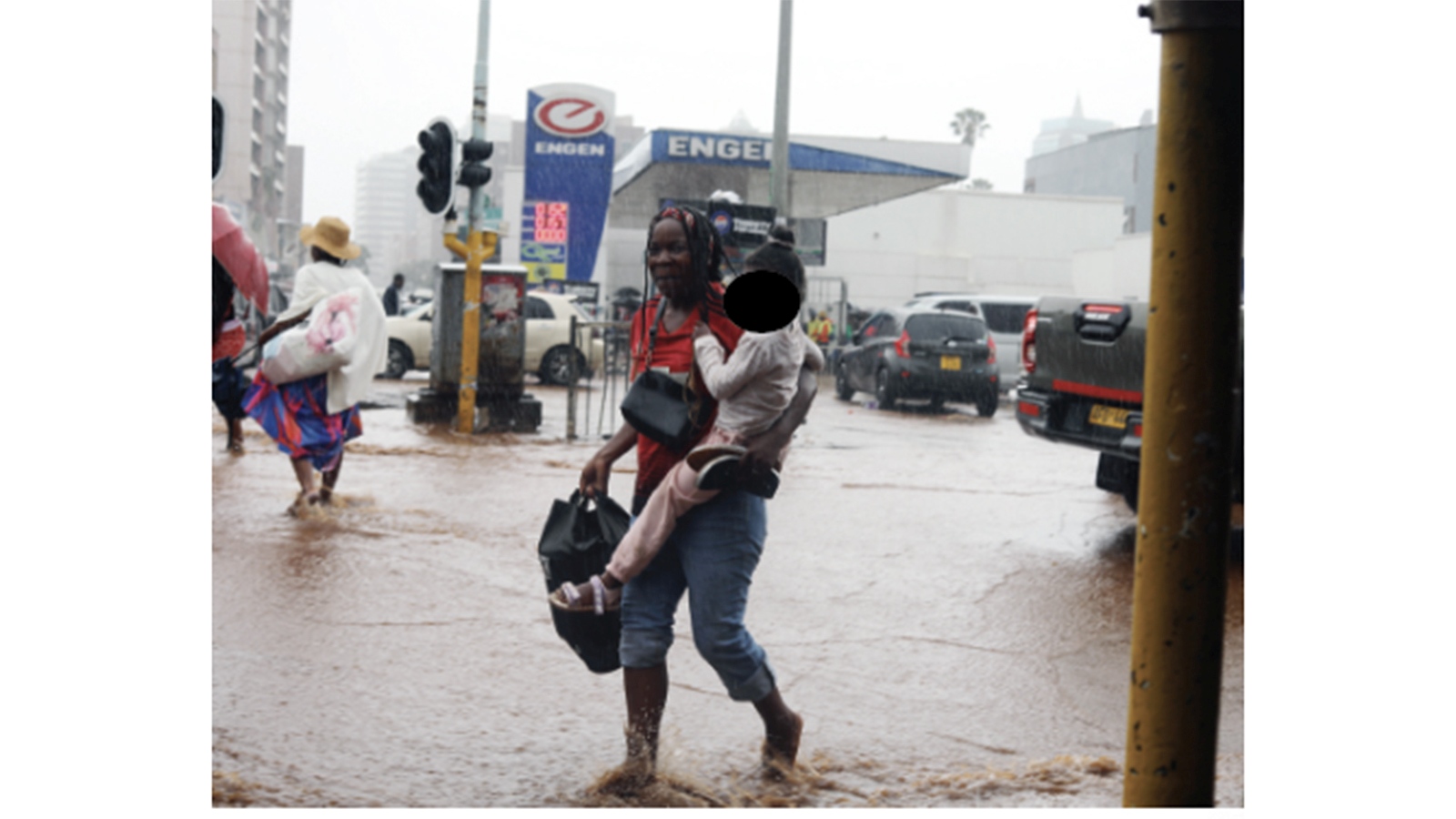
From the safety of shop verandas, hundreds of stranded pedestrians stand shoulder-to-shoulder, watching helplessly as the city they know disappear under a murky brown tide.
What should have been a quiet Saturday commute has ground to a frantic, watery standstill.
As the rain pours down, the streets are a mess of floating debris – maize cobs, pumpkin leaves, empty cans and empty bottles bobbing along the flooded streets, further blocking the already overwhelmed drainage system.
The irony is inescapable.
Right outside the doors of Town House, the seat of municipal power, Leopold Takawira Road has effectively ceased to be a street.
It is now almost like a canal.
Motorists, caught in the sudden deluge, have been forced to abandon their vehicles as water levels rise above exhaust pipes.
Those brave enough to wade through the crossings find themselves knee-deep in a cocktail of rainwater and urban neglect.
For the residents of Harare, this is not just a natural disaster; it is a visible manifestation of administrative failure.
“This is pure incompetence,” said Mr Davison Gumbo, a Budiriro resident.
“We haven’t even seen heavy rains yet, and the streets are already submerged. Clearly, someone is sleeping on the job.”
For business owners along Leopold Takawira Street, the poor drainage is crippling their livelihoods.
“In years past, the rain never deterred customers,” a businessman who only identified himself as Tawanda said.
“Now, an umbrella is not enough. People have to take off their shoes and roll up their trousers just to cross the street, so they simply stay away.”
Despite a clear seasonal forecast from the Meteorological Services Department warning of above-normal rainfall, the city council’s preparation appears to have been non-existent.
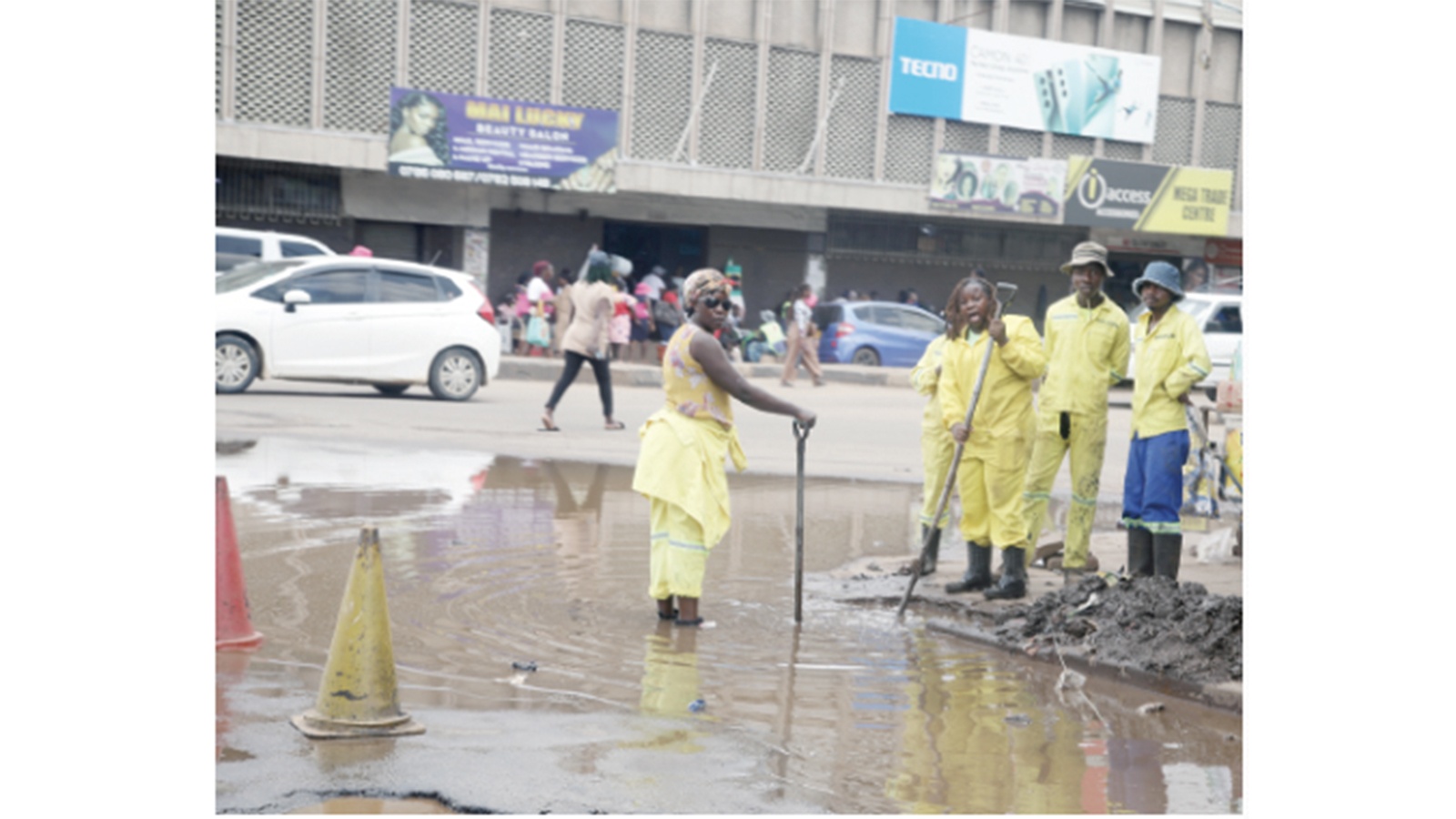
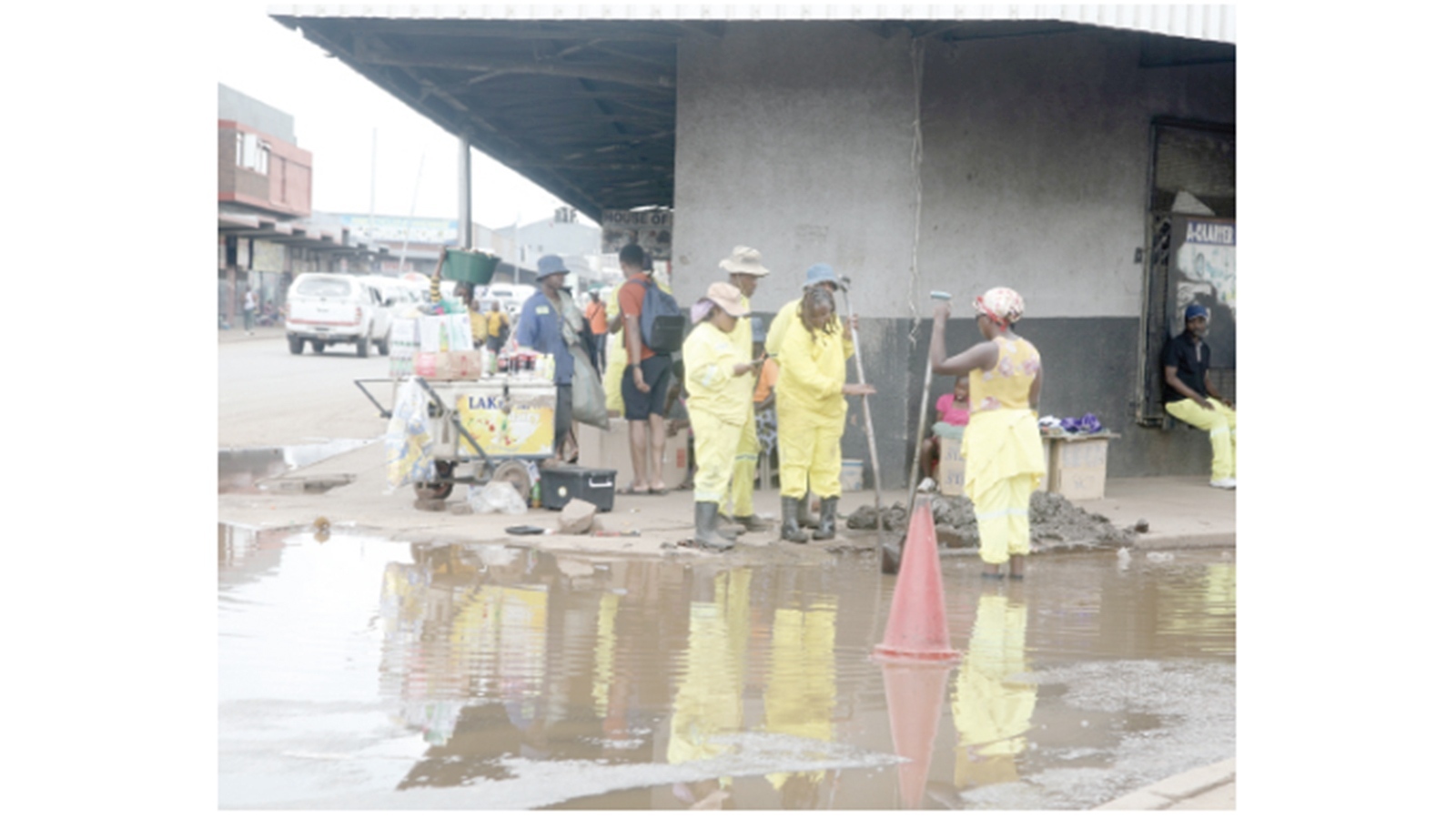
“It is sad that every year, council workers wait until late November to start cleaning the drains, even though the rains have already begun,” another concerned resident, Ms Florence Mandundu, a resident of Warren Park, said.
“In the few places where they did clean earlier this year, they left the piles of dirt and trash on the side of the road. Today, the rain just washed all that rubbish right back into the drains.”
The situation is even more dire in the high-density suburbs.
A survey conducted late Saturday evening revealed scenes of mounting desperation.
In Budiriro 2, Patrenda Way was entirely submerged.
Drivers were forced to guess the location of the tarmac, a perilous gamble given the road’s potholes.
While motorists usually navigate these deep potholes at a snail’s pace, the floodwaters turned the commute into a game of chance.
Commuters were offloaded directly into knee-deep water, where defunct drainage systems have long since collapsed into a flattened mess of silt and debris.
Unlike in the CBD, where the city council attempted to clear the drainage system, suburbs such as Budiriro, Glen View and Highfield have seen their drains become almost entirely blocked by debris.
Mr Reuben Akili, the director of the Combined Harare Residents Association (CHRA), believes the flash floods are being caused by the illegal parcelling out of land.
“It is not just about poor waste management; the city is parcelling out stands on waterways,” he said.
“In Mabvuku and Mufakose, they have literally diverted drainage lines, and some of the stands being allocated on infill sites are blocking the flow of water.”
Mr Akili slammed the council for parcelling out stands on wetlands.
“The council should simply stop allocating land on wetlands.
“They also need to clear the CBD’s drainage systems regularly,” he said.
“If you look at the few drains they have actually cleared, the buildup of sand shows they haven’t been touched in years.”
In an emergency statement, the Harare City council issued a red alert to residents following reports of flash flooding in several suburbs, including Mbare, Highfield, and Waterfalls.
The local authority urged property owners in low-lying areas to initiate immediate safety protocols.
“Due to the current excessive rains being experienced in Harare, we have received reports of flash floods in areas like Mbare, Highfield and Waterfalls among others,” the council said.
“We encourage residents and property owners in the low-lying areas to track weather alerts, be on watch for possible flooding and take appropriate action to avoid risks.”
The City of Harare confirmed that it is working in direct coordination with the Civil Protection Unit (CPU) to manage potential crisis.
“The City of Harare, working closely with Civil Protection Unit, is advising all residents to take heed of the flood alerts and avoid crossing flooded streams,” it said.
Despite the official alerts, residents are fuming, arguing that the flash floods are “man-made” due to the city’s deteriorating drainage system.
Harare mayor, Mr Jacob Mafume, attributed the city’s issues to illegal vending and littering, warning that the City of Harare will toughen its stance on offenders.
“One of the measures is to be hard on littering,” he said.
“There is an addiction to littering that is there in the city.
“People want to throw things under the drains, into the drains and they clog our drainage system.
“We need to come hard on littering. We also need to clear the drains on a regular basis and repair them to make sure that water freely moves.”
Mr Mafume said he was encouraged by the speed with which the floodwaters clear once the flash flooding ceases.
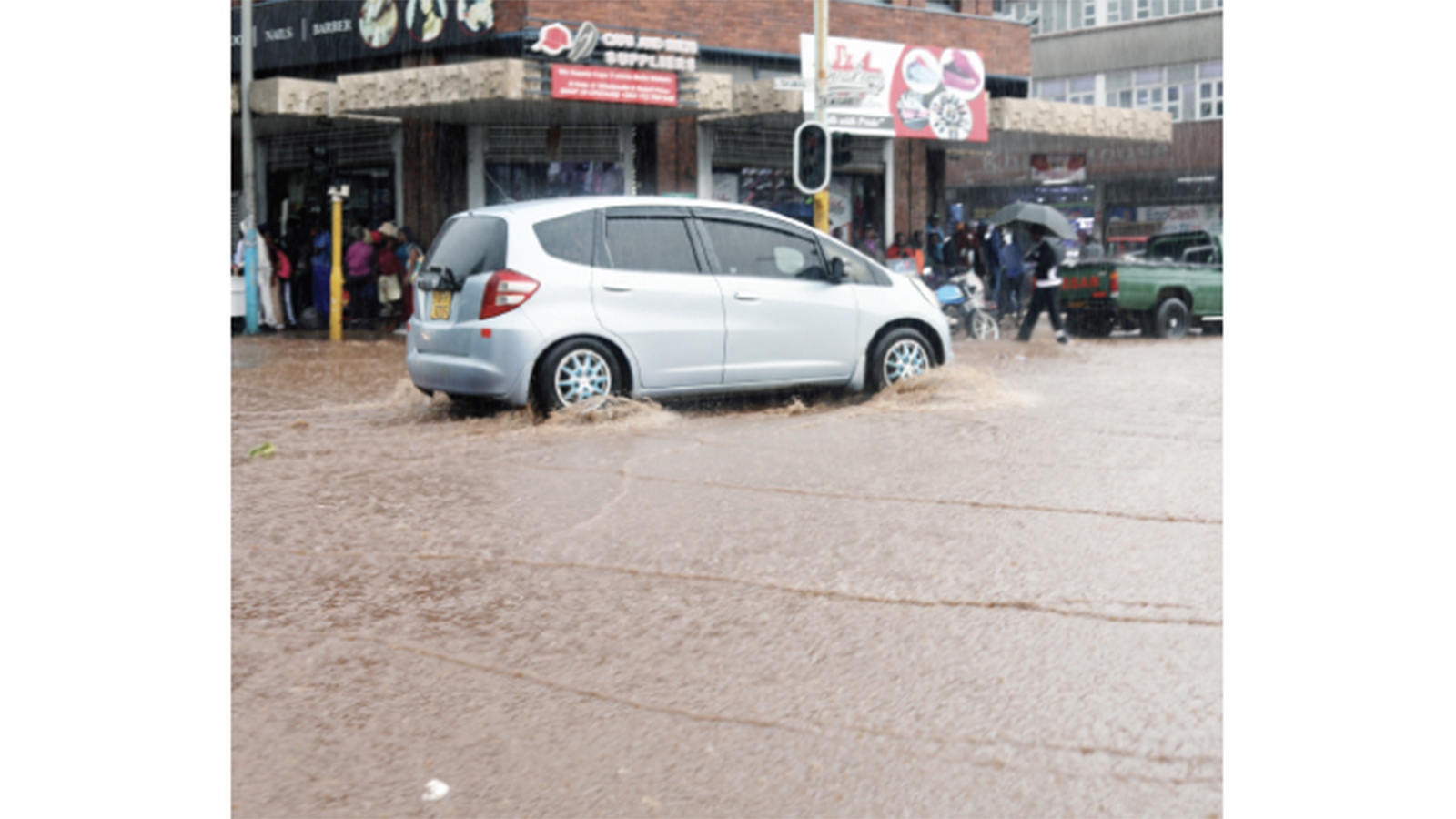
“But we are happy that when it rains, a few minutes after, 30 minutes or so after the rain has stopped or there is a pause, you will find that within the CBD, water would have gone out,” he said.
While promising to install more bins within the CBD, Mr Mafume argued that a lack of bins is no excuse for littering, noting that in many developed countries he has visited, street-side bins are rarely seen.
When asked why council workers were leaving piles of garbage in the vicinity of the drainage systems instead of disposing of them, Mr Mafume said: “If you move around, all the litter that was cleared has been moved.
“But probably I think it needs to be done contemporaneously or as the people are removing the litter.”
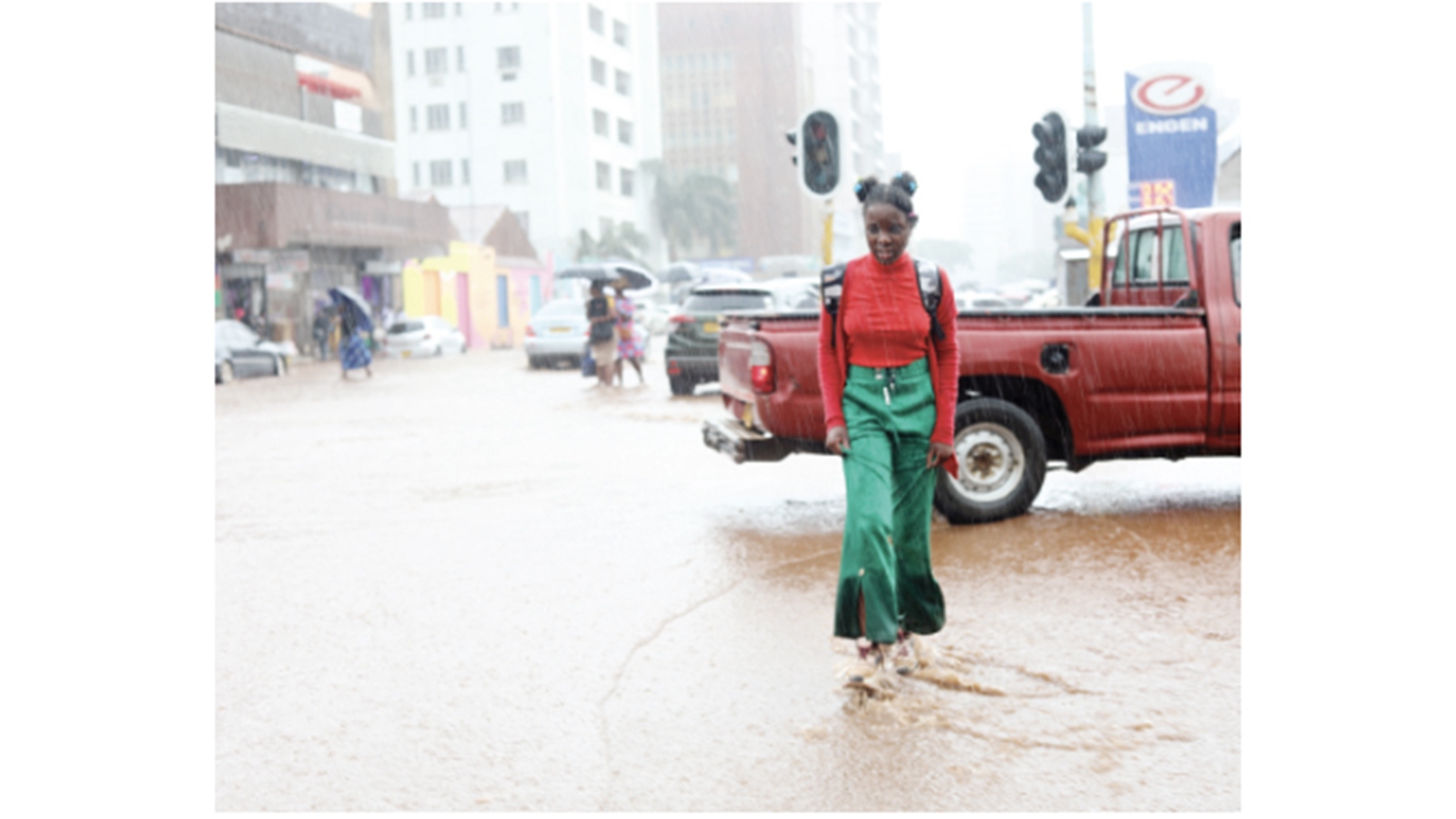
He advised residents with “nothing to do in town” to leave the central business district “before dark” to avoid flash flooding and worsening traffic congestion as the capital continues to experience heavy rains.
Mr Mafume admitted that the greatest challenge lies within residential areas, noting that some land developers abandoned projects without constructing necessary drainage systems or roads.
He encouraged all residents who built structures without approved council designs to immediately seek guidance and pursue regularisation.