Online Reporter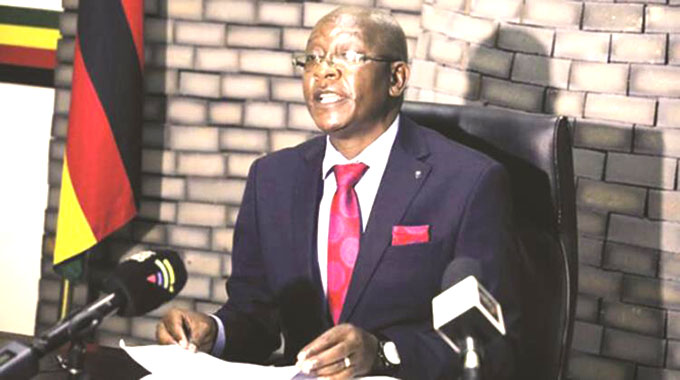
Sifelani Tsiko-Fact Check Editor
Zimbabwe, just like most other countries across the world is facing one of the most challenging social ills of our time — drug and substance abuse. It has become a very serious problem in many communities across the country.
An increase in drug abuse and drug trafficking has also led to a dramatic rise in drug-related mental health issues, crime and violence.
Drug abuse often pulls users into a downward spiral of dependency supported by finance gained by criminal or illegal activity.
Given this reality, Zimbabwe has established the Drug and Substance Abuse Courts — a specialised court that aims to deal with drug-related matters with speed, fairness and a “measured appreciation of the public-health dimensions of substance use.”
The move reflects a paradigm shift away from traditional court systems with routine imprisonment of drug offenders to exploring new and alternative ways to treatment and rehabilitation under judicial supervision.
Broadly, the new courts aim to break the cycle of criminal behaviour, drug and substance dependency, and imprisonment guided by the Zimbabwe Multi-Sectoral Drug and Substance Abuse Plan 2024-2030 which was approved by Cabinet in April 2024.
What is an Anti-Drug and Substance Court?
Drug courts are an innovative and alternative solution to addressing substance use within the criminal court system.
These courts are specifically for persons with substance use disorders. In addition, the court aims to be a specialised, efficient and health-centred justice delivery system that protects society while rehabilitating those caught in the web of addiction.
The courts are broadly guided by the Zimbabwe Multisectoral Drug and Substance Abuse Plan 2024-2030 that targets to fight the scourge of drug and substance abuse across the country.
These courts will have programmes that will offer individuals the opportunity to enter long-term drug treatment and agree to court supervision rather than receiving a jail sentence. Participants are expected to recover, take on responsibilities, and work towards lifestyle changes.
The courts ultimately aim to reduce crime and affect real, positive change in people’s lives.
What necessitated the establishment of such courts?
Prosecutor General Loyce Matanda-Moyo in a statement, said the establishment of the Drug and Substance Abuse Courts was motivated by President Mnangagwa’s vision and drive to fight the scourge of drug abuse under the Zimbabwe Multi-Sectoral Drug and Substance Abuse Plan (2024-2030). She quotes the President: “Drug and substance abuse (DSA) is a growing threat to the nation’s health, security, economy and social stability.
In April 2024, Cabinet approved the Zimbabwe Multi-Sectoral Drug and Substance Abuse Plan 2024-2030. The plan provides strategic direction to the nation’s response to the drug and substance abuse challenge and ensures that all communities, families and individuals are fully supported as the country moves towards Vision 2030 leaving no one and no place behind.”
Furthermore, Minister of Justice, Legal and Parliamentary Affairs, Ziyambi Ziyambi said the establishment of the specialised courts reflected the “deepening and essential collaboration between the Judiciary, the National Prosecuting Authority and the Executive arm of the State in confronting one of the most significant threats to our nation’s social fabric, public health and future prosperity. This is the pandemic of drug and substance abuse.”
How do Anti-Drug and Substance Courts differ from traditional criminal courts?
In traditional criminal court cases, individuals found guilty of drug charges are punished with jail sentences for long periods. The drug court’s primary goal is not punishment, it is treatment for the disease and rehabilitation. To motivate treatment, the court may grant rewards for progress and sanctions for failure to meet programme requirements.
How does the Anti-Drug and Substance Court operate?
The courts will strive to adjudicate drug-related matters with speed, fairness and a measured appreciation of the public-health dimensions of substance use.
Minister Ziyambi explains: “The specialised court will also cater to special considerations that arise in the prosecution of drug and related offences. For example, a case involving a sophisticated criminal network distributing drugs requires the full force of the law to protect society. In contrast, a case of possession or use by a young, first-time offender who is a victim of addiction demands a measured approach that balances accountability with the prospect of rehabilitation.”
What makes Drug Courts unique?
Legal experts say participants who successfully complete the drug court programme can have their underlying criminal offenses dismissed or expunged. If a participant fails to complete the programme, their case will be processed as it normally would in the traditional criminal justice system.
Under the drug courts system, there are rewards for maintaining treatment plans and sanctions for failure to meet obligations.
Does the country now have a legislative framework for the identification of anti-drugs and substance offences?
Says Minister Ziyambi: “Let me emphasise that specialised Drug and Substance Abuse Courts are not a parallel court system. Rather, they represent a strategic initiative within the magistracy. This is forecast to enhance case processing efficiency, promote consistent sentencing in line with Criminal Procedure (Sentencing Guidelines) Regulations, 2023, improve trial readiness, guarantee procedural fairness and facilitate access to health and rehabilitation services, where it is just and necessary.
“At present, a landmark National Drug and Substance Abuse Control and Enforcement Agency Bill is being considered for promulgation into law. The primary purpose of the Bill will be to establish a specialised National Drug and Substance Abuse Control and Enforcement Agency, tasked with enforcing laws related to drug trafficking and substance abuse.”
Have the roles and responsibilities of stakeholders for the Anti-Drugs and Substance Court been defined?
The responsible ministry says the Enforcement Division will spearhead national drug enforcement operations, ensure compliance with existing legislation and implement counter-trafficking strategies. The Social Services Intervention Division will be responsible for coordinating crucial support services such as counselling, vocational skills training and access to rehabilitation programmes. These strategic functions will complement specialised Drug and Substance Abuse Courts in the magistracy.
Are the courts ready to roll out investigations and trials? When are they expected to commence operations?
Work is underway to start the court with various capacity building initiatives being undertaken. Training of various key officers in progress to directly support the mandate of the Drug and Substance Abuse Courts under the Multi-sectoral Plan. The trainings are designed to prepare magistrates and prosecutors to navigate the practical realities of the Drug and Substance Abuse Courts effectively.
“The curriculum begins with a session on sentencing principles that is aimed at reducing outrageous sentencing disparities. There is also a review of the relevant legislative provisions that must be taken into account when prosecuting and adjudicating drug offences. Most fundamentally, it clarifies the complementary roles of magistrates and prosecutors and promotes collaborative case management,” said Minister Ziyambi.
How is Zimbabwe going to benefit from the introduction of the new Anti-Drugs and Substance Court?
The court will help support the Multi-Sectoral Drug and Substance Abuse Plan (2024– 2030) and provide a comprehensive roadmap to fight the scourge of drug and substance abuse in the country. It will help with supply reduction, demand reduction, harm reduction and community reintegration.
The prosecution of these offences will ensure that—offenders are brought to justice swiftly, victims are protected and supported while the courts will also serve as a platform to educate and rehabilitate where possible.
“By upholding the rule of law through the prosecution of all crimes without fear, favour, prejudice, or bias, we are obligated to ensure a just, peaceful, secure and drug-free society by 2030,” said Matanda-Moyo.
Global situation on drug and substance abuse
The sharp rise in drug and substance abuse has had a devastating effect with families being destroyed, young people’s aspirations lost and rehabilitation centres across the country flooded with addicts. Globally, an estimated 3,3 million people die each year from drug-related causes and Zimbabwe has not been spared.
The country is in the grip of a devastating drug abuse epidemic that has shattered the lives of young people. Drug and substance abuse among young people in Zimbabwe rose from 43% in 2017 to 45% in 2018 and 57% in 2019, according to the Zimbabwe Civil Liberties and Drugs Network.
Approximately 1 in 30 households in Zimbabwe is affected by drug abuse which translates to over 533 334 individuals nationwide.
An estimated 60% of institutionalised patients are struggling with drug-related challenges. Rehabilitation centres are said to be treating around 5 000 individuals.
As many as 45% of cases of gender-based violence in Zimbabwe are linked to drug and substance abuse, Zimbabwe National Statistics Agency and the Ministry of Women Affairs reported.