Online Reporter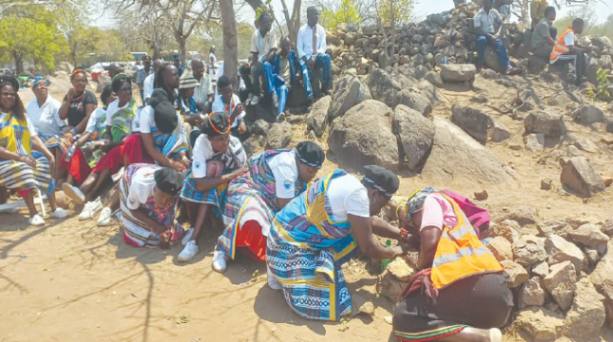
Thupeyo Muleya, Beitbridge Bureau
THE road to Mpande bends away from the Beitbridge Highway into a dusty road, and then suddenly the landscape changes.
Huts painted in the deep browns of Venda, the bright patterns of Shangani and the ochre of Sotho rise from the dust, the smell of wood smoke and mopane worms (mashonza/amacimbi) mixes with drums, and children in traditional regalia ululate as elders beat the ngoma.
This is Tshitaudze Cultural Village, and for three days last week it stopped being a village and become a living museum.
The inaugural Tshitaudze Heritage Festival, held from Friday to Sunday, drew thousands from Beitbridge, from across Zimbabwe, from Venda across the Limpopo, chiefs, headmen, legislators, schoolchildren, poets, fashion designers from the villages, women potters and mopane worm harvesters who for the first time had a stage.
The importance of what happened there hits you quickly. In a district known more for trucks, borders and transit, culture has been treated as background. Yet here, 24 schools performed Tshikona, malende, and xibelani. Learners debated in TshiVenda. An old woman taught a teenage girl how to shape clay pots while a boy learned how to thatch. Language, food, dress and ritual were not on display; they were being practised.
Patron and host of the festival, Chief Tshiṱaudze, who is also the chairperson of the Matabeleland South Provincial Council of Chiefs, said the festival was born out of pain.
“The Tshitaudze Heritage Festival was born out of a pain we all saw. Our rich heritage was under threat from urbanisation, from globalisation, and from our own young people losing interest in who they are,” said Chief Tshitaudze.
He said Beitbridge had no regular platform for artists, poets and fashion designers from villages to showcase talent, get mentorship and access markets.
“So, we said, let us build our own stage. We established Tshitaudze Culture Village in Mpande not as a place for one event, but as a living museum, a place where schools, communities, and elders meet,” he said.
Chief Tshitaudze said the goal is simple: to preserve and promote heritage while empowering artists and youths, and he painted a picture of what a culture centre should be.
“A culture centre should not be opened only when the Vice President visits. It must be a referral centre. It must be a library for our heritage. It must have activities throughout the year – where a child can come to learn TshiVenda, where a woman can come to learn pottery, where a young man can learn traditional building. It must be alive every day,” he said.
The chief said Beitbridge is a rainbow district of VhaVenda, VhaSotho, Shangani, VhaPfumbi, VhaLemba and Ndebele, and when diversity is celebrated it drives cohesion and unity.
He also linked heritage to environment and social justice, warning village heads to stop rampant cutting of trees by firewood syndicates that destroy pastures and mashonza, and to fight stock theft, child marriages and drug abuse.
“I have always said Beitbridge is a rainbow district where you find every culture. We want to position Beitbridge as a driver of cultural tourism from the grassroots level.
“Beitbridge is known as a border town of trucks. We must now make it known as a destination of culture,” said Chief Tshitaudze.
That message found an echo in Chief Nyangazonke from Matobo District, Matabeleland South, who stood to praise Chief Tshiṱaudze for leading from the front as the provincial council of chiefs chairperson in heritage preservation.
Chief Nyangazonke said what Tshitaudze has done proves that traditional leaders are not just custodians of land but custodians of identity, and that every chiefdom must have its own Tshitaudze.
“What Chief Tshitaudze has shown us is practical leadership. He has not just talked about culture; he has built it. As chairperson of our provincial council, he is leading from the front, and we must all emulate such a stance and have cultural villages in our areas,” said Chief Nyangazonke.
He said if each chiefdom establishes a cultural village, Zimbabwe will never lose its languages and sacred sites to modernity, and rural youths will find economic value at home through crafts, tourism and indigenous foods rather than drifting to towns.
As sunset fell on Sunday, Vice President Mohadi had left, the officials had left, but the drums remained. Women sang, children still danced, and elders told stories. In that moment, Tshitaudze was no longer a festival. It was proof that heritage, when given a home, can feed a community.