Chronicle Editor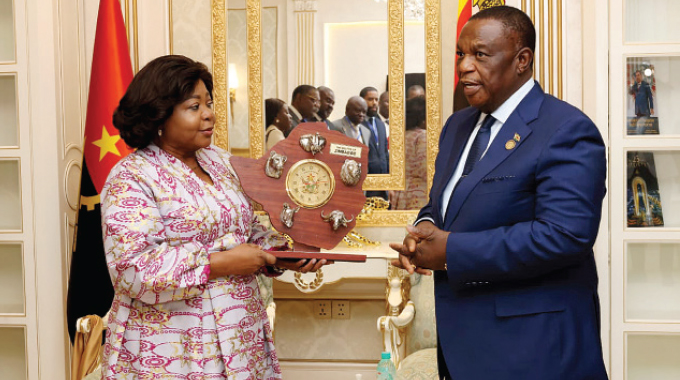
Richard Muponde, Zimpapers Politics Hub
WORLD leaders including Sadc member states converged in Tajikistan for the Third High-Level International Conference on the International Decade for Action which is aimed at ending global water problems.
The conference which was held under the theme, “Water for Sustainable Development”, started on Tuesday and ended yesterday in Dushanbe, Republic of Tajikistan.
This year’s event was a follow up on commitments made during the UN 2023 Water Conference and accelerated actions towards achieving the Water Action Agenda.
The conference is a precursor to the launch of the first-ever United Nations System-wide Strategy for Water and Sanitation.
The Dushanbe Water Process is an important initiative of the government of Tajikistan to support the implementation of internationally agreed water-related goals through a series of biennial conferences hosted by the government of Tajikistan in close co-operation with the United Nations. It is part of the United Nations’ Water Action Decade, a global initiative to accelerate efforts towards sustainable water management and access to clean water and sanitation for all.
Sadc leaders who come from a region with critical water challenges largely caused by climate change, also attended the conference. Zimbabwe was represented by Vice-President Dr Constantino Chiwenga, who is the chairperson of the Inter-Ministerial Task Force on Sadc Summit Preparations to be hosted by Zimbabwe. The issue of water is expected to be an agenda item at the summit.
The presence of the Sadc leaders at the Dushanbe conference presented a good opportunity for the regional bloc to learn from what is being done at the global level to solve water shortages.
The conference was held ahead of the Sadc Summit on solving water and sanitation in the region.
The Sadc leaders in Tajikistan carried the hopes of the region and are expected to take a cue from initiatives being undertaken globally to end water shortages in the region.
Climate change has led to increased variability in rainfall patterns, prolonged droughts and more frequent extreme weather phenomena.
These factors have contributed to water scarcity and reduced water quality in the region, posing serious challenges for agriculture, industry and people’s health.
Water experts who spoke to the Zimpapers Politics Hub said the Dushanbe water conference was an opportunity for Sadc, represented by different member states, to draw lessons on how to address the region’s water problems at the Sadc Summit in August.
An expert in water and sanitation Engineer Bernard Musarurwa expressed hope that Sadc countries that attended the conference will tap from technology advances of other countries across the globe that participated at the summit in order to harness water as a resource for domestic and industrial use.
“One wants to believe that the organisers of such a conference will be looking for dialogue and solutions to the provision of adequate and safe potable water said Eng Musarurwa said.
Turning to Zimbabwe, Eng Musarurwa said local authorities need to address the erratic supply of clean and safe water especially in major cities and towns.
“It is hoped that the Zimbabwe delegation to the Dushanbe Water and Sanitation conference will bring back useful knowledge and information to generate the required impetus and focus for the country to attend to the woeful situation regarding water and sanitation in the country, especially the City of Harare, the perennially dry
City of Bulawayo and elsewhere, including the rural and communal areas,” he said.
“Most sewage reticulation and treatment plants around the country are now dysfunctional and inadequate for the purpose due to neglect of maintenance and upgrading commensurate with the increase in the population and demand for the services.”
Bulawayo Residents Association president Mr Winos Dube said it was prudent for Sadc leaders to attend such a conference as they would take a cue on how to solve water problems in the region.
“In this region, as Sadc, we are facing water problems. It’s good that Sadc leaders attended the conference. It will help them come up with tangible initiatives to address water challenges at the forthcoming Sadc Conference,” he said.
Mr Dube said residents of Bulawayo are looking forward to a permanent resolution to their perennial water challenges.
“We, in Bulawayo are sometimes subjected to stringent water rationing. We hope such initiatives will help solve the city’s water problems once and for all,” he said.



 Online Reporter