Nobuhle Mgwaqo
FOR Zimbabwe to truly drive innovation and industrialisation, the integration of Science, Technology, Engineering, and Mathematics (Stem) education from primary school level is a necessity, Minister of Higher and Tertiary Education, Innovation, Science and Technology Development, Ambassador Frederick Shava has said.
In a speech delivered on his behalf by the ministry’s Permanent Secretary, Professor Fanuel Tagwira, during last week’s Scholastica 2025 Indaba, held alongside the recently concluded Zimbabwe International Trade Fair (ZITF), Ambassador Shava stated that the country’s education system has shifted decisively from the traditional Education 3.0 model, which focused on teaching, research and community service, to Education 5.0, which is centred on innovation, industrialisation, and the production of goods and services.
“This transformation is not theoretical but a strategic response to the urgent national imperative, which requires our universities and colleges to generate goods and services, solve real societal problems, and create employment opportunities through the commercialisation of knowledge,” he said.
Ambassador Shava said to achieve this vision, Zimbabwe must strengthen Stem education at the earliest stages of learning.
“We must build a strong Stem foundation from ECD (Early Childhood Development) and primary education so that when learners progress to secondary school, they already have an appreciation and competence in these critical areas,” he said.
Highlighting the country’s progress, the minister pointed to the establishment of innovation hubs and agro-industrial parks at universities as significant milestones in the education sector’s contribution to national development.
Ambassador Shava cited Midlands State University (MSU)’s innovation hub, which has incubated agro-processing ventures, AI-driven business solutions, and a state-of-the-art nanotechnology centre conducting advanced research in water purification, coal-to-tar production for road resurfacing, and nano-fertilisers for sustainable agriculture.
“MSU has also established a Pathology and Diagnostic Centre to enhance public health service delivery, particularly in cancer diagnostics and disease surveillance,” said Ambassador Shava.
Industrial parks are also playing a critical role, he said, with Great Zimbabwe University’s Agro-Industrial Park processing indigenous grains to develop value chains that uplift rural economies and reduce post-harvest losses.
Chinhoyi University of Technology’s Germplasm Project is focused on expanding Zimbabwe’s national herd by improving indigenous cattle genetics and developing vitamin-enriched mineral block licks to boost livestock nutrition and rural incomes.
Ambassador Shava said the launch of the National Strategic Document on Innovation Drive (2024-2030) last year, is providing a clear blueprint for institutions to channel innovations towards national priority areas such as food security, health, energy, mining and digital transformation.
“Already, the National University of Science and Technology’s Solar Energy Research Group has developed solar-powered cold rooms for rural health clinics, which is a major innovation that strengthens both rural healthcare and sustainable energy use,” he said.
The minister stressed the importance of ensuring that the benefits of Education 5.0 extend beyond urban centres.
“Education 5.0 must reach beyond urban centres, it must digitise rural campuses, support women’s innovation, and ensure that people with disabilities are fully included in the knowledge economy,” said Ambassador Shava.
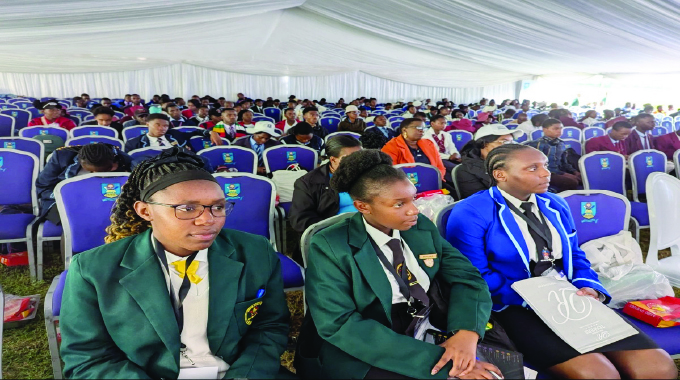
The Scholastica 2025 Indaba, held under the theme “Heritage-Based Education as a Catalyst for Industrialisation,” was attended by students from institutions across the country, all coming together to discuss how education can best serve the country’s development aspirations.