


 Online Reporter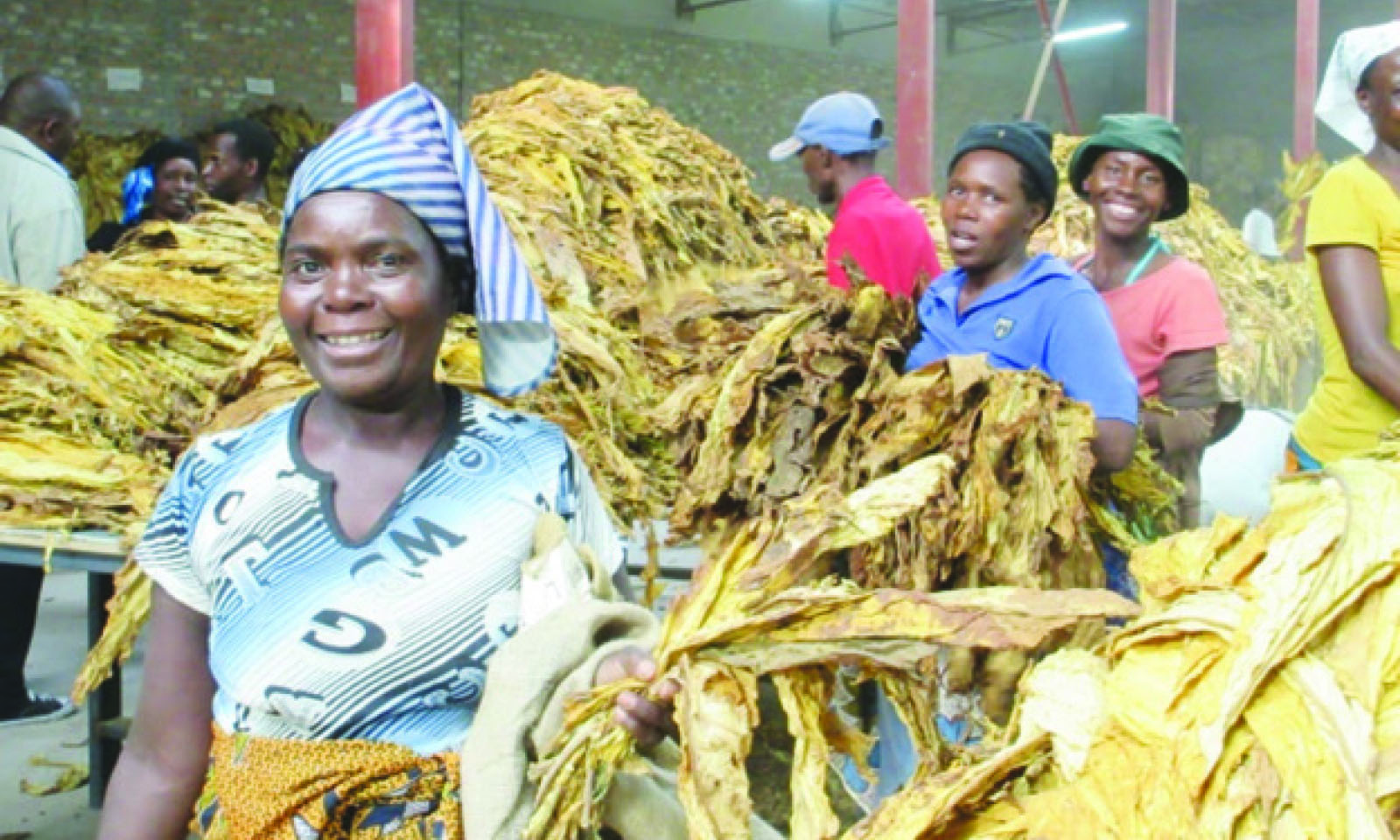
Tapiwa Masedza
The opening days of Zimbabwe’s 2026 tobacco marketing season have sent a worrying signal across the sector.
Prices across several grades have declined sharply, losing as much as US$2 per kilogramme compared to the same period last year.
For thousands of farmers who have spent months preparing their crop, curing it and transporting it to the market floors, such a development at the beginning of the season naturally raises concern.
Tobacco remains one of Zimbabwe’s most important export crops and a vital source of income for rural households.
When prices fall this quickly, the ripple effects are felt across farming communities, affecting livelihoods and confidence in the season ahead.
Zimbabwe is projected to produce approximately 400 million kilogrammes of tobacco in the 2025/2026 season, reinforcing its position as one of the world’s leading producers of flue-cured Virginia tobacco.
This growth reflects the resilience and commitment of Zimbabwean farmers, who have steadily expanded production over the past decade.
However, the global tobacco market is currently experiencing significant supply pressure.
Brazil, one of the world’s major producers, recorded a strong crop during the 2024/2025 season, increasing the volume of tobacco already circulating within global supply chains. At the same time, several tobacco companies entered the Zimbabwe marketing season still holding packed tobacco inventories from the 2025 crop. With these carry-over stocks already available to supply their customers, buyers have approached the new season cautiously.
The result has been downward pressure on prices, particularly during the opening days of the marketing season.
Beyond global market conditions, Zimbabwe is also beginning to confront structural pressures within its own tobacco value chain.
Over the past decade, national tobacco production has grown significantly — from just over 160 million kilogrammes in the early 2010s to levels approaching 370 million kilogrammes today.
Yet the industrial infrastructure supporting the sector has not expanded at the same pace.
Zimbabwe currently relies on three major green leaf threshing (GLT) processing factories, which convert green tobacco into lamina and stem products for export markets and cigarette manufacturing. These facilities form the backbone of the country’s tobacco value chain and ensure that the crop moves efficiently from the farm to international markets.
However, as production volumes continue to rise, the capacity of these facilities is increasingly under pressure.
Industry estimates suggest that more than 50 million kilogrammes of tobacco may struggle to access timely GLT processing capacity, particularly during peak marketing periods.
When this happens, some volumes eventually end up hand-stripped outside the modern industrial processing system, which typically yields lower value compared to industrial threshing.
This inevitably weakens price realisation across parts of the crop and adds further pressure on farmers already facing declining prices.
Addressing this bottleneck requires a strategic response. Zimbabwe must begin seriously considering the development of a fourth GLT processing factory.
Such an investment would not simply expand industrial capacity; it would represent a critical national asset capable of sustaining the continued growth of the tobacco sector while protecting value realisation for farmers.
Financing such infrastructure could be structured through syndicated investment involving pension funds, long-term institutional investors and sovereign capital, including participation from the Mutapa Investment Fund.
Mobilising domestic institutional capital into processing infrastructure would strengthen Zimbabwe’s industrial base while ensuring that the expanding national crop can be efficiently absorbed within the value chain.
At the same time, the sharp price decline witnessed during the opening days of the season raises an important policy question: How should the sector respond when global supply conditions temporarily depress prices to levels that threaten farmer viability?
One option worth exploring is the establishment of a strategic market stabilisation mechanism through a special purpose vehicle (SPV).
Such an entity could be mandated to purchase excess tobacco during periods of severe price depression. The objective would not be permanent State intervention, but rather temporary stabilisation during periods when supply temporarily overwhelms demand.
Under this framework, tobacco acquired by the SPV would be processed through existing GLT facilities into lamina and stem products.
The processed tobacco could then be stored and gradually released into international markets through structured bilateral merchanting arrangements with large buyers and state tobacco monopolies in major consuming markets.
This approach recognises a simple reality in agricultural markets.
When prices are strong, farmers naturally expand production.
Over time, this increased supply can exceed demand, placing pressure on prices.
As prices fall, production eventually adjusts and the market gradually finds balance again.
Because agricultural production responds to market signals with a time lag, farmers can sometimes face periods of price pressure even when long-term demand remains stable.
Without mechanisms to manage these cycles, farmers often carry the full burden of market volatility.
Strengthening farmer resilience must, therefore, remain a priority.
One of the most practical ways to cushion farmers against price shocks is through investment in efficiency-enhancing infrastructure, particularly curing facilities.
Curing remains one of the most expensive stages of tobacco production because of the large amounts of biomass required to cure flue-cured tobacco.
Improved curing technologies and more efficient barn designs can significantly reduce the quantity of biomass required per kilogramme of cured leaf, lowering production costs while easing pressure on forests used as sources of curing fuel.
Alongside improved curing systems, farmers must increasingly adopt modern farming technologies and improved agronomic practices.
Advances in irrigation management, soil fertility programmes and crop husbandry can improve yields and leaf quality while reducing the overall cost per kilogramme of tobacco produced.
When productivity improves and production costs fall, farmers are better positioned to withstand temporary price downturns without losing profitability.
These reforms align with Zimbabwe’s broader development agenda, particularly the objectives of the National Development Strategy 2, which prioritises value addition, industrialisation and agricultural productivity.
They also support the goals of the Tobacco Value Chain Transformation Plan, which seeks to deepen processing capacity and strengthen the entire tobacco value chain.
The early signals from the first days of the 2026 marketing season should, therefore, not be viewed simply as a short-term market fluctuation.
Rather, they highlight the need for immediate and coordinated industry dialogue involving farmers, tobacco companies, financial institutions, the Government and the Tobacco Industry and Marketing Board (TIMB).
Zimbabwe’s tobacco industry remains one of the country’s most important agricultural success stories.
Protecting that success will require practical action, strategic investment and collaboration across the sector so that farmers and rural communities can continue to benefit from the crop for many years to come.
Tapiwa Masedza is a tobacco value chain expert. For feedback on this article, call +263775621090 or email [email protected]



