Chronicle Editor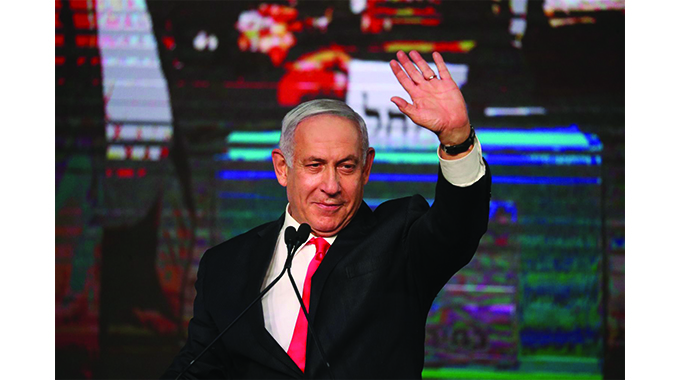
Jerusalem — Israeli Prime Minister Benjamin Netanyahu’s political future was uncertain Wednesday after his coalition failed to secure an outright majority in the country’s parliamentary elections, according to a partial vote tally.
The embattled leader’s right-wing Likud party appeared to win the most seats in Tuesday’s polls. But his path to governing majority grew more difficult as the official vote count continued. Final results are not expected until later this week and the lack of a decisive winner could prolong Israel’s political stalemate, raising the prospect of yet another election later this year.
With 97% of the vote counted Wednesday, Netanyahu’s Likud had secured 30 seats in the 120-seat Knesset, Israel’s parliament. His coalition of right-wing and religious parties appeared to control 52 spots, leaving Netanyahu no easy route to the 61-seat majority.
Not even the addition of seven seats controlled by former ally Naftali Bennett would put Netanyahu over the top, dashing hopes in the prime minister’s camp that a conservative coalition was in reach. That prospect, suggested by exit polls released Tuesday night, had caused jubilation at Likud headquarters and led Netanyahu to initially declare a “great victory” on Twitter.
But by the time he addressed his supporters after 2a.m., the early vote count had begun instead to hint that further deadlock was to come.
He called for an end to the stalemate, saying, “we cannot in any way drag the country to a fifth election. We must form a stable government now.”
An achievable majority appeared equally difficult for the disparate collection of anti-Netanyahu parties, ranging from disaffected conservatives to Israeli-Arab communists.
The preliminary results gave avowed anti-Netanyahu parties 57 seats, plus 11 controlled by two Arab factions. But in previous election, these groups had been unable to negotiate a power-sharing agreement that would topple the prime minister.
Adding to the uncertainty is an unusually high number of absentee ballots from military members, overseas diplomats and people quarantined under Covid-19 precautions. Those estimated 450 000 votes, expected to be counted this week, could provide dramatic swings in the finally tally.
“This is an extremely close election,” said Yohanan Plesner, the president of the Israel Democracy Institute. “Nothing is decided.”
Three previous elections in the past two years each failed to produce a functional government and lawmakers again face a period of intense horse-trading as pro- and anti-Netanyahu forces try to cobble together a majority.
Exit polls showed that Israeli politics remain locked in profound divide, particularly over Netanyahu. For the fourth time in row, the electorate split nearly evenly between voters wanting to get rid of Israel’s longest-serving prime minister and those hoping to continue his 14-year rule.
The prime minister, who is facing criminal prosecution on bribery, fraud and other corruption charges, has fallen short of securing a majority in the previous three votes. Each time, he has been spared by the refusal of opposing parties to join forces against him. In the previous vote, center-left parties declined a chance to create a majority by inviting the Arab faction into their coalition.
Some observers took heart that Tuesday’s result may have once again thwarted Netanyahu’s bid to hang onto power with an outright majority. It follows a campaign in which the prime minister and his allies sought to demonise his opponents and discredit the judicial system that is prosecuting him.
“In many ways, this election is an affirmation of the strength of Israeli democracy, in the face of attempts by a master politician to subjugate the electoral and judicial processes to his own political needs and to avoid the legal fate that awaits him,” said Chuck Freilich, a former deputy national security adviser. — Reuters



 Online Reporter