Online Reporter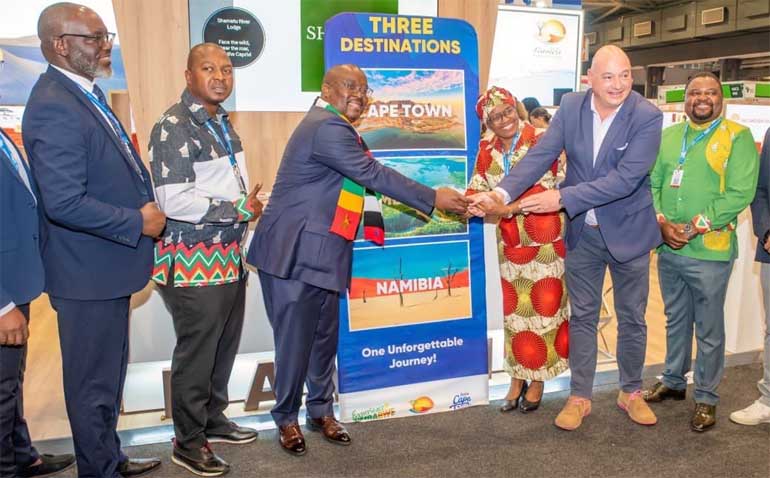
Lloyd Makonya
Correspondent
THE recent unveiling of the Strategic Three Destination Tourism Partnership between Zimbabwe, Namibia and Cape Town in South Africa during Africa’s Travel Indaba in Durban could prove to be a game-changing development for tourism in Zimbabwe’s Eastern Highlands.
Anchored on digital marketing and joint destination promotion, the partnership seeks to position Southern Africa as a unified tourism hub capable of competing more effectively on the global tourism stage.
While the agreement was announced at a regional level, its true impact will ultimately be felt in tourism destinations across member countries, including Zimbabwe’s premier mountain tourism region, the Eastern Highlands.
For years, destinations such as Nyanga, Vumba, Chimanimani, Mutare and Honde Valley have been marketed largely as standalone attractions.
Yet modern tourists increasingly seek multi-country experiences that allow them to experience diverse cultures, landscapes and adventures within a single itinerary.
The new partnership recognises this evolving trend and leverages digital marketing platforms to showcase Southern Africa’s collective tourism offering to international audiences.
The Eastern Highlands stand to gain immensely from this approach. As one of Zimbabwe’s most scenic tourism regions, the Eastern Highlands possess a unique combination of attractions ranging from breathtaking mountain landscapes, waterfalls, forests to rich cultural heritage and adventure tourism opportunities.
Destinations such as Nyanga National Park, Vumba Mountains, Chimanimani Mountains, Hot Springs, Bridal Veil Falls, Mutarazi Falls, the Skywalk and Zipline and numerous cultural heritage sites provide a tourism product capable of competing with some of the best destinations on the continent.
However, despite its immense potential, the region has often struggled with international visibility when compared to globally recognised destinations such as Cape Town, Namibia’s desert tourism circuits or East Africa’s safari destinations.
The Strategic Three Destination Tourism Partnership presents an opportunity to change this narrative.
By leveraging digital marketing campaigns, shared tourism platforms, influencer marketing, content creation and destination storytelling, the Eastern Highlands can position itself as an essential component of the Southern African tourism experience.
Tourism experts have long argued that visibility is one of the most important currencies in modern tourism. Today’s traveller is increasingly influenced by digital content consumed through social media platforms, travel blogs, online booking systems and virtual tourism experiences.
A single viral video showcasing the sunrise from Nyanga Mountain, the mist-covered forests of Vumba or the dramatic landscapes of Chimanimani can potentially reach millions of prospective visitors across the globe.
The Government’s embrace of digital marketing therefore arrives at an opportune moment.
For tourism operators in the Eastern Highlands, this means investing in professional digital content, maintaining active social media presence, improving online booking capabilities and telling compelling destination stories that resonate with international audiences.
More importantly, local communities must not remain spectators in this transformation.
Community-based tourism initiatives have become some of the fastest-growing segments of the global tourism industry.
Visitors increasingly seek authentic experiences that connect them with local people, traditions, cuisine and heritage.
Communities in areas such as Chimanimani, Nyanga and Honde Valley have an opportunity to develop cultural tourism products that complement the region’s natural attractions.
Traditional dance groups, cultural villages, heritage trails, indigenous food experiences and craft enterprises can all become part of the wider tourism value chain.
The success of such initiatives depends largely on empowering local communities with entrepreneurial skills, digital literacy and access to tourism markets. The partnership also presents significant opportunities for youths.
Young entrepreneurs are increasingly using technology to create tourism experiences that appeal to modern travellers.
From eco-tourism projects and digital tour guiding services to adventure tourism enterprises and heritage interpretation initiatives, young people can become key beneficiaries of the government’s regional tourism agenda.
Infrastructure development will also be critical if the region is to fully capitalise on the opportunities presented by the partnership.
While digital marketing may attract visitors, their experiences on the ground will determine whether destinations receive repeat business and positive reviews.
Improving road networks, enhancing visitor facilities, expanding internet connectivity and strengthening tourism service standards should therefore remain priorities.
Furthermore, tourism stakeholders in Manicaland must work collaboratively rather than competitively.
The future of tourism increasingly lies in destination networks rather than isolated attractions. Hotels, tour operators, local authorities, conservation agencies, cultural institutions, educational institutions and community organisations must collectively market the Eastern Highlands as a single integrated destination capable of delivering diverse and memorable experiences.
The Strategic Three Destination Tourism Partnership is more than a diplomatic agreement between nations. It is a bold recognition that Africa’s tourism future lies in collaboration, innovation and digital transformation.
For the Eastern Highlands, the message is clear: the region must position itself not merely as a destination within Zimbabwe, but as a key component of a broader Southern African tourism experience.
Those who embrace digital marketing, strengthen destination branding, invest in quality visitor experiences and empower local communities will be best positioned to reap the benefits of this new regional tourism era.
As Southern Africa increasingly markets itself as one tourism destination, the Eastern Highlands must ensure that its mountains, forests, heritage and people become part of the story being told to the world.