admin
admin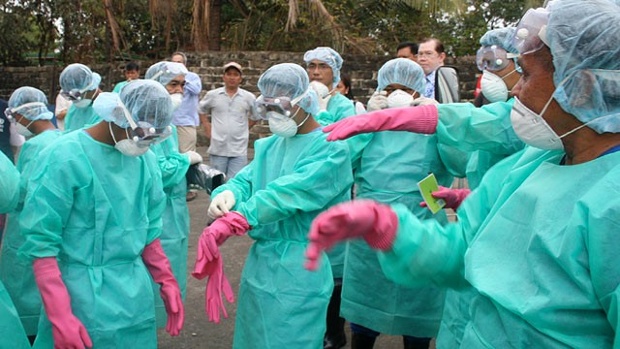
MONROVIA. — At least 28 African Union medical professionals, including doctors and clinicians, have arrived in Liberia from across East and West Africa to assist in the fight against the Ebola disease ravaging West Africa.
The high-powered African Union Assistance Team are now in the country, a statement issued by the Liberian Foreign Ministry said yesterday.
The AU Assistance Team will serve under the African Union Support to Ebola Outbreak in West Africa (ASEOWA).
The team is in West Africa to render medical and humanitarian assistance mainly in the areas of training, epidemiology and psychosocial support to the three countries highly affected by the Ebola disease including Liberia, Guinea and Sierra Leone.
The team will be deployed in the three hardest hit countries with its Headquarters situated in Liberia, the statement quoted head of the AU team, Major-General Julius F. Oketta as saying.
The team’s aim is to help the affected nations in curbing the virus.
This comes as more than 90 people were quarantined across Mali’s capital yesterday after a 25-year-old nurse died of Ebola having treated a Guinea man who succumbed with Ebola-like symptoms that were not recognised.
The man, a Muslim imam from the border town of Kouremale, was never tested for Ebola.
In a series of ceremonies that may have exposed many mourners to the deadly virus, his highly contagious body was washed in a Bamako mosque and returned to Guinea for burial without precautions against Ebola.
The World Health Organisation said a friend who had visited the imam in hospital died suddenly and was being considered another likely Ebola case.
A doctor at the Pasteur Clinic where the nurse worked — one of Bamako’s top medical centers — is also suspected to have contracted Ebola and is being monitored.
Mali, the sixth West African nation to record Ebola during the world’s worst ever outbreak of the disease, must now trace a new batch of contacts just as an initial group of people linked to its first and only other case — a two-year-old girl who died last month — completed their 21-day quarantine on Tuesday.
The locations quarantined in Bamako, whose population is nearly 2 million, include the clinic, the mosque where the imam’s body was washed and the houses where the nurse lived and the imam stayed.
Concern is growing at the time it took between the imam dying and the steps needed to contain the deadly disease being put in place. Dr. Samba Sow, head of Mali’s Ebola response, said the imam died on October 27, two days after going to the clinic.
“This case shows the lack of training of doctors in Bamako. This training should have been done six months ago,” one aid worker told Reuters, asking not to be named.
The government said yesterday that the nurse was confirmed with Ebola on Tuesday and died later that evening.
All necessary steps to identify people who had come into contact with the nurse had been taken, it said.
Ousmane Doumbia, secretary general of the health ministry, said more than 90 people had been quarantined. The clinic was locked down by police on Tuesday night.
Mali shares an 800km border with Guinea, which alongside Liberia and Sierra Leone has been worst affected by an Ebola outbreak that has killed nearly 5 000 people this year.
The two-year-old girl had also brought Ebola to Mali from Guinea, but Malian authorities said the border would remain open for now. — Xinhua-AFP.


 Online Reporter