admin
admin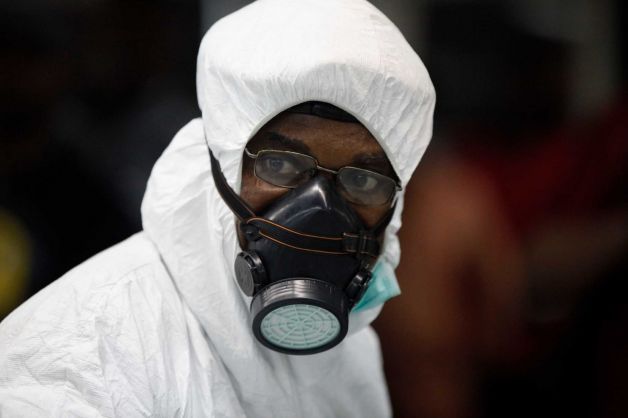
 Staff with the World Health Organisation battling an Ebola outbreak in West Africa see evidence the numbers of reported cases and deaths vastly underestimates the scale of the outbreak, the UN agency has said on its website.Staff at the outbreak sites see evidence that the numbers of reported cases and deaths vastly underestimate the magnitude of the outbreak.
The death toll from the world’s worst outbreak of Ebola stood on Wednesday at 1,069 from 1,975 confirmed, probable and suspected cases, the agency said. The majority were in Guinea, Sierra Leone and Liberia, while four people have died in Nigeria.
The agency’s apparent acknowledgement the situation is worse than previously thought could spur governments and aid organisations to take stronger measures against the virus.
“Staff at the outbreak sites see evidence that the numbers of reported cases and deaths vastly underestimate the magnitude of the outbreak,” the organisation said.
“WHO is coordinating a massive scaling up of the international response, marshalling support from individual countries, disease control agencies, agencies within the United Nations system, and others.”
International agencies are looking into emergency food drops and truck convoys to reach hungry people in Liberia and Sierra Leone cordoned off from the outside world to halt the spread of the virus, a top World Bank official said.
In the latest sign of action by West African governments, Guinea has declared a public health emergency and is sending health workers to all affected border points, an official said.
An estimated 377 people have died in Guinea since the outbreak began in March in remote parts of a border region near Sierra Leone and Liberia.
Guinea says its outbreak is under control with the numbers of new cases falling, but the measures are needed to prevent new infections from neighbouring countries.
“Trucks full of health materials and carrying health personnel are going to all the border points with Liberia and Sierra Leone,” Aboubacar Sidiki Diakit president of Guinea’s Ebola commission, said late on Wednesday.
As many as 3,000 people are waiting at 17 border points for a green light to enter the country, he said.
“Any people who are sick will be immediately isolated. People will be followed up on. We can’t take the risk of letting everyone through without checks.”
Sierra Leone has declared Ebola a national emergency as has Liberia, which is hoping that two of its doctors diagnosed with Ebola can start treatment with some of the limited supply of experimental drug ZMapp.
Canada’s Tekmira Pharmaceuticals Corp is also exploring making more of its experimental Ebola treatment, Chief Executive Officer Mark Murray said.
Nigeria also has declared a national emergency, although it has so far escaped the levels of infection seen in the three other countries.
Ebola is one of the world’s most deadly diseases and kills the majority of those infected. Its symptoms include internal and external bleeding, diarrhoea and vomiting.
The US State Department ordered family members at its embassy in Freetown to depart Sierra Leone because of limitations on regular medical care as a result of the outbreak.
Meanwhile, US president Barack Obama called the presidents of Liberia and Sierra Leone today to discuss the Ebola outbreak in West Africa, the White House said.
The calls to presidents Ellen Johnson Sirleaf of Liberia and Ernest Bai Koroma of Sierra Leone came as the US state department ordered families of its diplomats in Sierra Leone to leave the country to avoid exposure to the disease.
“In his conversations with both leaders, the president underscored the commitment of the United States to work with Liberia, Sierra Leone, and other international partners to contain the outbreak and expressed his condolences for the lives lost,” the White House said.
In a related matter, scientists are racing to begin the first human safety tests of two experimental Ebola vaccines, but it won’t be easy to prove that the shots and other potential treatments in the pipeline really work.
There are no proven drugs or vaccines for Ebola, a disease so rare that it’s been hard to attract investments in countermeasures. But the current outbreak in West Africa — the largest in history — is fuelling new efforts to speed Ebola vaccine and drug development.
The handful in the pipeline have largely been funded by government efforts, including the two vaccine candidates that are closest to human study: One developed by the US government that is gearing up for early-stage tests in healthy volunteers this fall, with a second developed by the Canadian government thought to be not far behind.
Initial tests typically are performed on a few dozen to 100 people, to look for warning signs of side effects and figure out a good dose — not to prove that they’ll actually protect people against infection with the Ebola virus.
Because vaccines are given to healthy people, not those who are already sick, getting safety information before the products are used too widely is a crucial step.
New details about the development of the vaccines emerged this week as the World Health Organisation declared it OK to use experimental drugs and vaccines as authorities try to contain the outbreak. At the same time, the Food and Drug Administration warned US consumers yesterday to avoid a new raft of fake Ebola treatments being sold online.
Meanwhile, NewLink Genetics of Ames, Iowa, said yesterday that it is preparing to test a vaccine developed by the Canadian government under a licensing agreement with the Public Health Agency of Canada. The company is discussing an initial safety test in up to 100 health volunteers with the FDA, although company executives would not say how quickly it could begin.
An FDA spokesperson for the agency would not confirm any discussions about the vaccine, but said the agency “stands ready to work” with companies and international agencies developing Ebola treatments.
A total of 1,500 doses have already been produced by a contract manufacturer in Germany, and the Canadian government purchased all of them. The government is setting aside some for NewLink to use in clinical research, and it also plans to donate between 800 and 1,000 doses to the WHO. — AP



 Online Reporter