


 Tinaye Agere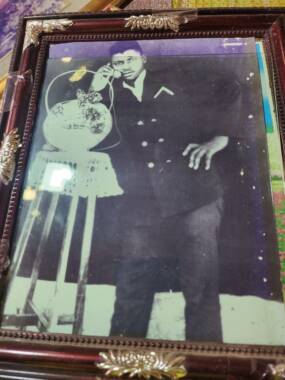
In the first instalment of this gripping and riveting story, CDE Patrick Chinamasa recounts the story of a fallen freedom fighter buried in a mass grave in Mashonaland Central province, who reached out to his relatives in a bid to get a decent burial at his family home. Read on . . .
**************************
ON Wednesday, April 17, 2024, the eve of the Independence Day celebrations at Murambinda, Buhera district, Vice President Kembo Mohadi lit the Independence Flame at the Dzapasi Assembly Point (otherwise known as Fox Trot), some 40 or so kilometres from Murambinda and four kilometres off the recently gravelled Murambinda-Birchenough Road.
The Dzapasi Assembly Point was the largest assembly point in the country during the ceasefire period from late 1979 to early 1980.
More than 15 000 guerrilla fighters assembled there, evidence that by the time of the ceasefire, Manicaland province, due to its proximity to ZANLA’s rear bases in Mozambique and its long border with the neighbouring country, had become a major theatre of the liberation war.
In total, there were 16 assembly points throughout the country, and Dzapasi was the largest. Along with the senior Manicaland ZANU PF Central Committee and provincial leadership, I attended the ceremony.
As I sat listening to VP Mohadi’s address, my mind strayed, as minds often do, to the amazing story of Silver Sebastian Mutomba (born in 1952), of Soro village, under Headman Nemhare and Chief Nyashanu, Buhera district, Manicaland province.
I will share this story without offering any comment. Silver, the son of Weston and Faina Mutomba, was the second-born in a family of seven siblings: four boys and three girls. In 1972, Silver, of the totem Mwoyondizvo, Bvumawaranda, who was working in the then-Que Que (now Kwekwe), decided to trek to Mozambique to join ZANLA forces fighting for the liberation of Zimbabwe. Before Silver set off for the long, arduous journey to Mozambique, he went to Buhera and bade farewell to Tete Mildred Juru, his father’s sister, and told her he was going to join ZANLA forces in Mozambique.
Silver then travelled to Salisbury (now Harare) to bid farewell to his younger brother, William, and convey the same message. Silver pleaded with William to take care of their parents.
Silver left for Mozambique through the then-Umtali town (now Mutare) and along the way, as William only got to know in 2008, Silver was joined in Umtali by another Buhera boy from his village, one Soro.
When Silver arrived in Mozambique, he wrote a letter to William bearing his Salisbury postal address, assuring him that he and his colleagues had successfully reached ZANLA camps in Mozambique and had been well-received.
The letter had no address but bore an Umtali Post Office date stamp.
In the letter, Silver once again urged his younger brother William to faithfully discharge his filial responsibility and look after their parents — “Ndapota, uchengete mai nababa”.
Tete Mildred never disclosed to Silver’s parents that their son had left to join the armed struggle, but William did.
He recalls that he travelled to Buhera specifically to convey that message.
Ceasefire came towards the end of 1979.
Under the Lancaster House Agreement, reached between the warring parties — ZANU, with its military wing, ZANLA; and ZAPU, with its military wing, ZIPRA, negotiating as the Patriotic Front on one hand; and Ian Smith’s Rhodesian forces, now led by Bishop Abel Muzorewa as figurehead prime minister, on the other, and brokered by the British colonial administration — guerrilla fighters gathered in assembly points located across the countryside in the war zones, some of which had become liberated territories, meaning they had become no-go areas for the Smith regime forces.
The Mutomba family, like any other, whose children had gone to war, had high expectations that Silver had survived and that he would send a message to advise which assembly point relatives could find him.
However, no word came about Silver’s fate. Family members visited several assembly points searching for him to no avail.
Sometime late in 1980, Cde Mundoza, a Buhera boy who had fought under the banner of ZANLA forces and returned, had a chance encounter with a member of the Mutomba family.
He reported that he had met Silver in Mozambique at one of the ZANLA camps and that Silver had assumed the nom de guerre Edson Chikwata.
He knew he had been operating in the Rushinga and Mt Darwin areas.
He postulated Chikwata might have been sent for advanced military training abroad, possibly to China, the Union of Soviet Socialist Republics (USSR), Romania, Yugoslavia or any of the Eastern European countries (then part of the Soviet bloc).
As years rolled by and there was no sign of Silver, the Mutomba family rightly concluded that their loved one had perished in the war of liberation.
Then, one Saturday evening, March 29, 2008, the voting day in the 2008 general elections, Silver’s brother, William Mutomba, then House of Assembly Member for Buhera North, received a call from his uncle Ngoni Mujuru.
He had called from Kariba, asking him to phone one Clifford, a ZBC TV presenter of “Programme yeMagamba”.
Mujuru, while watching the programme, had picked up the name Mutomba being mentioned.
When phoned, Clifford, in turn, referred William to George Rutanhire and Cde Motsi, both ZANLA ex-combatants.
Clifford was a producer of the programme, where a woman living with her husband in the Mukonde area of Rushinga district became possessed by the spirit of her late father, a ZANLA combatant, one Silver Edson Chikwata Mutomba. While in a trance, she had said the following in the presence of Cdes Rutanhire and Motsi: “I am Silver Edson Chikwata Mutomba. I come from Buhera.
“Please ask my relatives to come and exhume me and give me a decent burial in Buhera at the family cemetery.”
Allow me to refer to this married woman hereinafter as “the Chikwata daughter”.
We will get to know her real name later as the story unfolds.
On receiving this surprising news, the following day, William packed his bags to go and meet Cdes Rutanhire and Motsi, and accompanying him were his wife Othillia; younger brother Stanley and wife Winnet Bizure; sister Alice (Varaidzo); and Tete Mai Mildred Juru. They made contact with Cdes Rutanhire and Motsi, who confirmed the story and narrated exactly what had transpired. Cdes Rutanhire and Motsi further advised that when the Mukonde community got to know that the Chikwata daughter had become possessed, they referred her and her in-laws (who incidentally did not know what to do with their daughter-in-law or where to start from) to Cdes Rutanhire and Motsi for help.
Cdes Rutanhire and Motsi were well-known war veterans in Mashonaland Central province and had on numerous occasions throughout the region assisted with exhumations and identifications of war veterans buried in unmarked graves.
When Cde Rutanhire died in August 2017, he was declared a national hero and he is interred at the National Heroes Acre.
When the Chikwata daughter came in the presence of Cdes Rutanhire and Motsi, she became possessed by the spirit of her late father Edson Chikwata and uttered these words: “Ini ndinonzi Silver Edson Chikwata Mutomba. Ndinobva kuBuhera. I was buried in Mt Darwin, in a mass grave near the Mt Darwin aerodrome.
“My plea is for my family to exhume me and rebury me at the family cemetery in Buhera.” Cdes Rutanhire and Motsi reported to William that it was on the basis of this encounter that they had sought ZBC to publicise this story. To get to the bottom of the story, Cde Rutanhire rightly advised William to go and meet the Chikwata daughter’s mother and Sekuru Mugweni in Mukonde, Rushinga, Nyamatikiti area.
The Buhera team, now reinforced by the presence of Cdes Rutanhire and Motsi, drove to the Nyamatikiti area to meet Sekuru Mugweni. Around 5pm that day, the team reached Sekuru Mugweni’s homestead.
As is customary, Cdes Rutanhire and Motsi acted as intermediaries and approached Sekuru Mugweni. After paying “sumo” to allow these Buhera strangers to enter Sekuru Mugweni’s homestead as prospective in-laws, Cdes Rutanhire and Motsi gave a narration of what had brought them there.
Sekuru Mugweni opened up and stated that his sister Rosemary Mugweni, now married to Muvalima, had, during the liberation war, been made pregnant by a ZANLA guerrilla commander going by the Chimurenga name Edson Chikwata, no doubt at the night vigil meetings addressed and harangued by guerrilla fighters to raise the morale of the masses, while giving them political orientation.
These night vigil meetings were called pungwes, named after the perennial Pungwe River, with its source in the Nyangani Mountains of the Eastern Highlands in Nyanga district, Manicaland province.
From its source in the Nyangani mountains, Pungwe River cascades, meanders and snakes its way in an easterly direction through Honde Valley in Zimbabwe, crossing the Zimbabwe-Mozambique border and emptying its waters into the Mozambican channel in the Indian Ocean in Beira.
The family of Rosemary Mugweni did not know where Cde Chikwata came from, nor did they know of his fate. Sekuru Mugweni went further to say that he married off the Chikwata daughter, who had been raised by her mother Rosemary and stepfather Muvalima. Sekuru Mugweni owned up to the fact that he had charged and received the “roora” payment for the Chikwata daughter.
Thereafter, the Buhera team, Cdes Rutanhire and Motsi, and now joined by Sekuru Mugweni, set off that night to meet the Chikwata daughter. To get proper directions, they sought help from Innocent Mugambiwa, son of the Chikwata daughter, now married to Mugambiwa and a mother of four children — two boys and two girls.
Innocent was working at Mukonde Primary School and happily led them to his mother’s Mukonde residence.
One look at the Chikwata daughter, and the Buhera team was struck by the close resemblance between Silver and the Chikwata daughter and unmistakably between her and Mbuya Faina Mutomba, their mother back in Buhera. At the sight of the Buhera team, the Chikwata daughter became possessed and said: “I am Silver Mutomba and my Chimurenga name is Edson Chikwata.”
It should be noted that no reference was made to Silver’s middle name, Sebastian.
William, meeting the Chikwata daughter for the first time, refrained from disclosing his name or identity. He proceeded to interrogate the Chikwata daughter.
But before he could get far in the interrogation, the Chikwata daughter became possessed and fixing her eyes on William, she shouted with ecstasy: “Kuda (William’s Shona middle name and hardly used back home), ndokuzouya nhasi? Wakachengeta here vabereki?”
Following this totally unexpected outburst from the Chikwata daughter, especially at the mention of the long-forgotten middle name “Kuda” (short for Kudakwashe), William realised that he had been positively identified.
At this revelation, William cried uncontrollably, no doubt, shedding tears of joy over the discovery of his late brother’s daughter.
The Chikwata daughter, while still possessed, went a gear up and said: “Hazvichemwi munin’ina. Inga ndakakuoneka wani, ndikakunyorera tsamba kuti ndasvika kumakembi eZANLA kuMozambique. Ndakazvipira kufira nyika yangu. Ndinokutenda Mwoyondizvo Bvumawaranda kuti wakachengeta vabereki.”
The Chikwata daughter, while in that possessed state, began to sing: “Nyika ndeyedu, sunga utare; kana ndazofa, sara nenhaka.”
It then dawned on William that this was the song that Silver was fond of singing back home in Buhera.
Following this revelation, especially the disclosure of the letter Silver had written to William (which incidentally only William in the Buhera team knew about); the singing of Silver’s favourite song “Nyika ndeyedu” and the mention of his middle name Kuda, William was moved with emotion and he spontaneously proceeded to embrace the Chikwata daughter.
A lot of crying followed.
There was a moment of silence, and then, unexpectedly, the Chikwata daughter fixed her eyes on tete and said: “Tete Mildred, muripo?” The Chikwata daughter then turned and riveted her eyes on Alice and greeted her: “Wakadii, Varaidzo?”
Varaidzo was Alice’s name before Silver joined the armed struggle.
Varaidzo was later baptised and named Alice and was no longer known by that name. Next to be identified was Stanley.
She took aim at Stanley and said: “Wakadii Cosmas?” Cosmas was Stanley’s name at the time Silver went to war.
At baptism, Cosmas became Stanley and never reverted to the name Cosmas.
A lot of joyful crying followed.
While still possessed, the Chikwata daughter, speaking with the voice of her late father Silver, narrated how he (Edson Chikwata) got arrested.
The story was that Chikwata had become a feared ZANLA commander in the Rushinga and Mt Darwin areas and was known to have downed several enemy Rhodesian regime helicopters. Unfortunately, Chikwata and his three colleagues lowered their guard and decided to relax and play tsoro at a shopping centre. Other fellow freedom fighters acted as guards.
This was at night.
Someone somewhere sold out Chikwata and his three fellow fighters.
As musician Chief Shumba Hwenje would sing, “Ukaona dhakota (military helicopter) rondeya-ndeya panenge paita mutengesi somewhere”.
In the second instalment, Cde Chinamasa will recount how the Chikwata family located Silver’s remains in an unmarked grave with the assistance of his daughter.


 Bongani Ndlovu
 Online Reporter