Online Reporter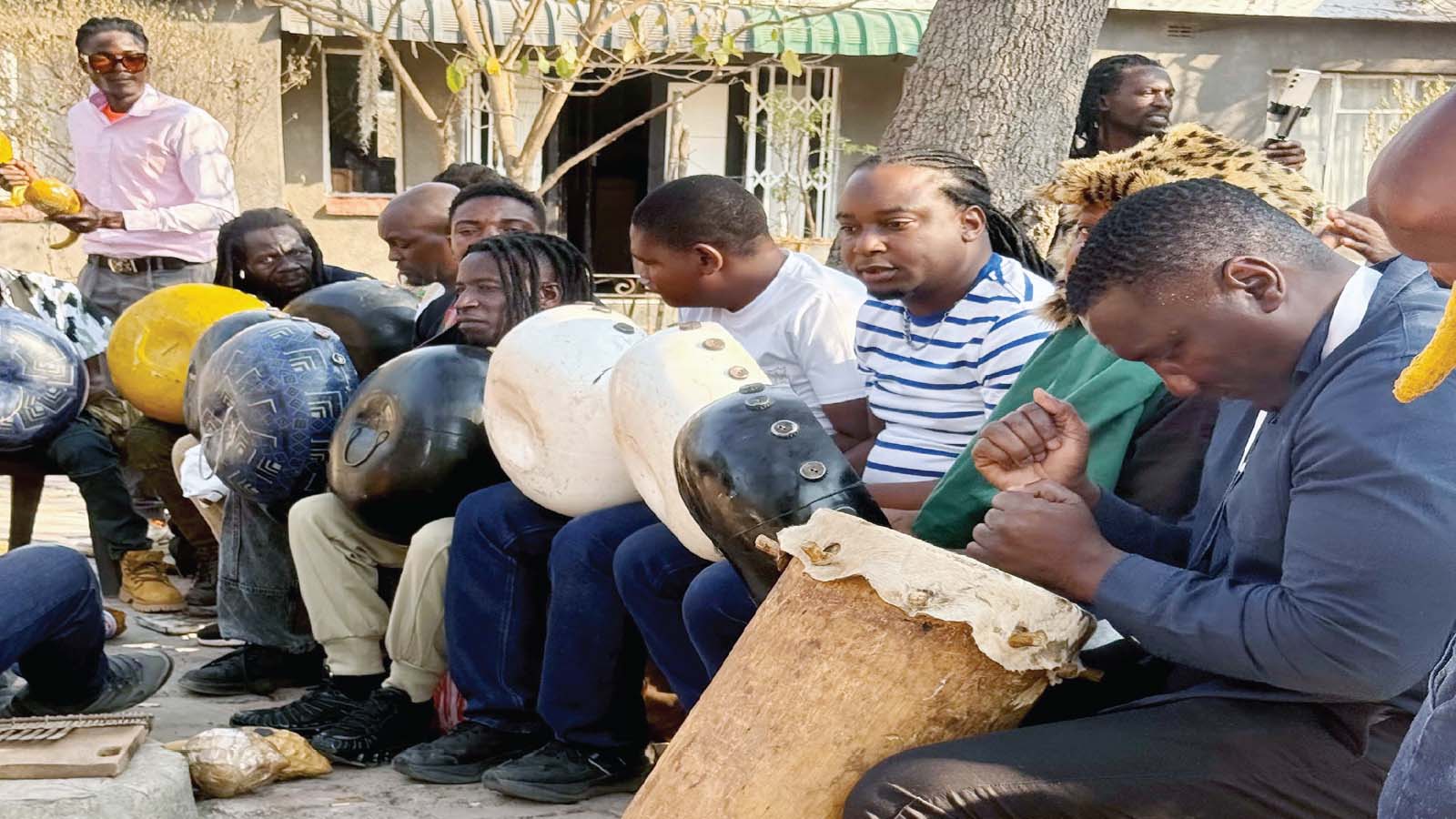
Trust Khosa
SEPTEMBER is a special month on Zimbabwe’s arts and cultural calendar, particularly for those who hold the mbira close to their hearts.
The month has increasingly become a period of celebration, reflection and renewed appreciation of the instrument’s profound cultural significance.
It is a sacred time for Zimbabweans who love mbira and the traditions associated with it.
Over the years, a series of festivities and cultural gatherings have been held during this period to celebrate the instrument and its enduring place in local society.
Deeply rooted in African tradition, the musical instrument is renowned for its spiritual and cultural significance.
In 2020, it was inscribed on UNESCO’s Representative List of the Intangible Cultural Heritage of Humanity, resulting in renewed global appreciation of the instrument.
Since then, September has been observed as Mbira Month in Zimbabwe, providing an important platform for musicians, cultural practitioners, traditional leaders and communities to celebrate and promote the country’s rich heritage.
Two years ago, Bira ReMbira, launched at Gwanzura Stadium in Highfield, Harare, was one of the major highlights of the month.
Last year, the event was held at Heritage Village, along Solomon Mujuru Road (formerly Kirkman Road), in Harare.
This year, the event is set to be held at Glamis Stadium in Harare on September 25 under the auspices of the Ministry of Sport, Recreation, Arts and Culture, alongside the National Arts Council of Zimbabwe (NACZ).
It will run under the theme “Roots to Market”.
The event is expected to bring together mbira players, traditional musicians, cultural enthusiasts and the public to celebrate the Zimbabwean heritage.
Beyond entertainment, such gatherings provide a platform for passing cultural knowledge and traditions from one generation to the next.
The growing prominence of Mbira Month also reflects broader efforts to safeguard Zimbabwe’s intangible cultural heritage.
By creating spaces where traditional music, rituals and indigenous knowledge can be celebrated and shared, organisers are helping ensure that the mbira remains relevant to younger generations.
Besides Bira ReMbira being the major highlight of the month, other cultural activities have already begun across the country.
Dandaro Remachembere — another gathering headlined by female mbira players — will be inaugurated next month at Sherwood Golf Club in Mabelreign, Harare.
Zimbabweans have always taken great pride in their culture, and the enduring significance of the mbira continues to strengthen that connection.
NACZ chief executive officer Napoleon Nyanhi said Mbira Month was “very critical”.
“It is a vital act of cultural reclamation, preservation and global assertion,” said Nyanhi.
“The month is crucial for educating people, especially the youth, about the mbira’s true value and countering negative perceptions, such as its misguided association with evil spirits. It provides a dedicated platform to pass knowledge to the next generation, ensuring the instrument’s legacy endures.”
He urged Zimbabweans to take pride in the instrument and its cultural significance as a way of promoting it.
“September is the designated month for a concerted global celebration, culminating in flagship events like the Bira ReMbira Festival, but we should take pride in this instrument all year round.
“It is one of the few cultural and musical ornaments that are uniquely ours and clearly defines us on the global arts and culture scene. We should actively cherish it or risk seeing it appropriated by others.”
Jive Zimbabwe director Benjamin Nyandoro, who is credited with organising Bira ReMbira alongside Partson “Chipaz” Chimbodza of Chipaz Promotions and Diana “Mangwenya” Samkange, agrees.
“Mbira Month is critical for us since the Government designated September as a special occasion to celebrate this intangible instrument,” he said.
“As usual, a series of events marking this occasion have already been put in place countrywide, with Bira ReMbira being the main event since it is now held annually. This year’s edition will be running under the theme ‘Roots to Market’, where we want to commercialise the mbira and make sure that mbira groups benefit from this initiative.”
Nyandoro hailed the Government for its efforts to preserve the instrument and its culture, describing the move as a step in the right direction.
“It’s quite refreshing to note that this instrument is being observed through a series of activities countrywide,” he said.
Samkange, a mbira player who now doubles as a promoter, firmly believes she has a role to play in the movement.
“September is a bit special to me because I will be wearing many hats as a promoter, player and mentor,” she said.
“Being part of the crew coordinating Bira ReMbira, it is a triumph for me to be at the forefront of organising this festival. This shows that I am doing something remarkable and I will always cherish my calling.”
Her counterpart, Lioness Shumbakadzi, whose real name is Florence Nyamazana, described September as a proud moment for Zimbabwe that should be cherished.
“We are blessed as Zimbabweans that one of our indigenous instruments — the mbira — is now being recognised worldwide, which is a triumph for the creative community. We should always cherish these special moments in life as they mean a lot to us and the entire creative community.
“What I cherish about Mbira Month is that children are also part of the celebrations. Last year, a number of primary school learners participated in the event and showcased what they are capable of when it comes to playing the mbira.”
The involvement of children in Mbira Month celebrations is particularly significant, as it ensures that the instrument is not confined to the older generation.
Over the years, Zimbabwe has produced several mbira players who went on to conquer the world.
Names that instantly come to mind include Mbuya Stella Chiweshe, Dumisani Maraire and his daughter Chiwoniso, Ephat Mujuru and David Tafanei Gweshe (popularly known as Sekuru Gweshe).
Mbira DzeNharira frontman Tendayi “Samaita” Gahamadze, Tichaona “Nyamasvisva” MaAfrica, as well as mbira princess Hope Masike and Vee Mhofu and his Dziva ReMbira have proved to be consistent in promoting the instrument.
With greater exposure and aggressive marketing, Zimbabwe has a strong chance of exporting mbira talent overseas and making an even greater impact on the global arts and culture scene.
Mbira Month is, therefore, more than a celebration of an instrument.
It is a reminder of Zimbabwe’s rich cultural identity and the responsibility to preserve, promote and pass that heritage on to future generations.