

 admin
admin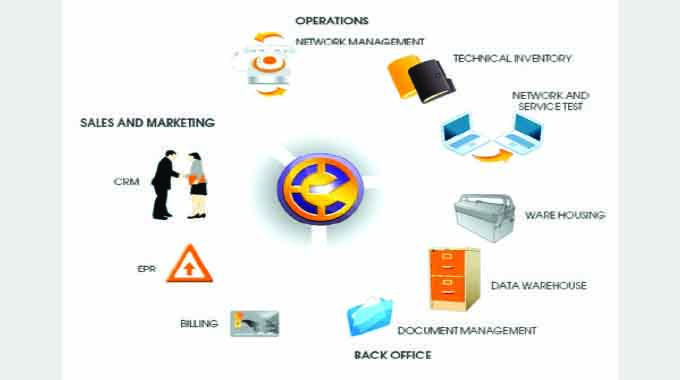
Enacy Mapakame Business Reporter
Zimbabwe’s largest telecommunications company Econet said its systems integration service, the Econet Business Solutions, is aimed at creating digital solutions for companies in various industries including heavy equipment, construction, manufacturing, energy, banking and retail.
Econet, which is showcasing its products and services at the ongoing Zimbabwe Agricultural Show in Harare, indicated that the system integration brings together component sub-systems into one functional system and ensures that all components work together in harmony to preserve productivity and accurate data analysis.
From information obtained at the company’s stand, the Econet Business Solutions is offering companies an innovative system that boosts the speed of information flows and reduces operational costs, resulting in improved productivity and quality of operations.
Econet is currently providing systems integration to companies that offer reverse billing, or zero billing, point-to-point integration, private APN (Access Point Name) and network integrations.
This comes after a recent report by McKenna Consultants, a UK-based software development firm, revealed that businesses of all sizes need a trusted technology partner to help them adapt and transform, boost productivity, improve efficiency and provide exemplary customer service.
The report noted that system integration enables companies to enhance business efficiency as it allows for greater business agility and smarter business decisions.
System integration speeds up company processes. For instance, integrating your company’s software applications can save time and money by improving communication throughout your organisation and making workflows and employees more efficient and productive.
“The system also increases work efficiency and productivity. By joining databases and data sources together to provide new, valuable information and create new products, businesses avoid having to re-key the same data into their systems twice or more,” read part of the report.
By connecting systems to each other, and by providing a central pipeline through which both old and new systems can communicate, integration allows companies to cut costs, as they continue using existing infrastructure and add functionality piecemeal using separate applications and services.
Information gathered by this publication also shows that systems integration not only improves customer experience, but also aids digital transformation and growth.
International best practices dictate that real-time visibility into the customer transaction means employees can provide a more consistent service experience, building customer satisfaction and developing longer term, more profitable relationships.



 Online Reporter