

 admin
admin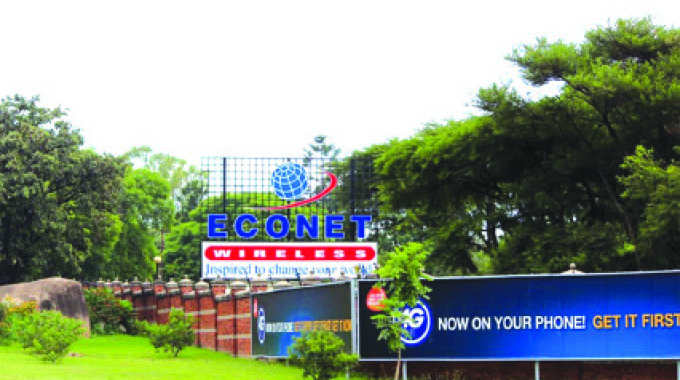
Michael Tome
Business Reporter
ECONET Wireless Zimbabwe (EWZ) maintained its pole position as Zimbabwe’s leading mobile phone network operator in 2022, accounting for 69,9 percent of the subscriptions market share.
EWZ mobile subscriptions market share during the year under review grew by 5 percent over 64,9 percent market share in 2021, while NetOne saw a four percent decline to 27,4 percent over the same period.
Telecel on the other hand lost one percent to rank third with a market share of 2,7 percent.
Econet’s growth during the year can be attributed to significant investment in network infrastructure and better service delivery, which helped it to retain its large customer base and attract new subscribers.
The active subscriber base grew by 7,9 percent to close the year under review at 9 988 105, while NetOne registered a 12,3 percent drop to 3 922 734 subscribers compared to the previous year’s 4 470 592.
Telecel’s dip was even bigger than NetOne’s after the firm’s active subscribers declined by 26,9 percent to 389 951 compared to 533 545 the previous year.
Notably, the growth in active mobile subscriptions, overall, was only driven by one operator, Econet Wireless, given the two other operators experienced declines in their active subscriber bases.
The positive growth in subscribers overall led to a slight increase in the mobile penetration rate, which grew by 0, 3 percent to end 2022 at 94,2 percent from 93, 9 percent in 2021.
Despite Econet’s dominance, competition in the Zimbabwean mobile market remains intense, with players particularly, NetOne, continuing to offer competitive products and services to attract customers.
“The growth in the mobile penetration rate is a result of the 0,3 percent annual growth in active mobile telephone subscriptions. The mobile penetration rate is expected to continue increasing, with the increased adoption of the Internet of Things,” said Potraz in the 2022 annual sector performance report.
Overall, the growth in mobile penetration is a positive sign for the industry and the economy as a whole, as it facilitates increased access to communication and information services, which can drive economic growth and development.
This growth in mobile penetration rate may have various implications for the telecommunications industry, such as increased demand for mobile data services, the need for improved network infrastructure,
ICT commentator, Munesu Chivindi, however, said mobile network operators in the country continued to tussle for the local market share which he deemed healthy for the sector.
“This trend will definitely have various implications for the industry, such as increased competition, changes in pricing strategies, and the need for operators to differentiate their services and offerings to remain competitive,” said Mr Chivindi.
MNOs collectively invested circa $16, 9 billion into their operations in 2022, representing a 370, 9 percent growth from $3,59 billion in the prior year.
Notable among schemes carried out in the period include Econet Wireless’ capacity expansion and the continuation of NetOne’s National Mobile Broadband (NMBB) programme.
NetOne sustained its NMBB programme, which is aimed at enhancing the growth of the country’s digital connectivity.
NMBB is scheduled to install over 340 base stations across the country predominantly 3G, 4G, and 5G technologies as the scheme moves to augment NetOne’s network coverage mainly in border areas countrywide.
The network expansion programme speaks to the high-speed provision of data thus enabling business intelligence as information will now be able to flow quite without difficulty.



 Online Reporter