admin
admin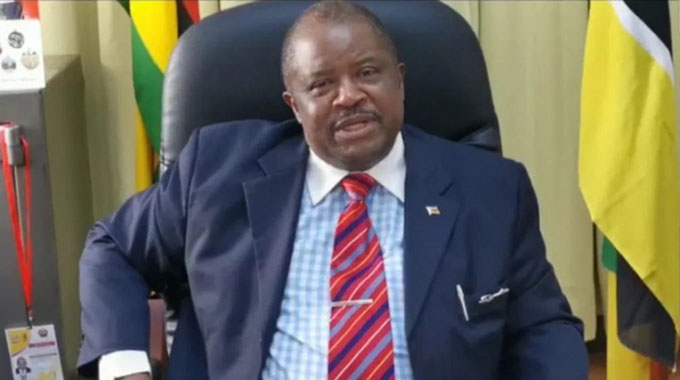
Zimbabwe is pressing ahead with the re-engagement drive as it seeks to normalise relations with countries that had given their backs to Harare in the last 20 years or so.
Further, Zimbabwe wants its foreign diplomatic missions to play a significant role in promoting investment opportunities available in the country for the attainment of Vision 2030 of an upper middle-income economy.
The Ministry of Foreign Affairs and International Trade recently held a commercial diplomacy workshop for diplomats and emphasised the need to promote commercial diplomacy.
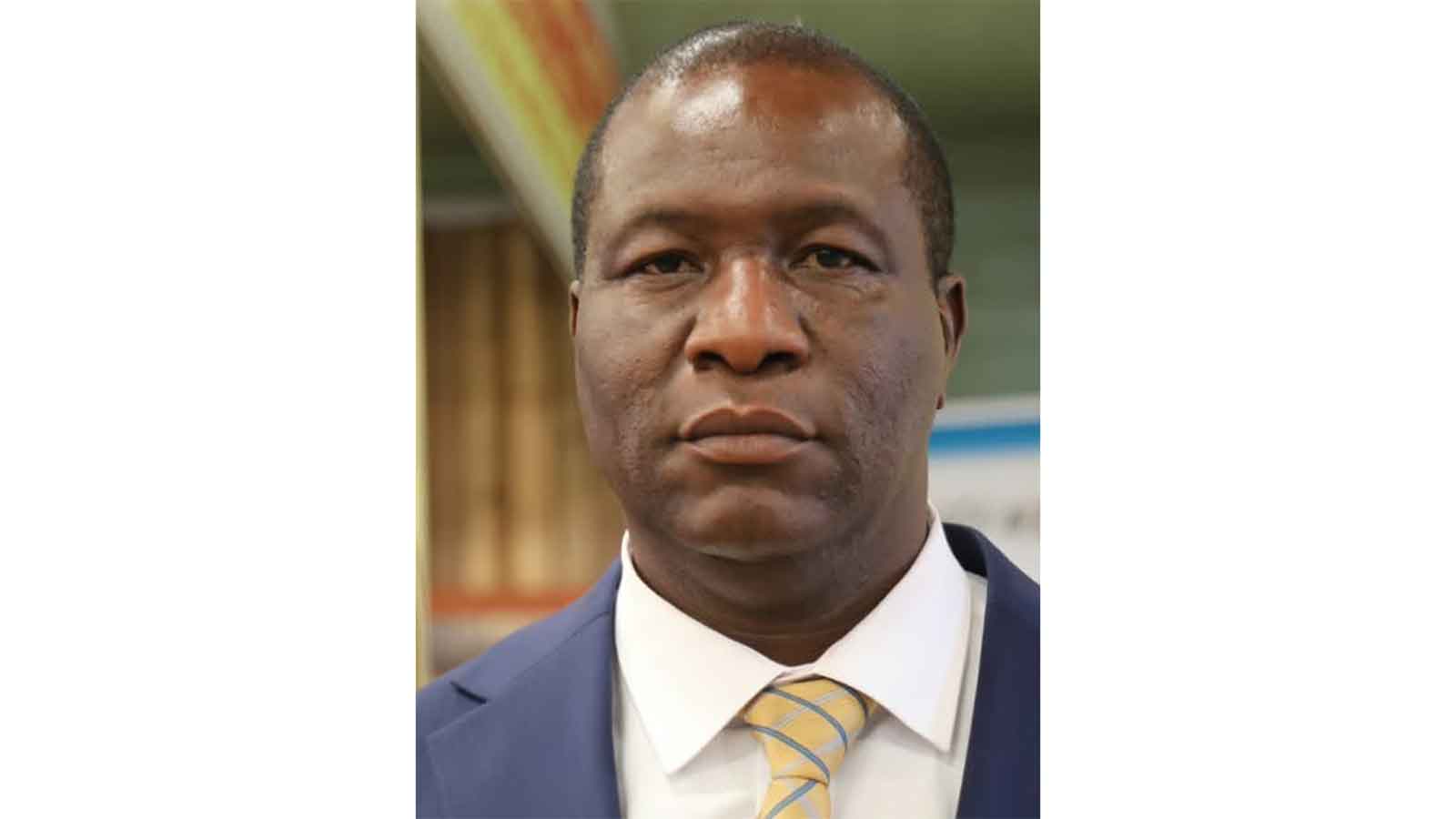
Last week, The Herald’s Deputy News Editor Africa Moyo (AM) spoke with Ambassador Douglas Nyikayaramba (DN), who represents Zimbabwe in Mozambique.
*******
AM: How has been your job since arriving in Mozambique?
DN: As an Ambassador, I am the foreign diplomatic representative of my country who is authorised to handle some political negotiations between my country and where I had been assigned. As Ambassador, I serve as an essential element in the diplomatic process, because I represent my home country on foreign lands, and also serves as an official link of communication between the host nation and my home country.
I am the most visible symbol of my country within the host country and its people. As such as Ambassador, I represent a depth of judgement based on experience accumulated overtime and aggregated across the different parts and functions of the embassy. This is important for the perpetuation of the national interests of the sending nation, in this case Zimbabwe.
According to Henderson (1998:202), most countries operate far-flung diplomatic systems of embassies and diplomatic corps because diplomacy has useful functions that include representing State interests (economic diplomacy), symbolic representation, obtaining information, promotion and protecting of interests of nationals, policy making and negotiation.
AM: Government says it wants Ambassadors to help attract investors. How far have you gone in this regard?
DN: Now, as you might be aware, the thrust of the Second Republic of Zimbabwe under His Excellency President Cde Dr Mnangagwa is on Economic or Transactional diplomacy to turnaround the country’s economic fortune, create jobs and improve the standard of living of our people. Since it is a private sector led economic growth and development, with the support of Government, the work of my diplomatic mission is to support the home country’s business sector.
This includes promoting trade and inward and outward investment. Overall economic diplomacy is the process through which countries work at home and abroad to maximise their national gain in all economic fields including trade, investment and other economically beneficial exchanges.
AM: Tell us if there’s any investors who have expressed interest in exploring opportunities in Zimbabwe? If so, how soon are likely to see them coming to Harare?
DN: My tour of duty in Mozambique as Ambassador Extraordinary and Plenipotentiary of the Republic of Zimbabwe, this far has been very exciting, challenging but productive as a result of the support I received from the host Government as well as colleagues in the diplomatic community. As alluded earlier, since an Ambassador is an official envoy who represents a State to another sovereign State, my interaction with the various Ministries, economic institutions and organisations has been at the behest of the host government. It is also pleasing to note that His Excellency President Filipe Jacinto Nyusi is very keen to see strong business exchanges between the two countries. With that type of support and political will, I am certainly good to go.
AM: Which sectors of the economy have attracted inquiries?
DN: Since the thrust of the Second Republic has been and is on economic diplomacy, it is against this background that, the role of my diplomatic mission is to attract investors to Zimbabwe, facilitate trade with the country of accreditation as well as to identify investment opportunities in Mozambique.
As a Mission, we believe we are on course of fulfilling our mandate. The Mission is fortunate in the sense that the economic pillars of Zimbabwe and Mozambique pillars are identical, being agriculture, tourism, mining and energy.
To this effect, we have identified the low hanging fruits in the Mozambique economy, in those sectors for the immediate to medium term. I will mention one which is already in the public domain in the succeeding paragraph.
In July 2019, Zimbabwe and Mozambique signed a Memorandum of Understanding (MoU) on Cooperation in Agriculture that will enable our extension workers to exchange notes with agriculture experts in Mozambique on how to boost agricultural production in both countries. Zimbabwe can benefit from Mozambique’s vast fertile lands and water resources by utilising land earmarked for private sector production in Gaza to grow rice for local consumption and export. Zimbabweans conversely can be taught on the cultivation of cassava and other economic benefits that derive from cassava. These are issues that are still under discussion with the ministry. We will shed more light when we concretise our discussions. Agriculture is the source of income for 72 percent of the population. It is key to transforming the economy and poverty reduction. This is one of the economic pillars like Zimbabwe in the economic turnaround trajectory.
AM: Any low hanging fruits that could be exploited in the short-term?
DN: Pertaining to the low hanging fruits in tourism, the Embassy has been in discussion with the Ministry of Culture and Tourism pertaining joint marketing of our prime destinations. Zimbabwe and Mozambique have an agreement to operationalise this. Mozambique has a 2500 kilometre ocean coastline with the most unspoiled beach-front which makes it a destination of choice for holiday resorts. Zimbabwe is conspicuous by its absence and yet it’s a source for foreign currency generation.
We are also in dialogue with the international cooperating partners explaining the new investment environment obtaining in the new dispensation. We have engaged with the President of the Mozambique Business Association and strategised on increasing trade between the two countries. We looked at possibilities of Joint Ventures in investments that can be established in Zimbabwe and Mozambique. We now await business delegations from Zimbabwe to come and seal deals with the Mozambican counterparts.
We have also interacted with the Country Manager of the African Development Bank who have indicated interest in supporting Zimbabwe’s economic growth through the private sector initiative, i.e. rehabilitating Olivine Industries and others. With the AfDB we looked at strategies of fundraising resources for the construction of a road to link Zimbabwe and Mozambique via the Sango Border Post. The construction of this road will significantly facilitate connectivity by road between the two countries and enhance trade.
Sectors of the economy that have attracted inquiry are agriculture, mining, tourism, education and manufacturing. I am glad to inform you that for the first time in many years, we hosted a ZimTrade delegation that was in Maputo to conduct a market survey of the Mozambican market. The ZimTrade, we are informed are organising an inward trade mission to Zimbabwe with the objective of conscientising their counterparts the production capacity and potential available. The response has been tremendous. The details will be shared with you at the appropriate time.
AM: Tell us of any other activities you have lined up, and time-lines, to attract investors.
DN: We anticipate a business delegation organised by ZimTrade to organise an outward trade mission to the provinces of Maputo, Gaza and Inhambane. Here there is huge potential to court investors for joint partnerships, markets for our goods and services as well as strategic linkages.
AM: Some investors say despite efforts to reform the doing business environment in Zimbabwe, inconsistencies remain. What are potential investors saying there?
DN: Regarding the reforms, Zimbabwe has done well, the elephant in the room is on the issue of currency.
AM: As we conclude, what are your last remarks?
DN: Mozambique is pregnant with investment opportunities. However, to tap into that market we advocate for a change of mind-set within our business circles. Zimbabwean agricultural produce is 100 percent organic and this fact alone makes our product, the product of choice. Zimbabwean farmers and entrepreneurs are encouraged to look into this market and establish business here. We appeal to the Ministry of Transport and Infrastructural Development to prioritise the construction of a tarred road linking the Masvingo Province and the Gaza Province.
AM: Thank you for your time, and all the best in your endeavours.
DN: You are welcome.


 Online Reporter