admin
admin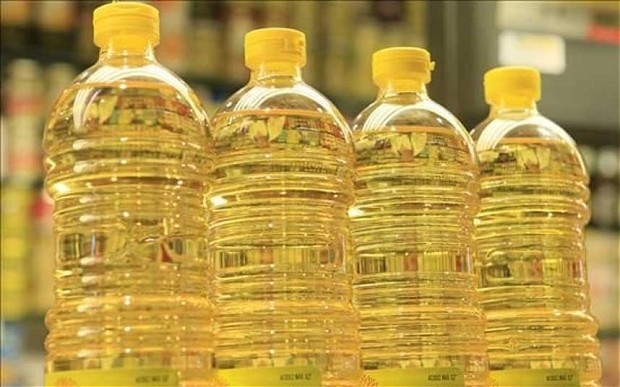

Gabriel Masvora
AT the height of shortages of most basic commodities in Zimbabwe around 2008, the few people who were importing cooking oil into Zimbabwe were selling a two-litre bottle at around R100 (then $10).
Local oil expressers were not only failing to meet demand but were allegedly channeling the few they were producing to the black market because it was more lucrative than selling through traditional retail shops.
A few months later when some shops were granted licences to sell goods in foreign currency, the country started to see some price changes in the pricing of cooking oil.
The breakthrough would come in 2009, when the country officially abandoned the use of the Zimbabwe dollar and used foreign currency and also relaxed import regulations to allow the business community to import more basic commodities.
Within a few months, a number of shops were filled with imported basic commodities especially from South Africa.
Cooking oil was one of the major products that was being imported. Its price too went down from the average $10 that was prevailing on the black market to around $5.
As a nation that was coming from a shortage and which had been once exposed to a price of $10 per two litre on the black market, the $5 price was seen as a relief.
People were buying without thinking twice because availability was more important than the price.
But this also presented a challenge for local manufacturers who had joined the black market euphoria and were finding it difficult to adjust to such a big price knock.
This resulted in imported cooking oil literally taking over the local market.
According to the Confederation of Zimbabwe Industries (CZI), 90 percent of cooking oil that were in the shops at that time were imports while only 10 percent was produced locally.
Such a situation was pointing to the end of oil pressers in Zimbabwe. They were simply drifting towards oblivion.
As people adjusted to the ready availability of foreign currency, they also started travelling more to neighbouring countries and discovered that in fact even the $5 which they were being charged locally was exorbitant.
People begun to import their own cooking oil and other basics and as a result the price of some of the imports including the cooking oil further went down.
But it is not this story which is inspiring. It is the steps which local cooking oil companies took to reclaim their place in the sun.
Oil pressers, among other sectors launched a spirited campaign to force Government to either ban or increase the duty for cooking oil to encourage people to buy local and support industrialisation.
The ordinary people were never supportive of this. All they wanted to see was a product available on the shelves at a competitive price. The Government too was careful not to upset the balance. It did not want to create shortages or price hikes by simply increasing duty on the product.
On the other hand Government could not ignore the call to support the local industry. There are so many benefits — creation of employment, increase in tax from workers and companies among others. In fact it is the wish of most governments to see their own companies prosper.
The Government did well, they implemented some sort of gradual process where they started marginally increasing the duty while testing if the local producers could then fill the gap without causing shortages and huge price increases.
At first the local companies managed to fill the gap but the issue of pricing was still thorny.
Their product was still priced higher than the imports resulting in consumers still preferring to buy the imported goods.
To their credit, the oil pressers did not give up. They had evidence that their capacity was enough to meet local demand.They gradually adjusted their prices to be closer to the imported goods.
This must have been a painful process but they knew that once they win this, they could operate as any other international company. You make profits by pushing volumes rather than trying to put outrageous mark ups.
With each passing day the pressers were also adjusting their prices at the same time ensuring that supply was maintained.
Over the past few years, the companies have reclaimed the market not only through lobbying the Government to completely ban imports but by proving that they are also capable of competing.
Today CZI says locally manufactured cooking oil constitutes 90 percent of oil on the market while only 10 percent is imported.
What is so encouraging is that it is not only about availability but pricing as well. The prices of the local product is at par with that of the imported product while in some cases the local product is actually cheaper.
Today local manufacturers do not even want Government protection. They fought their war by increasing capacity and elbowing out the imports.
This is a great story which shows that while Government is needed to ensure that companies are protected from imports, it also takes the will of the companies to prove that they are capable of filling the gap.
Considering that the cost of production is still high in Zimbabwe compared to other countries in the region, the country needs to give a big gratitude to local cooking oil companies. They have tried to stay afloat despite all the challenges.
Imagine if these companies were operating in an economy where electricity is cheap and readily available, where raw material could be easily accessed at cheap rates.
An environment where they could borrow cheap capital to retool.
It is obvious that under such an environment, these companies could be exporting now.
They could even be causing shockwaves in other countries just like what we used to do with a number of products in the past.
That is why it is difficult to listen to all these other sectors that have been pushing Government to just close imports without showing the initiative to provide the same products at competitive prices.
Take for example the clothing sector. They have been clamouring for the ban of cheap imports but what have they done to show that they can produce and cover the gap at competitive prices?
There are many sectors which have been given a helping hand by the Government for them to recover.
The Government has banned or introduced high import duties on many products but we still do not see any change in supply and prices from local companies.
This is one of the reasons why there is rampant smuggling. It is because some people still see a gap where local companies are failing to meet demand or rather are supplying the goods at very high prices.
It is time to take some notes from cooking oil companies. They operate in the same Zimbabwe with all the challenges that other companies are complaining of.
They also experience load-shedding, they borrow from the same banks where interest rates are around 20 percent and they are taxed by the same Zimra.
But instead of just sitting there and mourning, the companies have managed to work their way into the market to the extent that today their products now cover 90 percent of the market at prices that do not even make people think of crossing the border to buy in South Africa or Botswana.



 derick.khumalo