

 admin
admin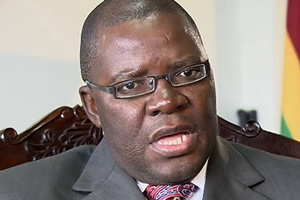

Oliver Kazunga Business Reporter
FINANCE Minister Tendai Biti has revised downwards the projected economic growth rate for this year to 3,4 percent from five percent earlier predicted in the 2013 national budget.Presenting the mid-term budget statement last week, he said developments during the first half of the year indicated economic stagnation mainly through underperformance of key sectors of the economy, agriculture and mining.
“Accordingly, agriculture growth has been revised downwards from 6,4 percent to 5,4 percent in 2013. Similarly, projected mining output has fallen sharply, to give a revised growth of 5,3 percent from 17,1 percent. As a result, overall growth is now projected at 3,4 percent, shedding 1,6 percent from the 5 percent earlier envisaged,” he said.
The downward revision in agriculture growth as on account of anticipated declines in maize, groundnuts and cotton output owing to the poor 2012/13 rainy season.
Poor performance of the mining sector resulted in the industry’s contribution to the Gross Domestic Product this year poor. This was largely attributable to falling international mineral prices, against rising mineral production costs, and perennial challenges related to lack of long term financing have had a profound effect on gold and diamond mining houses.
In the 2013 national budget presentation, Minister Biti indicated that the economy exhibited signs of growth slow-down.
He said economic growth rate decline had also been reflected by slowdown in growth of aggregate demand, which was now projected to grow by seven percent in 2013, down from the original forecast of 12 percent.
“The seven percent growth in aggregate demand will be supported by rising final consumption, notwithstanding marginal growth in disposable income due to the liquidity crunch as indicated by asymptotic growth in money supply,” he said.
On investment, Minister Biti said: “While domestic investment was primarily limited by the liquidity challenges prevailing in the economy, foreign direct investment was mainly constrained by perceived risks associated with the elections as well as the Indigenisation and Empowerment regulations, all of which have seen investors adopting a cautionary ‘wait and see attitude’.”
Private investment as a result, he said was projected at 6,3 percent of the Gross Domestic Product (GDP) in 2013.
On the other hand, public investment’s original target of 4,4 percent remains low and unachievable due to overcrowding from unsustainably high recurrent expenditures of 32.6 percent of GDP.
Minister Biti said in terms of external absorption, a slight improvement was anticipated due to marginal growth in exports.
The slow growth of exports has been attributed to lack of competitiveness and downside risks associated with the fragile global economy.
“A slowdown in import growth is also expected as a result of low investment absorption and squeezed disposable incomes.
“The above economic developments have necessitated a review of the 2013 Macro-economic Framework, with overall GDP growth as alluded to above, now revised downwards to 3,4 percent, while exports and broad money were reduced to $4,5 billion and $4,4 billion, respectively”.
However, Minister Biti said Government revenues were projected to slightly rise above the original target, not on account of improved economic activity, but rather in view of the new revenue measures announced during the first quarter of 2013.


 Online Reporter
 derick.khumalo