

 admin
admin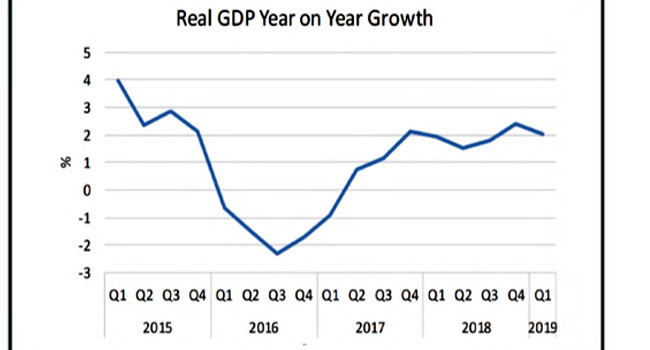
Elias Pacheso
Continuing from where I left off last week it is clear that the challenges caused by the Covid-19 pandemic are not going away soon. They will continue to haunt us for sometime to come and offer us an opportunity to transform ourselves as an economy.
The IMF revised its growth estimates for the Zimbabwean economy from a modest growth of less than 1 percent to a negative 7,4 percent this week as a result of the coronavirus, drought and other challenges facing our nation.
We will not dwell on that this week since the world economy is equally affected and tittering on the brink of collapse. This crisis is unprecedented and we are yet to see how everything will unfold.
What lessons can we draw as a country from the current challenges. The first lesson we can pick up is that globalisation as we know has been changed.
As quickly as countries took off barriers to trade and movement they are quickly erecting them to protect themselves and these barriers may stay even longer after coronavirus is managed or contained.
It goes without saying that as a country we should look at the impact of this on our supply chains and future relationships with other nations. Being a landlocked country, our situation is not ideal and makes us vulnerable.
The fallout arising from the spread of the disease across the globe will be felt across the board especially by smaller economies such as Zimbabwe.
However, as highlighted this disruption offers us an opportunity to transform ourselves and reposition our nation in the emerging economic order post the crisis.
It is very easy to assume that we have no role to play in how things turn out but this is far from the truth.
There is a lot that we can do to turn the crisis into a profitable opportunity, but first we must focus on coming out strong. The current isolation measures being pursued by the Government should be strengthened to limit the spread of the pandemic.
For a small already struggling economy such as Zimbabwe it may be argued that closing down the economy is more damaging and will result in more deaths due to hunger.
The opposite is even more damaging as the country’s capacity to handle more sick people is limited.
Opening up or relaxing the lockdown measures will result in the disease affecting more people and requiring even more resources to deal with an equally unmanageable situation.
When faced with such a dilemma the choice is simple: save more lives and direct resources to the most vulnerable group. It is this area of vulnerable groups that the government should be spending its precious time and resources on at this time.
Unfortunately for Zimbabwe due to drought and general economic challenges arising there from the number of vulnerable people is quite large and growing as livelihoods are affected.
Jobs are being lost as a result of the lockdown, but these will be recovered when the threat is neutralised.
Unfortunately for many these jobs will not be the same and this is another important area where serious intervention is required. As an economist I see the importance of economic planning at this stage.
Within the economic planning unit we must be coming up with various models and painting scenarios of where we see things going.
A review of the key economic sectors of the Zimbabwean economy will reveal a significant dependency on the services sector as well as primary sectors such as Primary agriculture and mining sectors.
Over 60 percent of this activity is based on the informal economy. The country depends on imports and worryingly of staple food items.
Unlike other countries that are not diversified, the Zimbabwean economy is by far one of the more diversified economies in Southern Africa. This is despite the fact that many of its industries are facing challenges.
In a sense with clear policies and adequate measures these industries can be resuscitated and help the economy prosper post coronavirus.
This is particularly important and should be the focus of economic planners because many countries will for a long time be inward looking as they battle to contain the damage caused by the pandemic.
What then can the government do to ensure that we reap the full benefits of the diversity of our economy? It goes without saying that without adequate inputs more secondary production industries such as textiles, steel and fabrication, construction, pharmaceuticals, and agro-processing will not be revived.
The buck still stops at the agriculture sector! We must produce more raw materials and do so more efficiently with never before seen zeal! This means that the agriculture sector must be re-sprioritised.
It has long been known that this sector needs tender loving care and more importantly more land must be utilised especially in areas with dams and irrigation facilities. Various studies have been done and it is clear that focusing on this sector will unlock other sectors.
For many years the country has also depended on the tourism sector with towns like Victoria Falls being dependent on arrivals only with little else being done in these cities.
It goes without saying that such areas will be most affected for sometime to come and deserve government support.
The role played by technology which we touched on last week is already leading to new business models in the education sector as well as the tourism sectors in other countries and Zimbabwe should be no exception.
However, for progress to be experienced deliberate supportive and transformative policies are needed.
It is my hope that ministries and technical experts will be alive to these facts and move in quickly to do the needful to help save jobs and adjust to the new way of life which is here to stay.
Clearly in all this there is also a role for individuals. The last three weeks have been instructive and quite telling in terms of what is expected of us in this unfamiliar way of life.
It goes without saying that we are having to learn new skills and must deliberately do so to ensure that we continue to be relevant or to make a difference. What are some of these skills that you need to learn and how do you learn them?
The most important thing that you need to have at this time is emotional intelligence and the ability to accept that life is changing.
You must make the necessary adjustments and learn about remote working, learning and social distancing. Stay active and stay healthy and play your part in ensuring that we continue to contribute to the success of our economy.
Use the internet to learn new skills or to offer your skills to those who need your services.
If you are in government, think about how you can make it easier for citizens to contribute to the success of the economy and simplify processes. We need each other more than ever wherever we are despite our social distancing. Stay safe and play your part until next time.



 Online Reporter