

 Online Reporter
Martin Kadzere
Senior Business Reporter
ZIMBABWE has made significant progress towards achieving upper-middle-income status, with the country’s Gross National Income per capita growing by 84 percent since 2021, Finance, Economic Development and Investment Promotion Minister Professor Mthuli Ncube has said.
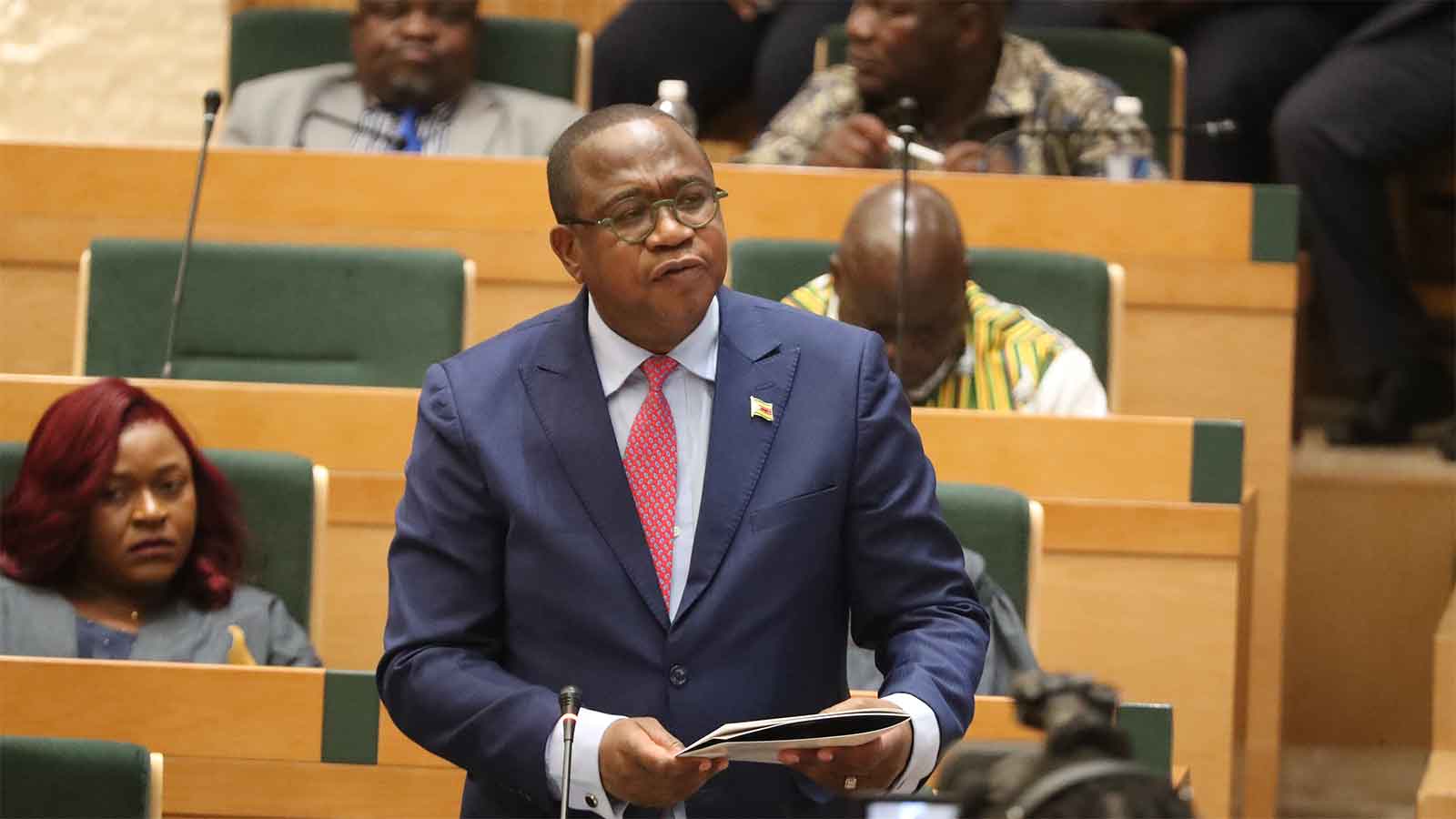
Presenting the Mid-Term Budget Review Statement at New Parliament Building in Mt Hampden yesterday, Prof Ncube said since the implementation of the National Development Strategy 1 (NDS1 2020-2025), GNI per capita has increased from about US$1 700 in 2021 to around US$3 200 in 2025.
To reach the World Bank threshold for upper-middle-income status — defined as a GNI per capita income between US$4 636 and US$14 375—Zimbabwe needs an additional minimum per capita growth of US$1 400 between 2026 and 2030.
GNI per capita is essentially a measure of the average income earned by a country’s citizens in a year, spread out across the entire population.
“While the Government has made commendable progress towards the realisation of Vision 2030, there is a need to accelerate the implementation of strategies and policy reforms in the medium term to ensure the attainment of Vision 2030,” Prof Ncube said.
He said local currency confidence and price stability provide a firm foundation for upper-middle-income goals.
Under President Mnangagwa’s administration, Zimbabwe launched Vision 2030—a strategic master plan aimed at transforming the country into an Upper-Middle-Income society.
The framework focuses on restoring economic stability, expanding mining and agriculture, modernising national infrastructure, and driving inclusive development across all provinces.
Implementation was structured into sequential economic plans, starting with the Transitional Stabilisation Programme (2018–2020), followed by NDS 1 (2021–2025) and culminating in NDS 2 (2026–2030).
Analysts have commended the country’s economic trajectory, as evidenced by the unprecedented levels of construction taking place nationwide—a key metric used to measure citizen incomes as well as investment across all sectors of the economy, which is churning out better-value employment opportunities.
“As we move into the second half of the year, I am confident that we will galvanise the collective energies of all Zimbabweans towards the realisation of Vision 2030, “Towards a prosperous and empowered upper middle-income society,” said Prof Ncube.
On economic performance, Prof Ncube said Zimbabwe’s economy posted a strong 6,8 percent growth during the first quarter of 2026, up from 4 percent in the same period last year.
“The economy performed impressively at 6,8 percent during the first quarter of 2026,” he said. “This is much higher compared to about 4 percent during the same period in 2025.
“If we continue on this trajectory, it is possible to meet or surpass the 8,3 percent recorded in 2025 for the full year of 2026.”
Prof Ncube highlighted major economic milestones, announcing that annual ZiG inflation dropped to 3,2 percent in July 2026—the lowest level recorded in decades.
Additionally, foreign currency receipts surged by 47,8 percent during the first half of the year, reaching US$10,7 billion compared to US$7,3 billion recorded over the same period in 2025.
Month-on-month inflation remained firmly anchored below the 5 percent target despite global oil price shocks, while the first-quarter current account surplus reached US$606,3 million.
On sectoral performance, agriculture expanded by 27,9 percent in 2025 and is projected to grow by an additional 6,9 percent in 2026, with grain output expected to hit 2,4 million tonnes.
The mining sector grew by 10,4 percent in 2025 and is set to expand by 5,6 percent in 2026, driven by a projected gold output of 55,6 tonnes.
Lithium exports increased by 229,8 percent during the first half of 2026 to US$782,2 million from US$237,2 million in the first half of 2025.
Manufacturing is projected to grow by 5,2 percent in 2026, supported by improved capacity utilisation, which rose to 61,2 percent in 2025 and is expected to reach 63,5 percent this year.
Regarding fiscal and monetary management, the 2026 National Budget projects total revenues of ZiG288 billion against expenditures of ZiG290.9 billion, leaving a deficit of ZiG3,2 billion.
Revenue collections in the first half of the year reached ZiG137,8 billion against actual expenditures of ZiG123,6 billion.
Value Added Tax (VAT) remained the primary revenue driver at 28,3 percent, followed by personal income tax at 16,6 percent, corporate income Tax at 13,8 percent and excise duty at 8,5 percent.
Highlighting the Government’s commitment to human capital and infrastructure development, Prof Ncube said ZiG27,2 billion was channelled into social services during the first half of 2026.
Of this allocation, education received the largest share at ZiG16,9 billion, while health and social protection were allocated ZiG9,5 billion and ZiG832 million, respectively.
“Treasury disbursed a total of ZiG832 million towards programmes supporting vulnerable households, children, persons with disabilities, the elderly, and other disadvantaged groups,” said Prof Ncube.
Parallel to social spending, ZiG11,8 billion was deployed towards critical infrastructure, supporting ongoing projects across transportation, water and sanitation, information communication technology (ICT), health, and housing—including key road rehabilitation programmes and national stadium developments.
The Treasury chief also reported key gains in the energy sector, where power generation surpassed expectations.
Electricity output reached 4 774.2 gigawatt-hours (GWh) in the first six months of the year—7,8 percent above target—complemented by accelerated rural electrification initiatives that expanded power access to essential community institutions, including clinics and schools.
Addressing the fiscal footprint, Prof Ncube detailed that public and publicly guaranteed debt stood at ZiG580,9 billion (about US$21,7 billion) as of June 2026.
Debt service obligations remained active during the period, with the Government making payments of US$170 million towards external obligations and ZiG15,3 billion towards domestic debt.
Most performance targets under the International Monetary Fund (IMF) Staff-Monitored Programme have been met, reinforcing ongoing arrears clearance and debt resolution efforts.
Prof Ncube expressed confidence in national budget execution, noting that 42,5 percent of allocated funds were utilised in the first half of the year, eliminating the need for a supplementary budget.
He said the fiscal trajectory remains aligned with Vision 2030 objectives, backed by a comprehensive agricultural framework for the 2026/27 farming season centred on climate resilience, food security, and sustained macroeconomic stability.
“Though the domestic economy faced challenges such as the Middle East War, which led to some deferment of fuel taxes and revenue losses exceeding US$74 million, the Government prepared to make strategic adjustments where needed, including realigning expenditures in preparation for the forthcoming drought season,” Prof Ncube said.
— HIGHLIGHTS—
- Gross National Income per capita rose by 84 percent, from US$1 700 in 2021 to US$3 200 in 2025
- Real GDP grew by 6,8 percent in Q1 2026, up from 4 percent in Q1 2025
- Annual ZiG inflation dropped to 3,2 pc in July 2026 — a multi-decade low
- Foreign currency receipts surged 47,8 percent year-on-year during H1 2026, US$10,7 billion
- Current Account Surplus reached US$606,3 million in the first quarter of 2026
- Agriculture projected to grow by 6,9 pc in 2026, grain production hitting 2,4 million tonnes.
- Mining to expand by 5,6 percent in 2026 behind expected gold output of 55,6 tonnes
- H1 2026 lithium exports jumped 229,8 percent to US$782,2 million
- Capacity utilisation projected to reach 63,5 percent in 2026, driving a 5,2 percent sector growth
- Electricity generation exceed targets by 7,8 percent
- H1 2026 revenue collections reached ZiG137,8 billion against expenditures of ZiG123,6 billion
- 42,5 percent of total annual allocations utilised in H1, keeping spending within targets without requiring a supplementary request
- Primary tax drivers, VAT, 28.3 percent, personal income tax, 16,6 percent, corporate tax 13,8 percent, excise duty, 8,5% percent
- Projected revenues of ZiG288 billion against expenditures of ZiG290,9 billion
- Treasury disbursed ZiG27.2 billion in H1 2026 (Education: ZiG16.9 billion; Health: ZiG9.5 billion; Social Protection: ZiG832 million)
- Disbursed ZiG11,8 billion towards national road rehabilitation, water/sanitation, ICT, housing, and national stadium projects
- Public and publicly guaranteed debt stood at ZiG580.9 billion (US$21,7 billion) as of June 2026
- Government paid $170 million towards external debt and ZiG15.3 billion domestic debt during H1.
- Middle East conflict disruptions caused fuel tax deferments and revenue losses exceeding US$74 million



