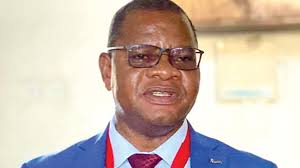
Dr Jabulani Dhlamini
SOMETIMES, the most compelling evidence of economic development is not found in statistics, policy documents or investment announcements.
It is visible in the changing physical landscape around us.
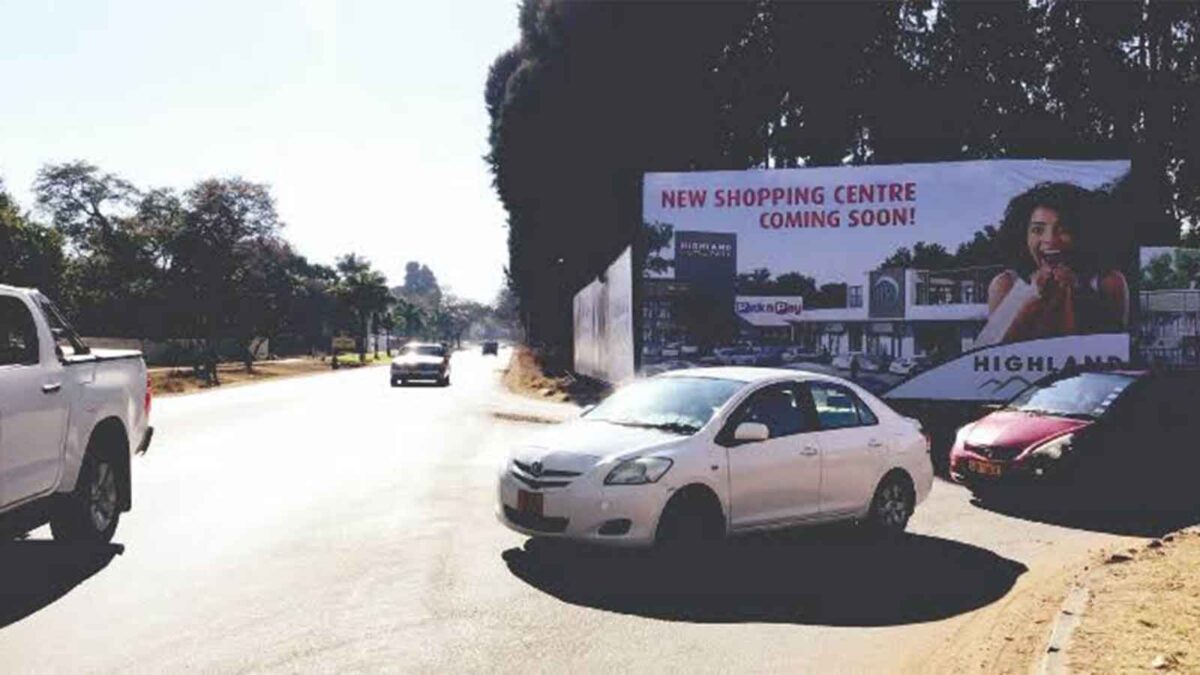
A drive along ED Mnangagwa Way — formerly Enterprise Road — in Harare offers an interesting illustration of this transformation.
What was once predominantly a road passing through established residential suburbs is steadily evolving into a vibrant corridor of commercial activity, hospitality, retail, offices and modern housing developments.
Starting from the city centre and approaching the intersection with Churchill Avenue, one begins to notice the changing character of the road.
A new Chinese hospitality development signals the growing diversity of investment in Harare’s property and tourism sectors.
Further along, Queen of Hearts has established itself as a distinctive hospitality and lifestyle destination, demonstrating how existing properties can be creatively transformed into commercially productive spaces.
Then comes Highland Park, arguably one of the most significant developments along the corridor.
What began as a modern shopping centre has become the foundation of a much larger mixed-use precinct — retail outlets, restaurants, offices and complementary developments are transforming this part of Highlands into a destination for shopping, business and leisure.
The development of Nedbank Zimbabwe’s new head office opposite Highland Park adds another important dimension.
At the most recent ZIMREAL conference, property developer Terrace Africa indicated that the Zimbabwe Investment and Development Agency (ZIDA) is expected to develop its offices within the broader Highland Park precinct.
Together with planned hotel accommodation, conferencing facilities and further commercial developments, these investments reinforce the area’s emergence as a significant business and commercial destination.
They also represent more than attractive buildings.
They reflect long-term commitments of capital, employment opportunities, demand for professional services and confidence in the future commercial potential of Zimbabwe.
Continuing along the road, one encounters further evidence of entrepreneurial activity. Chinese-owned hospitality and retail establishments sit alongside investments by Zimbabwean entrepreneurs, including prominent businessman Philip Chiyangwa’s office complex.
Modern mixed-use commercial buildings, a gym, service stations and restaurants add to the variety of economic activity.
Establishments such as Tiger’s Milk illustrate the emergence of contemporary leisure and dining destinations outside the traditional central business district.
Further along, the refurbished Chisipite Shopping Centre demonstrates another important aspect of development: the renewal and upgrading of existing commercial infrastructure.
Nearby, hospitality establishments including Mozambik and La Parada contribute to the growing concentration of restaurants and lifestyle facilities.
At the intersection with Harare Drive, the new Cardinals Corner development, incorporating retail facilities including SPAR, Doppio Zero and a service station, provides another example of investment responding to the changing commercial character of the corridor.
The transformation does not end there.
As the road extends towards Glen Lorne and the Shawasha Hills area, new residential and mixed-use developments are reshaping previously low-density neighbourhoods.
Developments associated with institutional investors such as Old Mutual, alongside emerging higher-density residential projects, point towards changing approaches to urban land utilisation.
What makes this transformation particularly significant is the cumulative effect of these investments.
Individually, each shopping centre, restaurant, hotel, office building or residential development represents a business opportunity. Collectively, they create an economic ecosystem.
Construction creates demand for building materials, contractors, architects, engineers and other professionals.
Completed developments create employment in retail, hospitality, security, maintenance and property management.
Businesses attract customers, customers attract further investment, and property values can strengthen as commercial activity becomes established.
Importantly, the developments also illustrate the contribution of different categories of investors: local entrepreneurs, institutional investors, international businesses and property development companies.
There is also an important urban-planning dimension.
In 2021, the Harare City Council designated ED Mnangagwa Way as a development corridor, recognising the potential for commercial and mixed-use developments along the route.
The visible transformation demonstrates how an enabling planning framework, combined with private-sector initiative and investment, can influence the economic character of an entire corridor.
However, continued development must be supported by appropriate infrastructure.
Road capacity, access arrangements, drainage, pedestrian safety, parking, water supply and other municipal services must evolve alongside commercial expansion.
Without such coordination, the very success of the corridor could create congestion and infrastructure pressures that undermine its attractiveness.
There is a broader lesson for Zimbabwe.
Economic development should not be understood exclusively through large industrial projects or national investment figures. It is also expressed through the cumulative investments that transform neighbourhoods, create jobs, expand commercial opportunities and improve the built environment.
Similar development corridors can be seen in other parts of Harare such as Borrowdale Road and can emerge across Zimbabwe’s cities and towns where appropriate planning, infrastructure investment and entrepreneurial initiatives come together.
ED Mnangagwa Way is increasingly becoming more than a road connecting different parts of Harare.
It is a visible illustration of economic transformation, investor confidence and the possibilities that arise when land, capital and enterprise are brought together productively.
Dr Jabulani Dhlamini is a strategic management professional and real estate consultant with more than two decades of experience spanning strategy formulation, strategic planning facilitation, corporate entrepreneurship, organisational restructuring, governance, SME (small and medium enterprise) development, strategic risk management and real estate development and advisory. Contact details: +263 781 322 478, [email protected], website: http://www.jabulanidhlamini.com/