admin
admin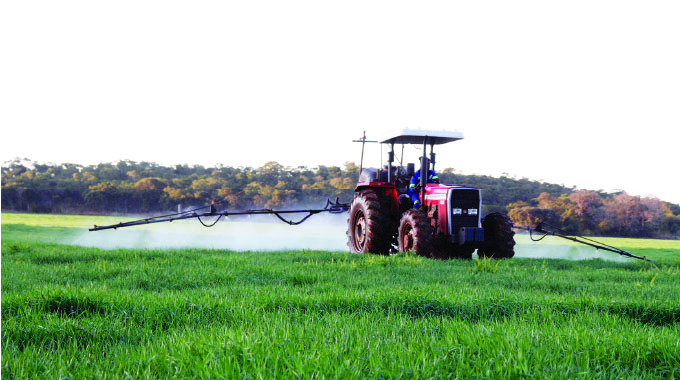
Elita Chikwati
Features Editor
Zimbabwe has become self-sufficient in wheat after recording the highest yield since production of the cereal started in 1966, thanks to the Second Republic’s Agriculture Recovery Plan aimed at boosting food security and nutrition in line with Vision 2030.
In 2022, the country recorded surplus in wheat after harvesting 375 131 tonnes of the crop from the 80 883 hectares planted by farmers during the winter cropping season.
Zimbabwe requires 360 000 tonnes of wheat for national consumption annually.
Zimbabwe and Ethiopia were the only countries in Africa that attained self-sufficiency in wheat last year.
The attainment of wheat self-sufficiency in Zimbabwe, is premised on Government’s agricultural transformation anchored on active private and public sector participation.
Over the years, Zimbabwe has been a wheat importer as local production could not meet the annual requirement of 360 000 tonnes.
Wheat production had been affected by several challenges that included interruption of power supply, high costs of production and unavailability of funding as most financial institutions were not willing to fund the crop due to high risks associated with the cereal.
The Second Republic has been targeting increases in wheat production to meet the national requirement in line with the Agriculture and Food Systems Transformation Strategy, the Agriculture Recovery Plan and the National Development Strategy 1 and in pursuit of the vision of becoming an empowered and prosperous upper middle income society by 2030.

Government through the Ministry of Lands, Agriculture, Fisheries, Water and Rural Development introduced a number of strategies to boost production and wheat has not been left out.
The Ministry of Lands, Agriculture, Fisheries, Water and Rural Development has been working closely with important stakeholders to ensure all things were in place for wheat production.
Key stakeholders including the Zimbabwe National Water Authority (Zinwa) have been working hard to ensure farmers have supply of water for irrigation while the ZETDC also came up with different strategies to ensure farmers had uninterrupted power supply during the winter cropping season.
This saw farmers being put in clusters so they could be prioritised on power supply.
Inputs manufacturers also played their role in ensuring enough supply of wheat seed on the market while the Ministry ensured farmers received the required advisory services to produce wheat viably.
Farmers were trained on important agronomic practices to increase yields.
The private sector was also tasked by Government to contribute at least 40 percent of the production of their raw material requirements in line with Government policy.
As with all crops under the Second Republic a number of public and private financing arrangements were put in place so farmers could access their needed inputs in good time.

Wheat was planted under the Presidential Inputs Scheme, National Enhanced Agricultural Productivity Scheme also known as Command Agriculture/CBZ Agro-Yield and private sector schemes.
Agritex extension teams were in full force going to wheat growing areas training farmers on planting, calibration of planting machines, fertiliser application and disease control among other important agronomic practices.
Efforts were also made to avail combine harvesters so that the wheat could not be damaged by early rains.
Following the success registered on wheat production, Government is also earmarking another record harvest form the 2023 season.
Preparations for the 2023/24 summer and winter seasons were done earlier because of the Russia and Ukraine conflict.
Combined, Ukraine and Russia were responsible for about 26 percent of global wheat exports in 2020 and the conflict makes it important for Zimbabwe to be self-sufficient and opens potential export markets.
According to the Ministry’s state of preparedness report on for the 2023 winter cereal production season, early preparations for the 2023/24 summer season and the 2023 winter wheat enabled consultations with key stakeholders in the agriculture sector to improve co-ordination and planning for the season.
More than 61 000 hectares had been planted to wheat by June 5 as farmers to continue to plant ahead of the extended planting deadline of June 15.
The Ministry had initially set a target hectarage of 85 000 hectares, but this has since been revised upwards to 90 000 hectares.
The 2023 wheat production target according to Government is to build on the momentum gathered in 2022 and produce enough wheat fir national requirements and to begin to build a wheat strategic reserve.
Government has put in place measures to ensure farmers do not experience challenges.

The pegging of producer prices in foreign currency has also attracted some farmers with irrigation facilities to grow the crop.
Enough seed was also availed while an enabling legislation has been put in place to facilitate the importation of duty-free top-dressing fertilisers by local companies to ensure adequate supplies for the 2023 winter cropping season.
This year’s crop is also being financed by the CBZ Agro-Yield programme, the AFC Land Bank and the Presidential Input Scheme, while the Food Crop Contractors Association (FCCA) constitutes the private sector funding which would be complemented by some self-financing farmers.
The Ministry of Lands, Agriculture, Fisheries, Water and Rural Development working closely with stakeholders has also ensured that water and power supply are ring-fenced for the benefit of wheat production.
Zinwa has also assured farmers of enough supply of water for irrigation while an Agriculture-Energy Task Force was also working to ensure availability of the key enablers in wheat production.
Over the years, farmers have been experiencing challenges transitioning from the summer season to winter.
In some cases, the summer crops especially maize will not be reedy for harvesting as the moisture levels will still be high than that required by the Grain Marketing Season.
Government had to put in place a number of measures for farmers to quickly harvest the summer crops and prepare land for the winter cropping season.
Some of the initiatives included availing harvesting and drying equipment and tillage machinery.
The Ministry confirmed that the AFC Leasing Company of Zimbabwe has a fleet of 630 tractors and 54 combine harvesters that could be accessed by farmers for the purpose of winter wheat production.
Additionally, the private sector has additional hiring capacity and there are over 150 combine harvesters which are adequate for harvesting of both summer area to convert quickly to winter wheat.
Those farmers in need of grain dryers had to seek assistance from the GMB.
Extension workers are also on the ground educating farmers and giving them advice on wheat growing.
Experts have urged farmers to ensure they plant within the window period so the crop is not affected by early rains.


 Online Reporter