admin
admin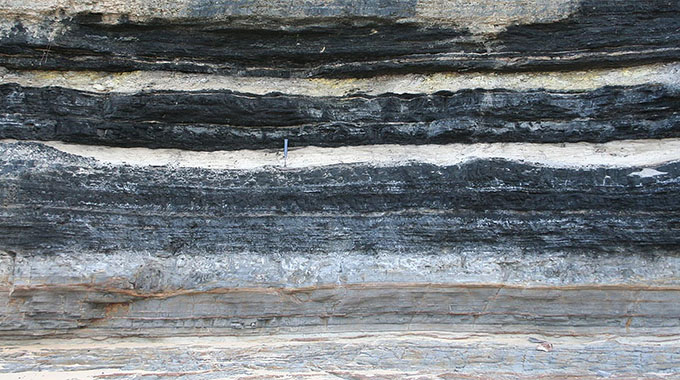
Coal bed methane is an extremely useful and very clean hydrocarbon and is easy to use in gas-fired power stations, among the simplest to build and quickest to commission.
You simply have to have enough of it to make it worth your while, and it is now almost certain the vast coal fields stretching across Matabeleland North do have enough to connect up to power stations.
This is not the very deep and large deposits in natural gas in Zimbabwe’s Muzarabani area, but they are very similar in nature, just a lot nearer the surface and with a lot fewer additions and impurities.
Coal bed methane is extracted in several parts of the world, particularly at the moment in Australia, Canada, United States, Kazakhstan and India.
Mining techniques need to be developed, as one danger is to avoid leaks of gas, which can drive global warming. But the product is so good, very largely just pure methane with no heavier hydrocarbons and no hydrogen sulphide, a perennial nuisance in coal mining.
The gas does not sit in underground reservoirs as such, rather being large absorbed as a high-pressure liquid into coal.
This is one reason why methane was considered a serious nuisance and a danger in underground coal mining, being the firedamp that underground miners feared. But modern extract techniques to do need strong workers to risk their lives.
After some long decades of idle chit-chat, and the enthusiasts could see where the advantages lay even as mining technology was being developed, the Second Republic go down to practicalities in 2020, that is seeking investors prepared to put in their money first in exploration, and then into the actually drilling for the gas.
Five large investors came in during that year: Alabara Resources, Zambezi Gas and Sakunda Energy, all from Zimbabwe, plus Tumugole of South Africa and Shangani Energy Exploration owned by the Chinese giant Sinosteel.
The following year Jacqueline Resources of Australia, one of those companies specialising in exploration, but then bringing in miners, turned up with solid proposals and was placed on the list.
The mix of three Zimbabwean companies and three foreign companies is better than some of our mining mixes, and possibly shows that both the exploration and development stages can produce reasonable quantities of gas, at least enough to be pumped to a central power station.
This makes supplies more secure and brings forward the day when Zimbabwe can commission its first thermal power station. Thermal power stations are almost as simple in speed of firing them up to go on the grid and in the relative simplicity of their technologies as is hydro.
The main difference is that you do not have to spend several years building the huge concrete dam.
The core of a gas station is a jet engine, one usually developed from 1950s technologies before all the high and low by-pass turbines were added. What is wanted the is the original core. This spins the generator. The civil engineer works are not much sophisticated than a decent roof, a large shed if you like, that keeps off the rain.
The other advantage of gas is that its carbon footprint is around half of that of coal. This is one reason, along with sheer convenience and lower costs, why many countries in Europe have switched a lot of their capacity from coal to gas, and why the American utilities like to do the same.
It is more convenient if your gas supplies back home, especially if you live some distance from the sea, but both Zimbabwe’s likely gas resources are internal, the coal bed methane of Matabeleland North and the more concentrated deposits in the Muzarabani area. The additional is not a problem, it simply gives us more.
The other use for methane is in fertiliser manufacturing. Already Sable Chemicals have expressed interest in a pipeline to Muzarabani once commercial gas production has started, and there would be other products that can come from a gas and condensate well that will not come from a coal bed.
But no one is blocking anyone interested in a fertiliser factor near the outlet from a coal-bed methane field.
In fact energy and raw materials will be the major gains from both the coal-bed methane and the Muzarabani fields, and as a solid chunk of the gas can come from coal, with a wider range of liquid products from Muzarabani, but not forgetting the solid carbon products we also need from the coal fields, especially for steel-making, Zimbabwe is busy filling in major gaps in its resources.
And we certainly do not have to worry about two separate gas supplies. We can easily have two stations, one in the west and one in the north-east and if we want a couple more then again there are no bars. The solider our foundations for a decent, uninterrupted power supply, the better.
Solar is ultimately clean with still respectable capital costs although now within commercial ranges, but has the problem of needing the sun. Hydro has many advantages, but the Zambezi River basin, where almost all our hydro water comes from, can be very variable between years.
Coal is dependable, is there in Zimbabwe, takes a long time to commission power stations, and needs environmental management.
Gas is far cleaner, and quicker to commission and run the stations, but you need gas. Zimbabweans probably want all four.
In some ways the Muzarabani condensates, as contrasted with the gases, may be less important.
By the time these have been confirmed in their precise nature and the technology to refine them into liquid fuels by pushing molecules lighter than petrol and diesel together, instead of splitting them apart, we might be well advanced on our route locally and globally to the electric vehicle economy, and making a lot of money while we do so with our present lithium reserves.
This is no problem when we talk about the ranges of products at Muzarabani.
We need a substantial amount of building blocks to build up our chemical industries, and the lighter condensates are more likely to more useful than the pure liquids we tend to use in our vehicles that so many are now trying to get phased out.


 Online Reporter