

 admin
admin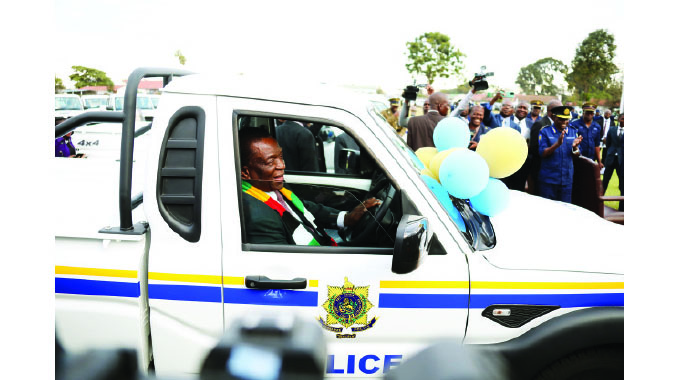
Elliot Ziwira-Senior Writer
A nation is as strong as its internal security, which includes the security of every citizen, every child, every family and their communities; and the cultural heritage that shapes their aspirations as enshrined in their indigenous languages.
This is why Zimbabweans take pride in the strides taken in that regard since Independence in 1980, and more so in the last five years under the Second Republic led by President Mnangagwa.

No activities, be they socio-cultural, socio-political or economic can thrive in the absence of internal security and cultural cohesion, which brings forth peace, tolerance, compromise and oneness.
The Second Republic, therefore, through the Ministry of Home Affairs and Cultural Heritage at whose helm is Honourable Kazembe Kazembe, has committed to the upholding of the values that shape Zimbabweans’ collective destiny.
Responsible for the administration of 38 Acts of Parliament that deal with security, cultural heritage, museums, lotteries and monuments, the Ministry of Home Affairs and Cultural Heritage surpasses any other ministry in the moulding of the national ethos that shape Zimbabwean-ness.
Since such aspects like crime, cultural normlessness, unpatriotic tendencies, selfishness and corruption are fodder for civil strife if they are left to fester, because of their impact on collective vision, the ministry keeps hands on deck to see to it that the fruits of Independence are guarded for the common good.
All organs of the ministry; especially the Zimbabwe Republic Police, which is tasked to ensure the nation’s safety on a daily basis, the Civil Registry Department, Immigration, National Archives of Zimbabwe, National Museums, Board of Censors, and Lotteries and Gaming Board, are crucial components in the economic development matrix embodied in Vision 2030.
The purposes of the ministry are to; provide internal security, law and order; register and issue national identification documents; register birth and death certificates; acquire, preserve and provide access to national heritage (promotion of Nationhood and Statehood); and regulate public entertainment and general publications.
To fulfill its mandate to the people of Zimbabwe, the ministry regulates entry and exit of people in and out of Zimbabwe; licenses, authorises and supervises gaming activities; and combats corruption. It also facilitates cattle branding certification; vets refugees; and formulates and implements policies.
Reflections on the Rhodesian system
The Rhodesian internal security system was premised on the upholding of the colonial legacy of oppression, brutality and exclusion. The police force was Cecil John Rhodes’ child, thus, it served colonists’ interests.
The imperialist godfather, Rhodes’ Pioneer Column, numbering 200 men, formed the backbone of the British South Africa Company Police (BSACP), Rhodesia’s first police force, in 1889. It was a ruthless force meant to brutalise, maim, rape and murder blacks into submission, not to police them.
The idea to form a paramilitary force of mounted infantrymen was proposed by William Bodle, who became the Commissioner in 1903. William Bodle mooted the concept of the police in 1889.
Lieutenant Colonel Penne Father led the Pioneer Column into Zimbabwe in 1890 in charge of 500 policemen, who offered military escort to settlers. During this trek north on a mission to pillage, plunder and murder indigenous people out of their ancestral heritage, the force was deployed in troops with the advance team under the command of Fredrick Courteney Selous.
In 1892, Charles White became the Chief Commissioner of the BSACP. The force was disbanded in the same year, and replaced by the Mashonaland Mounted Police and the Constabulary Units. The two forces of police were amalgamated into the Rhodesia Mounted Police, and in 1909 became known as the British South Africa Police (BSAP), the name it retained until 1980.

Up until 1954, BSAP officers were trained as both policemen and regular soldiers, which consolidated its role as a colonial force of subjugation; operating terror units during the liberation struggle in the 1960s and 1970s in rural and urban areas.
The force, whose middle name was violence, and knew no civility, was responsible for the disappearance, torture and death of thousands of blacks. It was a white people’s police force, although there were thousands of blacks (mabhurakwacha) in its ranks.
By 1980, BSAP personnel numbered 46 000; 11 000 professionals (60 percent of them black), and 35 000 reservists (mostly white). All commissioned ranks were reserved for whites, and blacks could not go beyond sub-inspector rank.
Establishment of a people’s police force
Independence in 1980 gave Zimbabweans control of their internal affairs through the establishment of the Zimbabwe Republic Police (ZRP) by integrating British South Africa Police, auxiliaries, ZIPRA and ZANLA forces.
As was the case in other institutions and departments, the police force was affected by the exodus of whites to South Africa, New Zealand, Canada, the United Kingdom, Australia and the United States of America.
Smarting from the repressive and tyrannical Rhodesian idea of internal security, the Government’s resolve was to remodel the police force. Since the force carried the mistrust, brutality and fear-mongering of the past, the new thinking was to overhaul and commit it to the safety and well-being of all Zimbabweans.
The first port of call, therefore, was to train black Zimbabweans and promote them to higher ranks previously reserved for whites, while at the same time learning from them.
By 1981, 635 former freedom fighters and auxiliaries were integrated into the ZRP with a further 500 former guerrillas undergoing police training. In 1981, there were nine black assistant commissioners, and more than 700 policemen had been promoted to patrol officers. Commissioners were selected from groups sent for senior officers’ courses in Britain.
By 1981, 166 of the 250 posts available for promotions were filled by blacks with the first black Deputy Commissioner coming into office in the same year. There were six Assistant Commissioners then, four of them blacks and two of them whites. The first black Commissioner, Wiridzayi Nguruve, was appointed in 1982.
The rank of Assistant Commissioner was open to whites only, and there were 12 of them before Independence.
Now, the Zimbabwe Republic Police, headed by Commissioner-General Godwin Matanga, has been transformed into a formidable force up to the task of upholding peace and provision of security for all Zimbabweans. The Zimbabwe Republic Police has been unwavering in its commitment to global peace and security through participation in United Nations International Peacekeeping Missions.
Freedom of Assembly
On May 13, 1991, Zimbabwe became a party to the International Covenant on Civil and Political Rights (ICCPR). The Covenant provides for the rights to freedom of peaceful assembly and of association under articles 21 and 22.
The Constitution of Zimbabwe guarantees freedom of peaceful assembly, since it is a fundamental right, provided that other citizens’ rights are not infringed.
As the nation awaits the forthcoming harmonised elections slated for August 23, 2023, all Zimbabweans are enjoying this right with political parties allowed to assemble for purposes of campaigning as long as they do so peacefully, and within the confines of law.
Empowering the ZRP with wheels
Recognising that effective policing requires resources, vehicles among them, since criminals have become daring and multifarious in nature, the Second Republic has been steadfast in the fight against crime in Zimbabwe.
To that end, President Mnangagwa commissioned 40 vehicles at Morris Depot Police Academy in Harare in November 2018 after the Presidential Graduation Parade. This first batch from the 107 vehicles bought to enhance the Zimbabwe Republic Police’s operations comprised 35 pick-up trucks and five lorries.
Furthermore, in August 2021, the President commissioned 82 more vehicles for the ZRP as efforts to capacitate law enforcement agencies in combating crime gained momentum. The vehicles included 46 single cab Ford Rangers, 24 Kia Picanto, nine Kia Rio, two Renault kwd and one Renault Logan.
This came as the Police has been battling to contain cases of armed robberies that have been spiralling in the recent past.
“Crime by its nature and diverse forms, retards the normal function of society, requiring intervention by law enforcement authorities, the broader security establishment, citizens and the business community, among others.
“Criminals must never be given any breathing space to commit their illegal, immoral and even wicked acts,” said President Mnangagwa at the commissioning of the vehicles at Morris Depot Police Academy in Harare then.
The President upped the ante against crime, particularly as the upcoming harmonised elections approach, by commissioning yet another batch of 132 all-terrain vehicles for the ZRP at the Morris Depot Police Academy in July 2023 at an occasion that saw the place being renamed Zimbabwe Republic Police Mkushi Academy.
The academy is named after the Mkushi Girls Training Camp in Zambia, which was attacked by Rhodesian forces in 1977 at the height of the liberation struggle against colonialism, leading to the massacre of scores of unarmed female trainee combatants.
The President also donated 100 computers and printers to the ZRP.
Now, that’s a great EDrive against crime for the safety of citizens!


 leeroy
 Online Reporter