admin
admin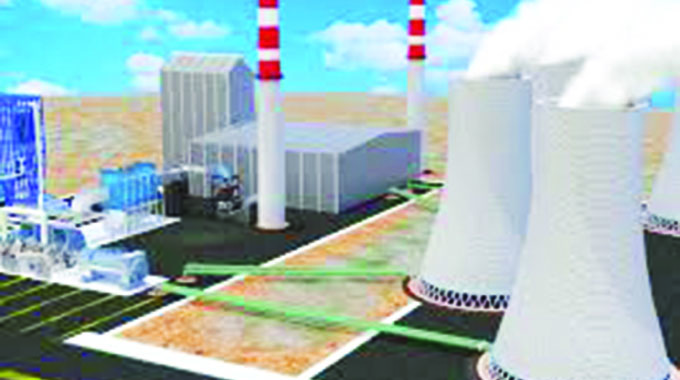
Elliot Ziwira
Senior Writer
Power is energy and energy is life, for without it humanity’s progression is doomed. In the absence of reliable energy sources, socio-economic development exists only in people’s minds.
Indeed, a positive connection subsists between energy supply and economic growth in any progressive nation. With 2030 beckoning for the attainment of an empowered upper-middle income society, the Second Republic’s commitment to the provision of sustainable modern energy sources, through the Ministry of Energy and Power Development, cannot be overemphasized.
The ministry has gone on a drive to implement strategies that achieve this vision through maintenance, and rehabilitation of existing infrastructure as well as construction of new energy projects.
The need ever arises to remain focused on ensuring collective access to up-to-the-minute energy sources hinged on increased generation capacity. Rural and urban electrification, through use of both on and off grid solutions, is also crucial in this energy supply matrix aimed at transforming livelihoods.
It, therefore, stands to reason that all economic sectors, such as agriculture, manufacturing and mining, are driven by energy in its varied forms. This is why President Mnangagwa’s commissioning of the US$1,4 billion Hwange Thermal Power Station Unit 7 and 8 expansion project in June 2018, and subsequent delivery on it, is symbolically apt.
Historical background
Between 1942 and 1980 electricity services were the prerogative of Local Authorities under settler domain. Consequently, policies were in favour of whites, blacking out Africans.
Colonialism was hinged on exploitative machinery which led to the establishment of towns and mines. The growth of settler capital culminated in demand for power to drive equipment, hence the slant towards electricity that dates back to the early 1900s in the case of Rhodesia.
In 1938, the Electricity Supply Commission (ESC) was formed as an integrated utility to provide power to local authorities, farmers, rural communities and industries.
Around 1960, Central African Power Corporation was established to generate power from the north and south banks of Kariba Dam. During this time small thermal power stations were built, including Harare Power Station between 1942 and 1955, Munyati Small Thermal Power Station in 1946 and 1957, while Bulawayo Power Station was built between 1947 and 1957.
These stations were crucial in the provision of electricity to strategic industries under each local authority.
There are different sources of electricity in Zimbabwe; thermal, hydro and renewable.
The largest coal-fired station in the country is Hwange Power Station, built in stages, with the first 4x120MW commissioned between 1983 and 1986. The station has a nameplate capacity of 920MW. Stage 2 Units (2x220MW) were later commissioned in 1987. The station used to get its coal from HCCL through a 6km conveyor belt.
The Kariba Hydropower Plant was built in 1959. The first generator was commissioned on May 17, 1960. The station was upgraded from a capacity of 666MW to 750MW (between 1999 and 2002).
Work in progress includes the refurbishment of the dam plunge, pool and the spill gates by the Zambezi River Authority (ZRA). Generation has been affected by low water levels in the Zambezi River and reduced water allocations by the Zambezi River Authority.
Another hydro project is Batoka. The Batoka Hydro Project came on the backdrop of the ex-CAPCO debt resolution in February 2012, which paved the way for its development.
In 1985, the Electricity Act 13:05 provided for the establishment of the Zimbabwe Electricity Supply Authority (ZESA), which was an amalgamation of the local authorities, Electricity Supply Commission (ESC) and Central African Power Corporation.
In 1986/7 electricity activities were integrated into ZESA resulting in the amalgamation of Local authorities and the Electricity Supply Commission’s ventures at Munyati, Hwange and Central African Power Cooperation (CAPCO) at Kariba.
Local authorities lost the privilege to distribute electricity in 1987.
Following the enactment of the Electricity Act (Chapter 13:19) in 2002, the Government established the Zimbabwe Electricity Regulatory Commission (ZERC) to regulate the power sector in 2005.
ZESA was unbundled into five successor companies to allow private sector investment in electricity generation through licensing of independent power producers (IPPs).
The Rural Electrification Fund Act (Chapter 13:20) of 2002 allowed for the creation of the Rural Electrification Fund Board, whose main objective was to ensure rapid electrification of rural areas.
To date, the Rural Electrification Agency (REA) has electrified about 9 407 rural institutions countrywide through the six percent levy imposed on electricity consumers.
Public institutions are connected through a 100 percent support scheme, while other customers receive a 60 percent subsidy from the Government.
In 2011, an all-encompassing Energy Regulator, the Zimbabwe Energy Regulatory Authority ZERA was formed in terms of the Energy Regulatory Authority Act (Chapter 13:23) of the same year. Its major role was to regulate the procurement, production, transportation, transmission, distribution, importation and exportation of energy regardless of source.
To date, the regulator has licensed more than 50 IPPs with a combined capacity of more than 5 000MW.
Following the unbundling of ZESA in 2002 the following companies were formed; ZPC, ZETCO, ZEDC, ZENT and Powertel. However, in 2008, ZEDC and ZETCO were bundled to ZETDC, and in 2012 a proposal to restructure the ZESA Group according to the energy policy was initiated, but did not come to fruition.
In 2018, a decision to re-bundle the Group and move Powertel to the Ministry of Information Communication Technology, Postal and Courier Services was approved and is being implemented.
Situation analysis
Zimbabwe’s maximum electricity demand is 1 750MW, while average internal supply stands at 1 500MW, including imports from regional utilities. The deficit of up to 250MW means there will be loadshedding during peak hours or demand side management.
To meet its power demand, the country has signed Power Purchase Agreements (PPA) with other regional players on a firm and non-firm basis. These include HCB of Mozambique and Eskom of South Africa, comprising 100MW firm and up to 400MW non-firm capacity.
However, a combination of factors has led to both increased demand for power and a dip in generation capacity, which has exposed Zimbabweans to daily outages for quite some time.
Firstly, the marked growth in all economic sectors on the wave of rapid industrialisation anchored on National Development Strategy 1 (NDS 1) saw demand for electricity surging.
Secondly, Zimbabwe largely depends on thermal and hydro sources, which are dependent on other unforeseen challenges. Hwange Thermal Power Station, for example, was exposed to forced outages to its plant operations owing to equipment failure at some point, causing it to operate with an average of four units from the available six, producing about 430MW.
On the other hand, Kariba Power Station, the country’s reliable source of electricity with most of the units available at any given time, relies on the benevolence of nature. The station has all eight units available transmitting a maximum of 980MW. Output is, however, usually limited due to water conservation measures. A fall in water levels, particularly in poor rainy seasons, negatively impact electricity generation from the station given the low water inflows.
Thirdly, the Southern African Development Community (SADC), which Zimbabwe relies on to meet its power demand, is saddled with the same generation shortcomings in the wake of heightened industrialisation, leading to a deficit of over 35 000 megawatts.
Hence, with loadshedding becoming the order of the day, impeding economic growth and negatively impacting citizens’ livelihoods, the solution to sustainable energy supply for the greater good could only be self-sufficiency.

Delivering on the promise
It is trite that increased generation leads to self-sufficiency, and ultimately eases forced power interruptions and saves the country on foreign currency as electricity imports will be reduced.
A stickler to economic reforms that take everyone aboard, President Mnangagwa is not lost to the reality that energy is life. In June 2018, following the commissioning of the US$1,4 billion Hwange Thermal Power Station Unit 7 and 8 expansion project in Matabeleland North Province, the servant leader promised Zimbabweans that the nation would be power self-sufficient within five years.
True to that vision, major milestones have been achieved through the Ministry of Energy and Power Development. In 2018, the Government commissioned 300MW (2x150MW each) from the Kariba Extension Project at an estimated cost of US$440 million, including development charges. Commissioned in March 2019, the project has seen Kariba becoming the largest power plant in the country with a combined capacity of 1 050MW.
Although there are other developments in the energy sector, which will be explored in another instalment, the Hwange Thermal Power Station Unit 7 and 8 project remains the numero uno.

Run as a joint venture between Zimbabwe Power Company and Sinohydro Mauritius, the project, which commenced in August 2018, has a combined capacity of 600MW (2x300MW each). It is financed through a loan facility from China EximBank. The project was affected by a number of unforeseen events, like the Covid-19 outbreak.
Unit 7 is already feeding 300MW into the national grid, having been officially integrated, while Unit 8 achieved its 355MW capacity on June 13.
After the rehabilitation of the six units, Hwange will be able to produce a maximum of 1 520MW with 920MW from units 1 to 6, and 600MW from Unit 7 and Unit 8.
Now that’s self-sufficiency!
Who are the beneficiaries?
All Zimbabweans, who have been grappling with power outages, sometimes going hours on end in darkness, are the beneficiaries.
All economic sectors, such as industry, agriculture and mining have been given new leases of life through improved power generation. Socio-economic spin-offs have also been accrued, all for the common good.
About 50 000 Zimbabweans, local and international entities have benefit ted directly from the Hwange Thermal Power Station Unit 7 and 8 expansion project. The project has created at least 4 600 job opportunities for locals. Opportunities were opened up in employment and material supplies, hence, everyone was taken on board.
Thousands more benefited from the Kariba Extension Project.
With the country’s electricity access rate inching to 50 percent, the future can only be brighter for Zimbabweans, thanks to President Mnangagwa’s commitment to people-oriented policies.


 Online Reporter