admin
admin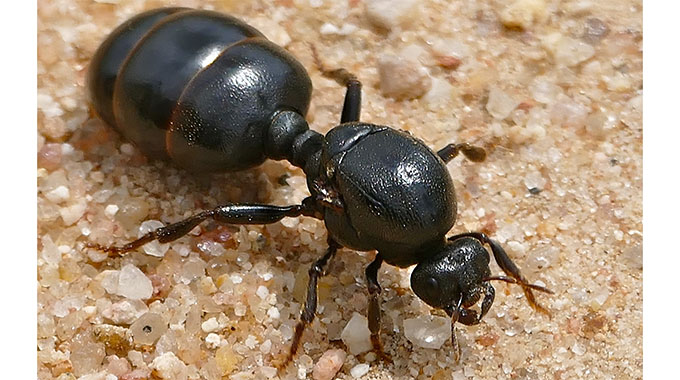
Mangaliso Lawrence Kabulika
THE advent of Covid 19 has caused people to be health conscious in their eating habits with edible insects’ consumption being promoted to supplement the growing demand for nutritious food while caring for the planet.
This was said by the Food and Agriculture Organisation in a recent Twitter post that revealed the nutritional benefits of edible insects.
“As the world population continues to grow, we need to find innovative and sustainable ways to produce highly nutritious food and animal feed without putting pressure on our limited resources. Edible insects are under-utilised resources that can help meet our growing demand for nutritious food while caring for our planet.”
“They are nutritious as they offer energy, fat, proteins and fibres and can be a good source of micronutrients such as zinc, sodium, calcium and iron,” said the Twitter post.
Production and consumption of the insects was both environmentally friendly and sustainable.
“Edible insect rearing emits considerably fewer greenhouse gases than most other animal protein sources and requires substantially less water, land and feed than other livestock,” continued the post.
Research shows that methane is emitted more by large livestock like cattle and pig.
Moreover, edible insects also contribute to high quality animal food source.
“Insects can feed on bio-waste such as food and human waste, compost and animal slurry and can transform this into high quality protein that can be used for animal feed,” read the post.
The post said over 1 900 species of edible insects are consumed throughout the world supplementing diets of approximately two billion people, however, their economic and nutritional potential was still under-utilised.
Knowledge Transfer Africa (KTA) Chief Executive Officer Dr Charles Dhewa, also provided a market opportunity on the local markets for various individuals who harvest them.
“With the rainy season approaching, it will be characterised by a lot of edible insects which various individuals harvest, dry or fry and sell at local food markets contributing to value addition,” he said.
Adding on, he said edible insects act as a source of income for some members of the populace.
“They provide for inclusive livelihood opportunities, and access to natural resources both in rural and urban areas. They are also a source of income especially now at Mbare Musika we have mopane worms going for US$330 for a 30 kilogrammes bag and US$42 a 20-litre tin coming from Gwanda,” said Dr Dhewa.
Dr Dhewa said there was also need for policy makers to categorise edible insects under any agriculture subsector such as crop and animal farming and train people on how to rear them as this could be a source of income and jobs.
Research says Zimbabwe hosts about 52 edible insect species with Bulawayo having the highest concentration. These edible insects thrive more during the rainy season. Zimbabwe’s various edible insects include mopane worms (madora/amacimbi), cicada insects (nyenze/nyezha) found in the lowveld areas, flying ants (ishwa), carebara vidua (tsambarafuta), stink bugs (harurwa) found in Bikita district of Masvingo, chafer beetles (mandere) found in Mhondoro and tobacco cricket (gurwe) common in Masvingo.



 Online Reporter