

 admin
admin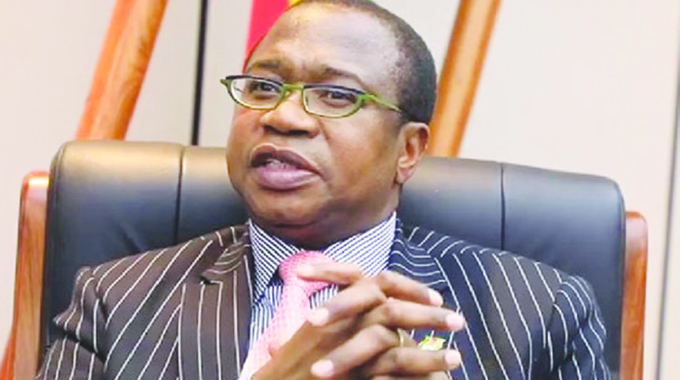
The decision during debate on the Finance Bill implementing the tax changes announced in the mid-year supplementary Budget to widen the zero tax bracket, that is raise the threshold for zero income tax to $75 000, shows a welcome growth of Parliamentary initiative and a welcome willingness by Government to meet it.
This follows the lengthy process of getting the new Marriages Act through Parliament, where traditionalists, and in particular the senator chiefs, were willing to go a long way to modernising the marriage law, but were not prepared to dump lobola in the solemnisation of a customary marriage. And again, after long debate and discussion, the Government found a compromise.
Generally speaking financial legislation is one area where a Government is expected to have its own way. This in fact is the prime requirement why a Government must have a Parliamentary majority, so that it can run the country by raising taxes and getting permission to spend them. Without that majority, a Government simply crashes into nothingness.
There has been a tendency in most democratic systems for the legislature to have retreated in the influence it can exert on a Government.
The rise of the party system, replacing potentially independent legislators with those attached to a political party has meant that governments can demand a great deal of support from the backbenchers who back the governing party.
But this does not mean that the backbenchers simply have to become rubber stamps. They might be obliged to vote the way their party whips demand, but they can certainly show initiative, can question, can suggest improvements and generally represent their constituents as well as the party whose support they were given at the polls.
So legislators can bring up opinions and suggestions. Sometimes these will be shot down, although an explanation is always required, but sometimes the responsible minister can back away for a moment and ask why not.
In this case we suspect the spike in monthly inflation in the second quarter, which triggered the supplementary Budget, is diminishing faster than Minister of Finance and Economic Development Mthuli Ncube and his senior advisors were predicting, especially as neither the minister nor his senior advisors have ever been guilty of wishful thinking.
They prefer to look the worst cases in the face and then plan accordingly, so they are always in control.
The original budget late last year must have taken into account that there would be some inflation. The reported percentages of each line item on that budget show this.
But then there was a burst of inflation that was higher than expected, and the immediate decision of the Treasury was to return to Parliament promptly and ensure that the Government could continue running by spending more than was originally allocated.
The same budget, again following the modern Second Republic rules carefully explained where the money that needed to be spent was coming from. Government revenue would automatically grow in some areas, since some taxes are simply flat percentages. Income tax is a little different since we use a graduated tax system, with the better off paying more than the lower paid, and those at the bottom paying nothing.
Some leeway was given in the original supplementary Budget to move tax brackets up in line with inflation, although it must be admitted that the careful Treasury was not going to go all the way.
Then several backbenchers, on both sides of the House, brought up the zero tax bracket as something that really bothered their constituents.
Normally a minister steering legislation through Parliament will have instant access to the odd expert from their ministry, and in this case there must have been a quick calculation done on the side and when it was discovered that the zero bracket could be moved a bit more in light of the latest circumstances and fiscal discipline still maintained, Minister Ncube went for it.
Sure, he did not go all the way that some were suggesting, wanting tax brackets quadrupled in width rather than doubled as suggested in the supplementary Budget.
But he did offer a tripling of the zero bracket, and the startled legislators gave full agreement. They probably were expecting nothing, which shows the sort of gain that can be expected when you do argue back.
The $75 000 zero bracket makes sense in other areas. For a start it will continue to keep out of the PAYE group those at the very bottom of the heap, generally domestic workers and those in similar sorts of employment. It also adds to the pressure for those in the informal sector to register with Zimra and get their tax clearance certificates.
At the moment informal contractors who are not processed for PAYE or who cannot present a tax clearance have to have 30 percent of what they have earned from a formal taxpayer or business deducted.
This is only an advantage to the informal business person now if their monthly income is pushing $1 million, something that is rare. By registering they can bring their deductions right down, and now the first $75 000 a month, or $900 000 a year since their income fluctuates, is tax free. So the incentive is dramatic.
Even if an informal business person earns more than $75 000 a month or $900 000 a year, they still have tax brackets below 30 percent to fill, and can even move into the next higher bracket since the average will still be below 30 percent.
But once they are in the system Zimra can keep an eye on them and if they really make good can get a fair share off them.
Legislators were keen for Minister Ncube to push even harder to get those who should be paying taxes, but at the moment do not, to be brought into the tax system.
It is unfair when a large slice of Government spending comes off the PAYE deductions of those in formal employment, and they quite rightly feel that others should be contributing as well.
Certain assumed taxes are already charged, but perhaps the net needs to be a bit finer to catch those swimming through the gaps.
So that need for everyone who earns enough to pay taxes to become known and then to pay is ever more important. One action the minister could take is declare an amnesty for some of the older payments, on condition that the taxpayer sorts out their registration very soon and starts contributing.
And some sort of way of making automatic deductions for those in the informal mining sector was highlighted by legislators.
Others in the informal sector can be caught at least by VAT and other flat taxes, but miners can earn full value for what they deliver and then vanish. Some sort of system whereby Zimra gets the name and address should not be impossible.
But we are now winning by more informed and constructive debate in Parliament, and that can only benefit the nation. We all do need to work together to make the system better and make it work better.



 Online Reporter