admin
admin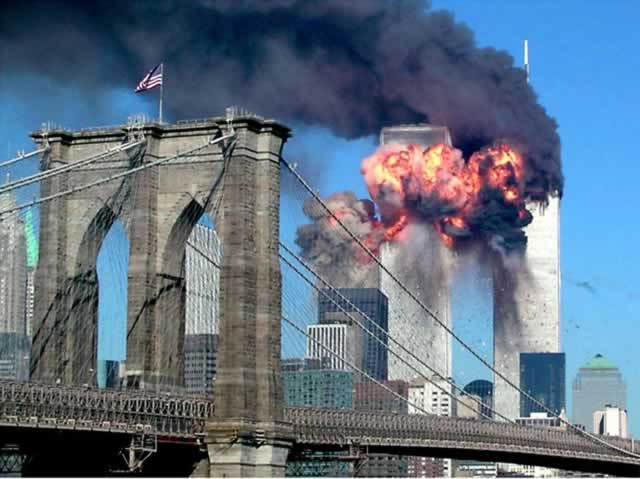

Today marks the twelfth anniversary of the attacks on the World Trade Centre in the US on September 11, 2001; an attack that claimed thousands of lives of citizens from around the globe who worked in New York.
Surprisingly, the anniversary comes at a time the unrepentant Uncle Sam is busy sabre-rattling trying to create conditions for similar attacks by bullying Syrians and many other people across the world. It was an attack that saw former president George W. Bush declaring a war on terror policy as the US hunted down the attackers. It is also a time when the United States would want to remind the whole world why it is necessary for them to wage war against so-called terrorist nations or nations that aid and abet terrorism.
Through its diplomatic offensive, the US has been able to convince its citizens and the international community to have zero tolerance on terrorism and terrorist activities. In the same vein, the United States was able to rope in a coalition of the willing nations to pursue Al Qaeda and other terrorist organisations.
It was under this guise that the US attacked Afghanistan in October 2001.
Notwithstanding, questions have been raised about the legality of the wars that the US and other members of the North Atlantic Treaty Organisation (NATO) have waged in the name of fighting terrorism.
They have shown little regard for the United Nations Charter, which bind all members of the UN family. Through their actions, they have demonstrated that they believe they are more superior to other nations and, that other members of the international community should play second fiddle. We have many examples where such acts of aggression have led the US and its allies to attack other nations with reckless abandon. For example, Iraq was attacked in 2003 when Bush claimed that Saddam Hussein was in possession of weapons of mass destruction, which proved to be a big lie. The same fate befell Libya in 2011 resulting in the cold bloodied murder of Libyan leader Muammar Gaddafi.
Thus war drums have continued to be beaten, and beaten more loudly at the approach of the 9/11 commemorations. It was the same this year.
This time the blazing guns are directed at Syria, with US president Barack Obama accusing the Syrian leader Bashar al-Assad of gassing more than 1 400 Syrians to death uson August 21.
The chemical weapon allegedly used to kill innocent civilians, including women and children was the deadly Sarin nerve agent.
Obama made a declaration of war against Assad claiming that he had crossed the red line, and thus he had to be punished through “limited and narrow” military action.
The past fortnight saw Obama throwing caution to the wind as he pursued his military agenda against Syria, which did not have as much support comparing to how popular war was among the American public when Bush struck Afghanistan.
It was surprising to see the US president disregarding the United Nations, public opinion and even downplaying the cautious pragmatism from other permanent members of the UN Security Council when they met as the G20 in Russia last week.
It was also surprising that the loose Western coalition could claim to have conclusive evidence that it was Assad’s forces that used the chemical weapons, but at the same time rejecting that intelligence information from Russia as inconclusive and unreliable.
The barrage of claims and counter-claims through their media outlets was a ploy to give Obama and his allies the green light to carry out a military strike against Syria and cause more deaths.
A careful analysis of the Obama administration’s arguments was that Assad had to be punished. It was a war that did not consider the people they claim to be helping. It was another case of using ordinary people to protect their national interests.
However, it is Russia that seems to have broken the camel’s back with its proposal on Monday to place Syrian chemical weapons under international control for eventual destruction.
This was a major relief to all peace-loving people, despite Washington’s face-saving threats to attack Syria.
Even Obama welcomed this diplomatic initiative and called it “a potentially positive development” and “significant breakthrough”. Other European nations also quickly welcomed this sudden turn of events, and have once again gone back to the United Nations to pursue this diplomatic life-line. Even the statement issued by Arab League foreign ministers shows that diplomacy and not war is the only solution to the Syrian crisis: “The United Nations and the international community are called upon to assume their responsibilities in line with the UN Charter and international law by taking the necessary deterrent measures”.
The coming days are not easy. There is a lot of pressure on President Obama to take decisive action on Syria, thereby changing the Middle East’s political landscape.
However, Obama also needs to balance his action with realities on the ground. There is no support for his intended military strikes, among his own people and elsewhere.
We hope that this voice of reason that is propelling things towards peaceful and dialogue-oriented direction will prevail.


 Online Reporter