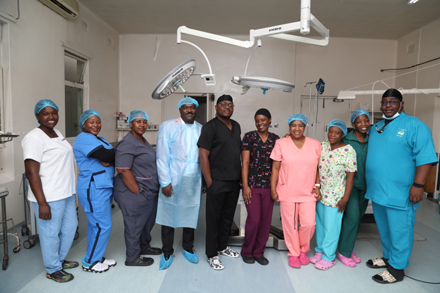
THE recent successful completion of the first craniotomy surgery at Victoria Chitepo Provincial Hospital marks a historic milestone, not only for Manicaland Province, but also for Zimbabwe’s ongoing quest to improve access to specialised health care services.
It is an achievement that deserves national recognition and celebration because it demonstrates what is possible when investment, expertise and determination converge to transform public health institutions.
For decades, patients in need of highly specialised neurosurgical procedures have had little choice, but to travel long distances to referral hospitals in Harare or Bulawayo. Such journeys are often costly, emotionally draining and, in some cases, life-threatening, especially when dealing with severe head injuries, brain tumours or other neurological emergencies where every minute counts.
The successful craniotomy at Victoria Chitepo Provincial Hospital signals the beginning of a new chapter.
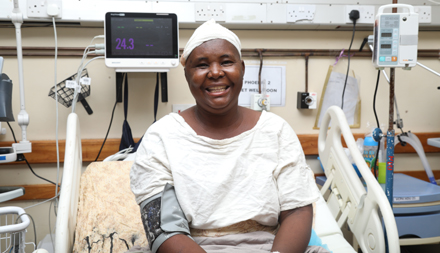
It is proof that specialised medical services can be brought closer to the people. More importantly, it gives hope to thousands of families across Manicaland who previously faced uncertainty whenever a loved one required advanced medical intervention.
This development is particularly significant given the strategic importance of Victoria Chitepo Provincial Hospital. The institution is not merely a provincial hospital serving residents of Manicaland. It is a critical regional health facility that caters for a vast catchment area stretching across districts such as Mutare, Chipinge, Chimanimani, Buhera, Makoni, Mutasa and Nyanga.
Beyond Zimbabwe’s borders, the hospital also serves patients from neighbouring Mozambique, particularly those from communities located close to the border who rely on Mutare for specialist medical services.
As a result, strengthening specialised health care services at the hospital has both national and regional implications. Every new specialist service introduced reduces referrals, saves lives and eases the burden on central hospitals. It also helps families avoid the financial and logistical challenges associated with travelling hundreds of kilometres in search of treatment.
The achievement should also be viewed within the broader context of the Second Republic’s efforts to modernise the country’s health sector. While much attention is often focused on infrastructure development, true transformation occurs when hospitals are equipped with the necessary technology and staffed by highly trained specialists capable of performing procedures that were previously unavailable outside major urban centres.
The successful craniotomy must therefore not be seen as an isolated accomplishment. It should serve as a foundation upon which more specialised medical services are built. Manicaland deserves a provincial hospital that continues expanding its capabilities in areas such as neurosurgery, cardiology, oncology, nephrology, trauma care, orthopaedics and advanced diagnostic imaging.
The province’s unique geographical and economic profile makes this imperative.
Manicaland is home to major mining operations, extensive agricultural activities and busy transport corridors. These sectors inevitably increase the risk of workplace accidents, road traffic injuries and other medical emergencies that often require specialist intervention. Having comprehensive specialised services within the province can significantly improve patient outcomes while reducing mortality rates.
Equally important is the need to continuously invest in human capital. Medical equipment alone does not save lives; skilled professionals do.
Government, hospital authorities and development partners should therefore prioritise the recruitment, training and retention of specialists. Opportunities for continuous professional development must be expanded to ensure that local medical teams remain abreast of global best practices and emerging technologies.
Furthermore, partnerships with universities, teaching hospitals and international health institutions could assist in creating centres of excellence at the provincial hospital. Such collaborations will, not only enhance service delivery, but also position Manicaland as a hub for specialised medical care in eastern Zimbabwe and the wider region.
The success story also highlights the dedication of health workers who continue to perform their duties under often challenging circumstances. Their commitment deserves commendation.

Behind every medical breakthrough are doctors, nurses, anaesthetists, laboratory scientists, pharmacists, technicians and support staff whose collective efforts make such accomplishments possible.
As we celebrate this landmark achievement, it is important not to become complacent. Rather, this moment should inspire greater ambition. If a craniotomy can now be successfully performed at Victoria Chitepo Provincial Hospital, then there is every reason to believe that even more sophisticated procedures can be introduced in the future.
The hospital has demonstrated its potential. What is now required is sustained investment, strategic planning and unwavering support from all stakeholders to ensure that specialised health services continue to expand.
Ultimately, the greatest beneficiaries will be the ordinary citizens of Manicaland and neighbouring Mozambique who depend on the institution for quality health care. The successful craniotomy is more than a surgical triumph; it is a symbol of progress, hope and the growing capacity of Zimbabwe’s health sector to deliver world-class care closer to the people. It is a milestone worth celebrating and a reminder that the journey towards accessible, specialised and equitable health care for all is well underway.