


 Online Reporter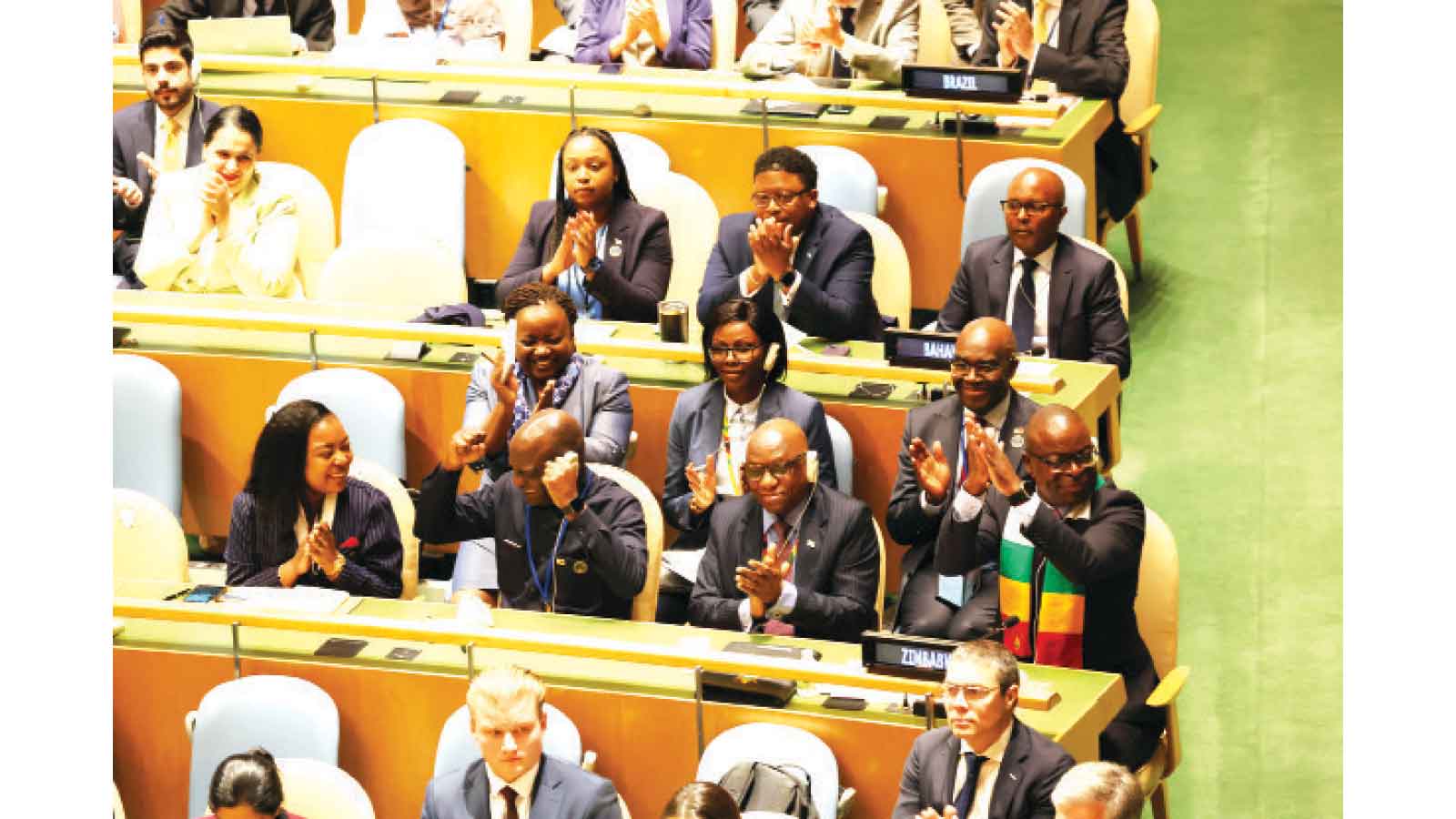
WHAT Zimbabwe achieved on Wednesday in the hallowed halls of the United Nations headquarters in New York — securing 182 out of 190 votes for a non-permanent seat on the United Nations Security Council — was more than a victory; it was a geopolitical thunderclap.
For a country that, less than a decade ago, was systematically portrayed as a diplomatic outcast, this margin — the highest of any contesting country for the 2027-28 term — represents nothing less than a complete and unequivocal rehabilitation on the world stage.
To fully grasp the magnitude of this moment, one must recall the isolation that defined Zimbabwe pre-2017. Sanctions, rhetorical condemnation and a deliberate narrative of exclusion were the hallmarks of the country’s foreign relations.
The label of “pariah” was affixed with the intent to cripple not just the economy, but the spirit of the nation.
Yet, in the span of eight years under the Second Republic, President Mnangagwa has systematically dismantled that narrative, replacing it with a doctrine so effective that the global community has now responded with a near-unanimous embrace.
The figures are staggering.
One hundred and eighty-two countries — representing diverse continents, ideologies and economic systems —cast their secret ballots for Zimbabwe.
This is not the grudging acceptance of a former outcast, but an enthusiastic endorsement of a country that has earned its place through a well-thought-out rapprochement foreign policy.
The Second Republic’s mantra — “friend to all and enemy to none” — has transcended mere rhetoric to become a functional blueprint for multilateral success.
Foreign Affairs and International Trade Minister Professor Amon Murwira rightly noted that Zimbabwe will now help represent 8,3 billion people around the world expecting peace, stability and tranquillity.
That responsibility is immense.
But the significance of the 182-vote margin is that it provides Harare with an unprecedented moral mandate. When Zimbabwe sits at the horseshoe table alongside permanent members like the United States, China, France, the United Kingdom and Russia, it will do so not as a supplicant, but as a nation whose diplomatic capital is at an all-time high.
This victory is the fruit of President Mnangagwa’s engagement and re-engagement agenda built on years of disciplined outreach across Africa, Europe, Asia, the Caribbean and the Pacific.
The Second Republic understood that isolation was a choice, and it chose differently.
It chose dialogue over defiance and cooperation over confrontation.
On Wednesday, that choice was validated by 95,7 percent of the UN General Assembly.
Moreover, this is a victory for Africa.
Zimbabwe’s seat will amplify the continent’s voice in critical deliberations on peace, security and a fairer global order.
It proves that patient diplomacy, grounded in respect for sovereignty and non-interference, yields tangible results.
Of course, with such a commanding victory comes elevated expectations.
The world will watch to see if Zimbabwe can translate its diplomatic charm into effective conflict resolution and humanitarian action.
But for today, the country is entitled to a moment of profound pride.
The pariah is gone.
In its place stands a nation that has mastered the art of returning to the fold.
Of course, with high reward comes high responsibility.
As Prof Murwira rightly noted, this is not merely a moment for celebration but a summons to duty.
Zimbabwe will now help shape decisions on peacekeeping missions, conflict resolution, humanitarian interventions and global security challenges.
The nation’s voice will be expected to champion Africa’s quest for a more equitable global order while upholding the UN Charter’s principles of sovereignty, non-interference and peaceful dispute resolution.
President Mnangagwa’s immediate response — hailing the victory as proof of global confidence in Zimbabwe’s leadership — captures the moment’s gravity.
But the real work begins now.
The Security Council is no place for rhetoric alone; it demands strategic nuance, coalition-building and an unwavering commitment to international peace.
For Zimbabweans at home, however, there is ample reason to take pride.
A nation once whispered about in corridors of power as a cautionary tale has instead become a model of diplomatic rehabilitation.
The 182 votes are not just a number.
They are a ledger of quiet, sustained effort; a repudiation of isolation; and a testament to the Second Republic’s most enduring legacy: proving that a country can remake its global image not through bluster, but through the patient, dignified work of engagement.
Congratulations are due to the President, the diplomatic team and every Zimbabwean.
Now, let the world watch as this nation takes its rightful seat as a trusted partner in peace.



Its the third time Zim has campaigned and been voted into this seat “non permanent security council member ” could some one please enlighten us on the benefits derived by Zim during the first and second terms. I remember that Zim was in the leadership position when Iraq was attacked.