admin
admin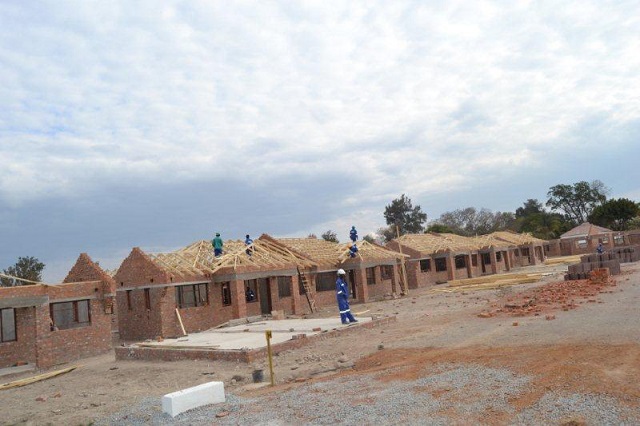
THE right to housing is recognised in the Universal Declaration of Human Rights and International Covenant on Economic, Social and Cultural Rights. It is also enshrined in Zimbabwe’s constitution.
Article 25 of the Universal Declaration of Human Rights says: “Everyone has the right to a standard of living adequate for the health and well-being of himself and of his family, including food, clothing, housing and medical care and necessary social services, and the right to security in the event of unemployment, sickness, disability, widowhood, old age or other lack of livelihood in circumstances beyond his control”.
Zimbabwe’s housing backlog of 1,25 million is clearly unsustainable and concerted efforts need to be made to reduce it. Local authorities in the country’s major towns and cities have been battling to provide decent accommodation to residents but this has been curtailed by lack of resources.
The economic downturn at the turn of the millennium also militated against moves by councils to reduce their housing backlogs. Zimbabwe’s urban areas have been developing at a slow rate with the capital, Harare, grabbing a lion’s share of the growth.
The chasm between Harare and Bulawayo in terms of size, for instance, points to a concentration of urban development in the capital compared to the second largest city. This has been necessitated by a number of factors among them the bigger population in the capital and the proximity of the city to major decision makers. The rapid growth of Harare has, however, spawned illegal settlements as demand for accommodation rises.
Elsewhere across the country, towns and cities have been experiencing acute housing shortages with councils and private developers unable to meet demand for accommodation. Massive corruption in most urban councils has seen service delivery suffering and their housing waiting lists have been going up over the years.
It is apparent that local authorities are failing to meet the housing demands of residents and should accept the help being rendered by central Government to provide decent accommodation to Zimbabweans. Housing provision is also an engine for economic growth and also serves as a barometer for a nation’s level of economic growth and development.
The Government has moved into the housing development sector and has rolled out massive schemes in major urban centres. Local authorities should not view this as an encroachment into their area of expertise but should welcome the assistance Government is rendering to them.
In Bulawayo for instance, the first phase of the construction of houses for 7,000 youths has begun in Umvutsha on the outskirts of the city and a further 150,000 young people will benefit in the second phase. At the end of the programme, Government would have virtually wiped out the city’s 100,000 waiting list and created a new satellite town for Bulawayo with attendant amenities.
Other projects are in the pipeline are in Harare and Norton. These will decongest major cities and provide investment opportunities. In this vein, we challenge the private sector to take the country’s huge housing backlog as an opportunity to tap into the sector. They should heed President Mugabe’s call for them to take corrective action and help reduce the housing backlog.
Officially opening the National Housing Conference in Harare on Wednesday, President Mugabe called for the removal of bottlenecks in housing delivery saying principles of ease of doing business cut across all sectors of the economy. He said housing projects still being developed were a clear demonstration of the demand for residential accommodation, an area that for long has remained untapped by local and foreign investors.
“Housing provision is, the world over, an engine for economic growth, which serves as a barometer of any nation’s level of economic growth and development. It goes without saying that when this sector performs, all the other downstream sectors all flourish,” President Mugabe told the delegates.
“The sector creates employment for those who are into construction, in as much as it promotes small and medium enterprises, the main suppliers of building materials. I challenge and implore all of us here today to perceive the housing backlog as an opportunity rather than as a problem,” he said.
We challenge investors to partner Government and other stakeholders in providing housing for the nation.



 Online Reporter