Moffat Mungazi
AFRICA needs to take full responsibility for developing the continent and building the sort of economy and society we all desire and that will give us the sort of life we need and deserve.
The fundamental bits are there. Almost every mineral known, including the carbon and hydrocarbon minerals, is mined somewhere in Africa, and deposits of the odd rarer mineral that is not mined are known and mapped.
Every known crop is grown, somewhere in Africa and production of all crops can be increased and new varieties generated that will increase yields.
We have four of the biggest river systems in the world and our energy resources, both in the older coal and oil reserves and the newer green energy potential, including hydro, solar and wind, are immense, so we can back up the resources with the energy needed to develop them.
All African countries have been boosting their education systems and skills training, and Africans in any case are generally thirsty to push their own qualifications and skills as high as they can as part of desirable modern culture existing on the continent.
So the bits for development are all there. We have the raw materials, but we tend to export them as raw materials and even then quite often as ores, or raw harvested crops, or at best partially processed minerals and crops.
We also as a continent tend to export skills, as some of our best move into the wider world to find the opportunities they should find at home or at least on the continent.
We also need to realise that while the continent as a whole has the breadth as well as the depth of raw materials and energy resources, and that the continent’s skills base is good, the building blocks of the future we want are not concentrated in every country. In fact, no country, even the largest, has all the bits needed for rapid development and most African countries are quite small.
Trying as individual countries to achieve all the economic and development goals would be like a single Chinese province being self-sufficient, or a single US state or a single EU member country. We need to move together and tie the bits together as a continent. In any case we will need the combined market of the whole continent to make many of the proposed industries and processes viable.
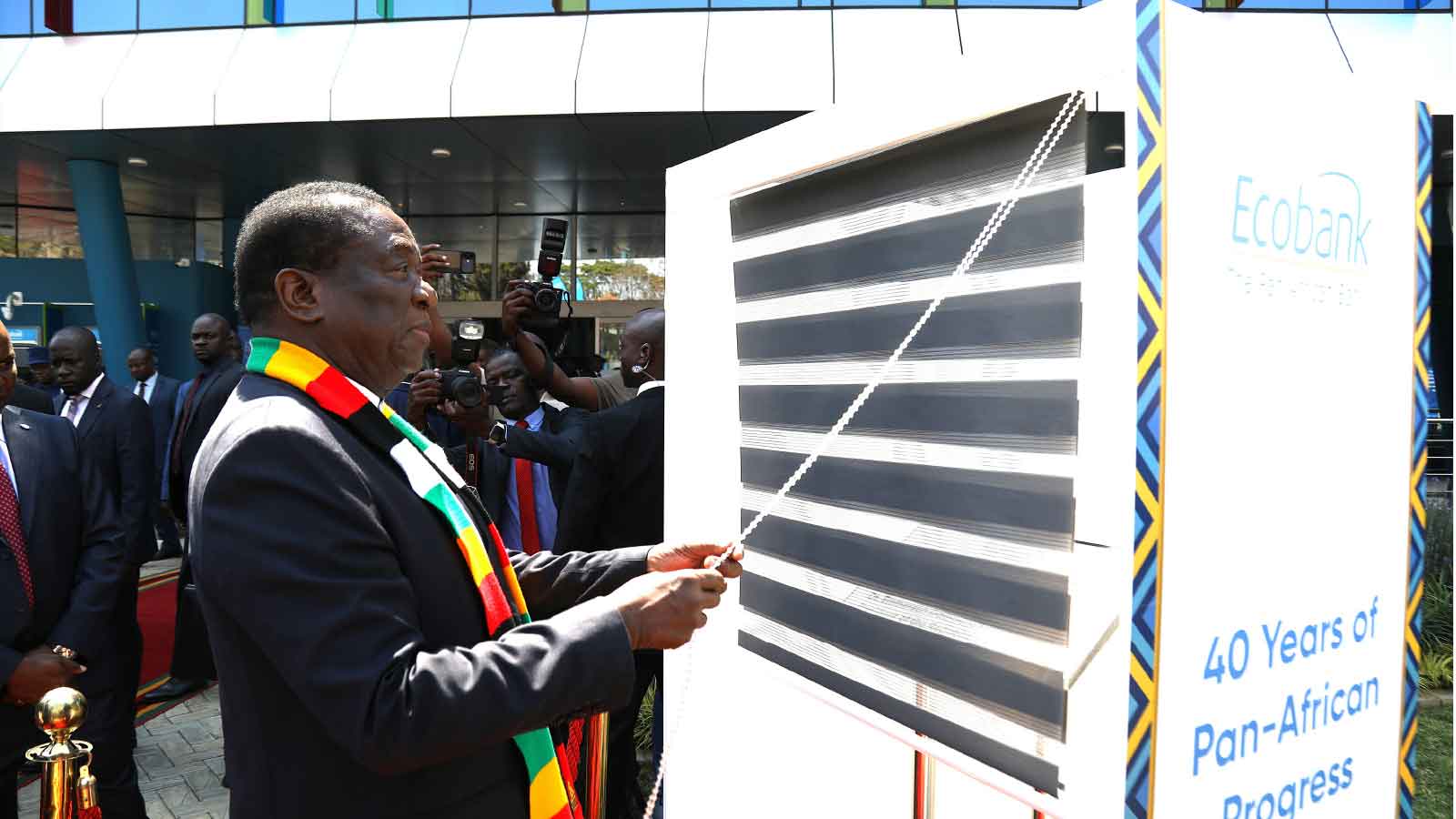
President Mnangagwa brought this up at the 11th Africa Regional Forum on Sustainable Development, speaking both as one of the regional leaders, the chair of SADC, as well as Zimbabwean President.
The urgency of the need for Africa to grab the opportunities and move forward as a continent is becoming ever more apparent. It has been obvious for some time that, as the President noted, development will not “occur by chance”. We need to be in the driving seat.
Recent events have made this need for internal development even more obvious.
Africa will suffer most from climate change, experts agree, but it is now fairly clear that the sort of external resources once partially promised to help drive greener development and mitigate against climate change are simply not going to come.
While many countries are still willing to play their part in curbing and eventually eliminating global warming, we have seen the largest global economy, that of the US, pulling out of all commitments and even slashing or reversing its own national programmes. Aid levels are generally going to fall, in some cases being eliminated and in other cases being reduced.
However, the present uncertainty over international trade pans out, with tariff barriers and trade wars set and then suspended, it is clear that older certainties have gone and a lot will depend on how each country, or group of countries or, in the case of Africa, a continent of countries is going to adapt.
A smart choice would be to push the African Continental Free Trade Area as hard as possible, to create the markets that move so much investment from a marginal possibility to a viable certainty.
There is still plenty of investment money around the world, although Africa also needs to build up its own saving levels so that we have the best of all worlds, high levels of local investment and a lot of inward direct investment.
AfCFTA came into existence in 2018 and while work has been done to set the rules of origin for many products, and the prospective vast free-trade market has attracted some direct investors wanting their footprint inside the market, there is still a long way to go before it is a full and living reality, with most trade in most countries being done on the continent.
Africa does not have to develop the same way as Europe or North America or even more recently Asia. We can avoid some mistakes; we can build cleaner and more people-oriented; we can, to be blunt, build better.
Despite the clear vision of many African leaders, there is still a tendency among many people to see Africa as a continent that things happen to, rather than as a continent that can drive and create its own future.
We need to remember that we managed to get rid of the colonialists, sometimes peacefully with just mass action, sometimes having to go to the extent of liberation war. But the point is we won our freedom and there was in that political and military struggle, a high degree of hope through Pan-Africanism.
We need some of that idealism once again, of everyone contributing to freedom, this time the economic freedom and the development freedom, but seeing Africa as a united continent.


 Online Reporter