admin
admin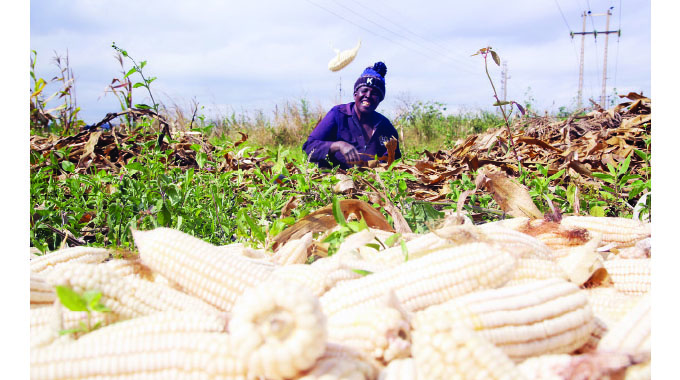
THE rapidly rising number of rural Zimbabweans who are enjoying a decent standard of living and quality of life must now become the main goal of the Government’s programmes and efforts in agricultural reform.
While national food security and household food security were the starting goals when many of the programmes started in 2018 and 2019 after President Mnangagwa won his own term as President, these limited targets have been largely achieved.
We still need to grow more oil seed crops, despite the dramatic improvements, and we still need to expand our dairy farming further, again growing on the achievements of the last few years, but very largely most of what we eat some Zimbabwean farmer has grown for us, and we are paying that farmer, not some foreigner.
We are now producing sufficiently large surpluses of most basic foods that we are entertaining export inquiries, and as the output continues to grow these export markets will become ever more important.
If we produce a surplus of one million tonnes of grain, the surplus being what we cannot eat in the next 12 months, we can store some for that day when we may have back-to-back droughts, but for a lot we will need to find a market.
And even with drought, so long as the farmer has selected, on advice, the right variety of the right crop, and the Pfumvudza scheme is being continually upgraded to ensure this, there will be some sort of harvest.
It is difficult to underestimate this conversion of more than one million families from subsistence farmers requiring handouts and food aid if the rains are just a little bit so-so to households that need two bank accounts in local currency and US dollars as their money rolls in from their tobacco contractor, the Grain Marketing Board, Cottco or the businesses and people they sell vegetables to.
The major success at the household level is the fast diminishing number of people who need food aid, which was once a major exercise each year, in some areas dwarfing the exercise of inputs, which probably explains why food aid was sometimes so necessary.
Most Zimbabwean farming households now grow their own food, and a large number are growing extra for the money they get when they sell the surplus.
Some farmers, on quite small farms, now earn more than many city dwellers and their number is growing fast.
The Ministry of Lands, Agriculture, Fisheries, Water and Rural Development is now looking at sponsoring 3,5 million households through Pfumvudza/Intwasa in the coming season, which is why it is already shipping the inputs since it does not need a logistics failure.
A solid chunk of those will now be urban Pfumvudza plotholders we hope, as some of those pathetic little plots of stunted maize are replaced by properly dug Pfumvudza plots, even if they are just half-size in rural terms, producing a decent crop of mealies for an urban family.
While urban plot holders were invited to join Pfumvudza last year, very few did so the farming revolution has yet to reach the cities.
Perhaps more will be influenced by their rural relatives this year. These urban farmers are not growing things for sale, but to supplement their lowish urban incomes by growing some of their food, but they can still win.
There is rapid expansion of Pfumvudza membership in rural areas. The pioneers are now sufficiently prosperous, having been adding to their plots over the last three years, diversifying what they grow as they accept advice from experts and generally getting on with it.
More traditionalist neighbours now realise that there is a better way of farming, especially for smallholders, that can produce decent harvests. So the Agriculture Ministry’s targets are not overly ambitious.
If anyone wants a good economic reason why President Mnangagwa is attracting such huge crowds of supporters to his provincial rallies, they should look at the farming revolution of the President’s first term, and this being backed by the devolution policy that is seeing fast and steady improvements in education and health services, as well as road works and more irrigation.
So if the standard of living and the quality of life of whole communities is rising rapidly, they clearly feel that enthusiastic support is a good idea.
Zanu PF admittedly created tight bonds with rural communities during the liberation war.
These were the areas where the war was fought, and where survival meant that the liberation forces and the people had to be close.
But more than half of all voters are now born after the war, and these groups want to see more, like that dramatic improvement in their lives and a bright future. This they are getting.
Zanu PF kept up the momentum after independence with the dramatic expansion of education, including putting in what amounted to the full high-school system in rural areas, plus the basic primary health care.
Land reform opened doors, and although not initially backed with resources to use the land effectively, at least allowed a large number of people to move from total poverty to being able to scratch a living.
The Second Republic converted the promise given by land reform a lot of muscle by implementing the required agricultural revolution, backed by the devolution agenda that is now bringing in the services.
Urban populations have not been forgotten, but municipalities are supposed to be self-financing and self governing, providing 24/7 piped water, proper sewers, weekly rubbish removal, tarred roads and decent town planning.
They were largely functional under the colonial regimes and under the Zanu PF councils of the 1980s and 1990s, expanding services into the high density suburbs and generally ensuring cities worked well.
Two decades down the line we have a different situation with others in charge.
The failure of most urban councils since then has now seen emergency work by the Second Republic: the emergency roadworks, the emergency drilling of boreholes in an extension of the huge rural scheme of one borehole in every village, and now the emergency collection of rubbish in Harare Metropolitan.
But still, when your average rural voter looks at their improved life over the last five years and compares it with the stories told by an urban cousin, it is fairly easy to work out why so many people show enthusiasm for the President and party that has done so much so quickly.


 Online Reporter