


 Online Reporter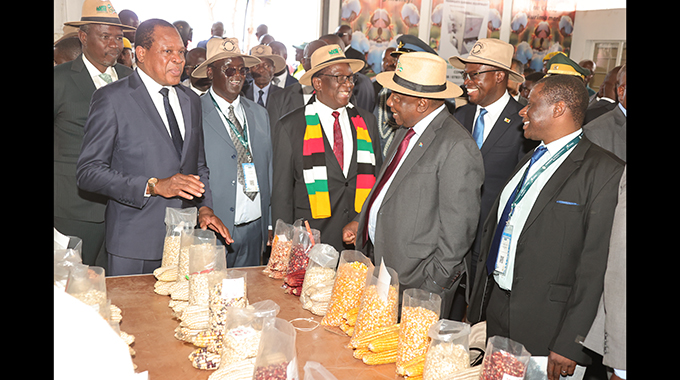
THIS year’s Zimbabwe Agricultural Show, which ended yesterday, was more than an exhibition.
It was a powerful symbol of progress and a critical platform for shaping the future of our nation.
Coming on the heels of significant successes in the agriculture sector, the show served as a pivotal moment to consolidate gains, address challenges and chart a path towards a more prosperous and sustainable future.
As Zimbabwe’s economic backbone, agriculture has shown remarkable resilience and growth in recent years, despite facing challenges such as climate variability.
The focus on bridging the gap between farming, industry and the community — as amplified by this year’s theme “Building Bridges: Connecting Agriculture, Industry and Community” — is especially important as we work to build on these successes through new technologies and agro-processing.
Zimbabwe’s agriculture sector has experienced a remarkable resurgence, moving away from a narrative of perpetual struggle towards one of innovation and growth.
The milestones in the sector, which have been driven by “policy reforms, investment in irrigation and mechanisation and empowering large-and small-scale farmers”, were duly noted by South African President Cyril Ramaphosa, who officially opened the show on Friday.
Indeed, driven by a combination of Government initiatives, farmer resilience and strategic partnerships, we have seen impressive progress.
For instance, the Horticulture Recovery and Growth Plan is creating a more enabling investment environment, while the Livestock Growth Plan is driving improvements in genetics and production.
The dairy industry, in particular, has seen significant growth, with national milk production rising by 170 percent between 2009 and 2023.
We have also witnessed record-breaking achievements in key crops, such as surpassing the national winter wheat target in 2024.
These accomplishments are not accidental; they are the result of deliberate efforts to modernise our farming practices and invest in our people.
Government initiatives, like the Presidential Input Scheme, have provided vital resources to small-scale farmers, while partnerships with organisations like the Food and Agriculture Organisation of the United Nations (FAO) are equipping farmers and extension officers with modern, climate-smart farming techniques.
The success stories of programmes like Pfumvudza/Intwasa, which promotes conservation agriculture, demonstrate that farmers are eager to embrace new methods to increase their resilience and yields.
So, the Zimbabwe Agricultural Show was the perfect venue to celebrate these milestones, providing a national stage for our farmers to showcase their achievements and inspire others. While celebrating our successes is vital, the show also served as a crucial reminder that our work is far from over.
The global agricultural landscape is constantly evolving, and Zimbabwe must keep pace to realise Vision 2030.
This year’s theme highlights two critical pillars for future growth: new technologies and agro-processing.
The future of farming is increasingly digital.
Precision farming, which uses data analytics and GPS technology to optimise inputs, is no longer a luxury but a necessity for maximising yields and conserving resources, especially when the country is now focussing on boosting productivity.
New technologies, for instance, now make it possible for farmers to receive real-time information on soil moisture, pest outbreaks and weather forecasts directly on their smart gadgets.
This kind of digital literacy and access to technology can significantly boost productivity, particularly for smallholder farmers who often lack access to critical information.
Agro-processing is also a critical competent.
For too long, Zimbabwe has exported raw agricultural commodities, only to import higher-value processed goods.
This has limited our economic potential, export earnings and employment opportunities.
Agro-processing is the bridge that transforms raw produce into finished products, creating jobs, stimulating economic growth and increasing profitability throughout the value chain.
It is, however, comforting that the Government is already supporting agro-processing through initiatives that aid small and medium enterprises.
By fostering partnerships between farmers, manufacturers and financial institutions, we can unlock investment in processing plants and storage facilities, reducing post-harvest losses and ensuring a more stable supply of high-quality products for both local and international markets.
This value addition is not just about economics; it is about building a sustainable and resilient agriculture sector that creates lasting prosperity for our communities.
The Zimbabwe Agricultural Show was, therefore, a moment of reflection and a call to action.
It is a time for all stakeholders — the Government, agribusiness leaders, smallholder farmers and young entrepreneurs — to come together and embrace a shared vision for the future.
The successes of the past year demonstrate our potential, but the path forward requires bold steps.
We must leverage the momentum generated by our agricultural triumphs to push for even greater innovation and investment.
Let us use this show to celebrate our progress, learn from the latest technologies and build the bridges that will connect our farms to a thriving, agro-processed future.
By doing so, we will not only feed our nation but also position Zimbabwe as a leader in sustainable and intelligent farming, cementing agriculture’s place as the engine of our economic resurgence for generations to come.



 Bongani Ndlovu