


 Online Reporter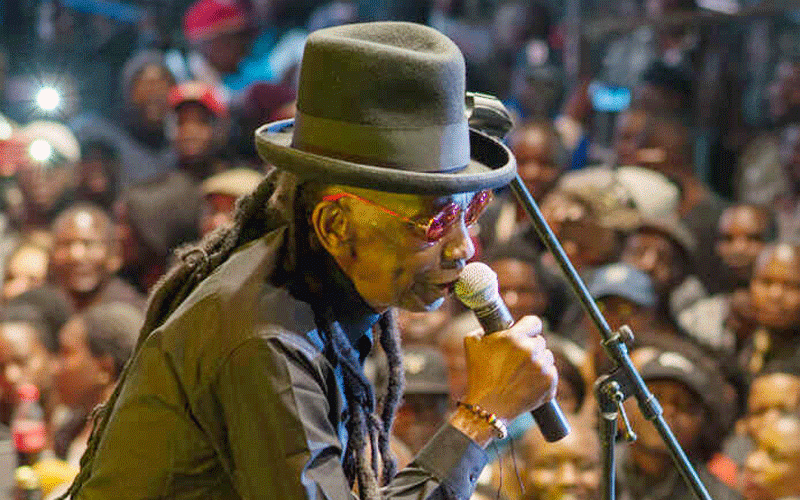
Trust Khosa
Zimpapers Arts and Entertainment Hub
“Life here can be hell on earth because you do not have close friends or people to support you when you are broke. It is survival of the fittest and one must be responsible, knowing you are not in your own country. You may not appreciate the freedom you have back home until you relocate overseas, where your rights are limited as a foreigner.” — Thomas Mapfumo
SINCE Chimurenga musician Thomas Mapfumo announced his retirement, a fierce debate has raged among fans about whether he will relocate to Zimbabwe.
Mapfumo, who is affectionately known as Mukanya by his legion of followers, moved to the United States at the turn of the new millennium.
While the official reason was to boost his international presence, many viewed the move as self-imposed exile, as the singer often used his platform to criticise the Government while abroad.
Despite living overseas for many years, Mukanya has expressed a strong desire to be buried in Zimbabwe.
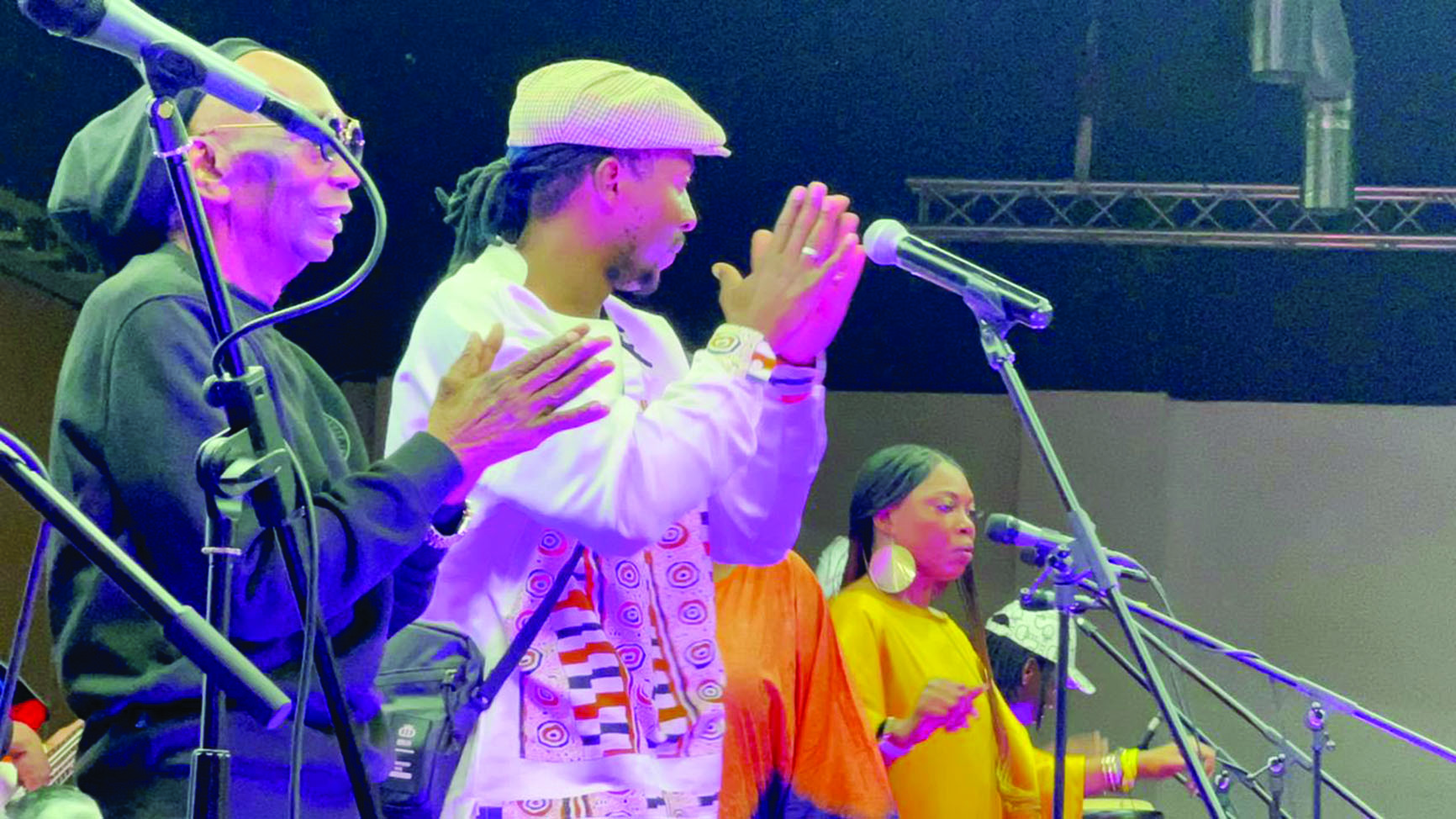
The 80-year-old founder of The Blacks Unlimited band recently made his intentions clear following a tour in the United Kingdom, where a farewell concert in Birmingham attracted over 3 000 followers.
In a wide-ranging interview with Zimpapers Arts and Entertainment Hub, Mukanya spoke about his deep admiration for his homeland.
“I have always loved my country, Zimbabwe, and I am never shy or afraid to visit my birthplace,” he said.
“I was born in Zimbabwe and here in the US (United States), the best I can do is showcase our way of life and culture.
“Many foreign nationals living here are known for promoting their own cultures, and I have done the same. I will continue to put my country on the world map by showcasing our lifestyle overseas.”
When asked if he would ever relocate to Zimbabwe, Mapfumo replied: “It is something we have never discussed, but if I die, I will be buried in Zimbabwe. I may have American citizenship, but that does not change the fact that I am Zimbabwean. I truly love my roots, and, as I mentioned earlier, we can never escape ourselves, even if we live abroad.”
Mapfumo acknowledged that life overseas is not as easy as many in Zimbabwe perceive.
“Life here can be hell on earth because you do not have close friends or people to support you when you are broke. It is survival of the fittest and one must be responsible, knowing you are not in your own country. You may not appreciate the freedom you have back home until you relocate overseas, where your rights are limited as a foreigner.”
He also revealed that several factors pushed many to the diaspora.
“For your information, most of the people who have settled overseas did not come here by choice. There are several factors that prompted them to be here, and they dearly miss home. I also miss home because I will always be Zimbabwean, no matter how many years I have settled in the US, which has become my second home — not by choice, but due to situations beyond my control,” he said.
While outlining his retirement plans, he did not rule out the possibility of performing back home.
He confirmed that a concert in South Africa is already in the works.
“There are people planning something in Zimbabwe and I am just waiting to hear from them. I also have other shows lined up in South Africa very soon and I will certainly come once everything has been sorted out by the management team of the group.”
One thing certain throughout the interview was the veteran singer’s reluctance to come clean on whether he would return home for good or continue staying in the US.
“It is something we have not discussed (relocating to Zimbabwe), but just know that I truly remain a Zimbabwean and nothing takes away that fact. I will be buried there, and I just love my roots, as I indicated earlier.”
Dearth of stars
Never the one to shy away from speaking his mind, Mapfumo believes Zimbabwean musicians are very talented but some lack originality.
“I listen to a lot of Zimbabwean music and skits like Naiza Boom to stay connected with what is happening back home and I see a lot of talent. The only challenge I notice is the lack of originality,” he said.
“Young artistes should take a cue from Nigerians, especially Burna Boy, who has become a global star because of his originality.”
The Chimurenga singer expressed frustration over the tendency of local artistes to imitate rather than innovate.
“I do not understand why Zimbabwean artistes are not being original. Some of us succeeded because we were authentic. Look at Tuku — the late Dr Oliver Mtukudzi — he made it everywhere because he was original.
“With all 10 provinces in Zimbabwe, surely, we could have produced more icons of my calibre or Tuku’s. But we do not believe in ourselves. Honestly, my heart bleeds when this subject comes up. People say I am an unfair critic, but I am just telling the truth.”
Reflecting on his own musical journey, Mukanya recounted how he transitioned from rock and roll to Chimurenga.
“I always use myself as an example. As young boys, we used to attend rock and roll sessions in Harare, gathering in the hundreds in Salisbury (now Harare). We performed cover versions of bands like the Rolling Stones. One day, a white man rebuked us for our approach.
“At one point, we all wanted to sound like Elvis Presley. But we learnt the hard way that we would never make it internationally by singing music that was not authentic.”
He emphasised the importance of guiding the next generation.
“I am a perfect example of someone who realised that being a copycat leads to failure. Even now, I feel compelled to guide young artistes in the right direction. We cannot fold our hands and pretend to be role models if we are not advising them properly.”
The singer added that he was not afraid to be labelled a harsh critic if it helps future generations to reach their potential.
“I am never afraid to defend fellow creatives and I know they will thank me later if they genuinely take my advice.”
Successor
Mapfumo, who has since ordained his nephew Kurai Makore as the heir to the Chimurenga legacy, firmly believes the rising star still has a long journey ahead.
“I have seen the talent he possesses, but we will keep guiding him. There are areas he still needs to improve if he wants to go far and I will speak to him. We do not want him to settle into a comfort zone — we want him to be as authentic as possible,” he emphasised.
“I admire his work ethic, passion for music and dedication, but we will continue pushing him to grow. He has not yet reached the level we expect of him, though his talent is undeniable. He has worked hard to get where he is.”
When asked to name a local artiste he believes has the potential to break onto the international scene, Mapfumo could not come up with a name.
“As I said before, I urge local artistes to work hard and be original. Only then can we begin to talk. I will continue to preach the importance of authenticity because that is what these boys lack. It takes hard work, originality and focus to reach that level.”
The Chimurenga icon, who recently bid farewell to his fans in the UK, reiterated his plans to step away from the stage.
“There comes a time when one needs to rest and that is the process we have begun. I will not perform forever, but I have enjoyed every moment.”
As the curtain gently comes down on Mapfumo’s long career, his wish is to be laid to rest in Zimbabwe and to sign off in high spirits.
More than anything, he hopes to give Zimbabweans one final, unforgettable moment on home soil.



 Bongani Ndlovu
 Online Reporter
Mapfumo ate his own legacy by trying to be smart with everyone. He was and is still a political chameleon. From supporting the likes of Bishop Muzorewa’s Zimbabwe-Rhodesia, to supporting Cde Mugabe’s ZANU-PF, to Morgan Tsvangirayi’s MDC, to Nelson Chamisa’s project. The old rooster is a rolling stone looking for recognition. He could have done himself a favour had he stayed out of politics.